
2026-10-04
Smart Bin Trends: How Solar-Compacting and IoT Litter Bins Are Changing Public Waste Management
Solar-compacting and IoT-connected litter bins are moving from pilot to procurement. What smart bins actually do, when they pay off, and how to specify them.
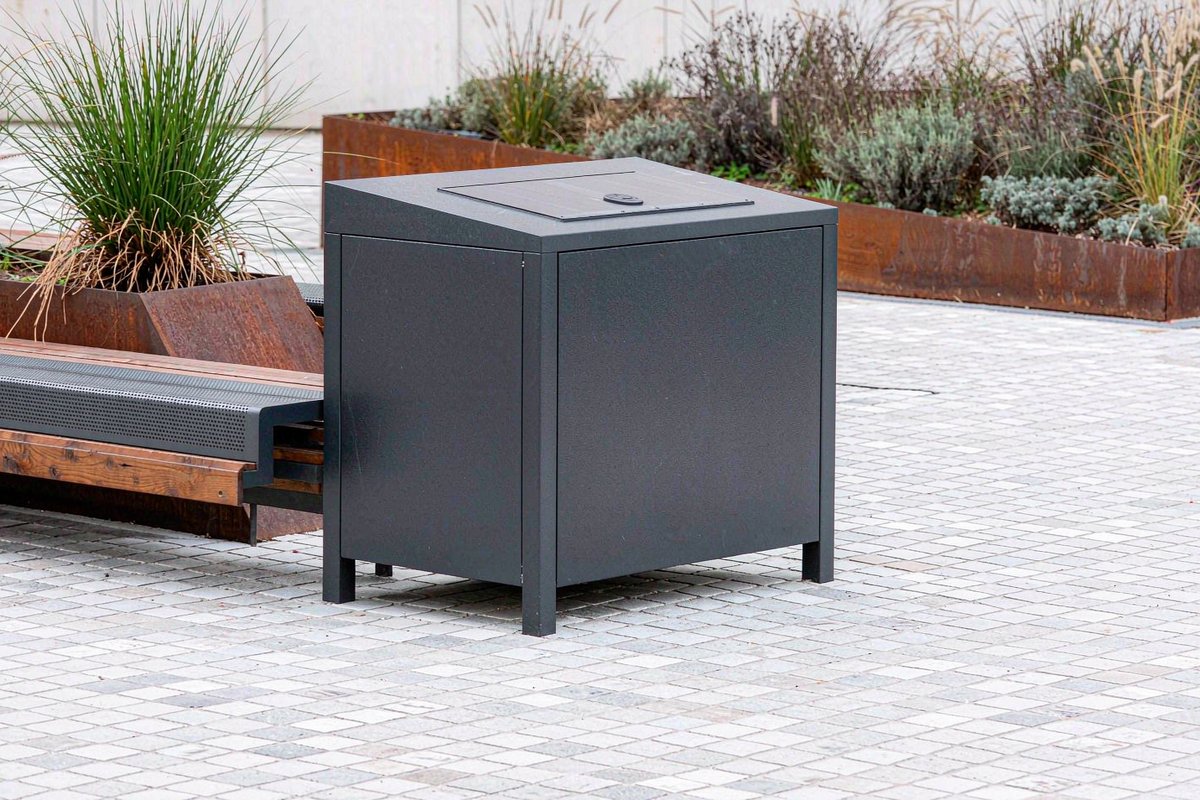
Smart litter bins spent a decade as a trade-show curiosity — a solar panel bolted to a container that compacts trash and sends an alert when it is full. In 2026 the conversation has changed. Sensor costs have fallen, connected waste containers now appear in standard municipal procurement frameworks, and the question buyers ask is no longer "do smart bins work?" but "where do they pay off, and what should we verify before we order?" For municipalities, park operators, landscape contractors and distributors, this guide summarizes the smart bin trends that matter in 2026, separates the genuinely useful capabilities from the marketing, and provides a specification checklist that keeps total cost of ownership under control.
What "Smart" Actually Means in a Public Litter Bin
The label covers three distinct capability tiers, and confusing them is the most common procurement mistake:
| Tier | Technology | What it changes | Typical cost premium | Best-fit sites |
|---|---|---|---|---|
| Sensor-monitored | Ultrasonic or infrared fill-level sensor with low-power radio | Collections routed by data instead of fixed schedules | Low | Campuses, business districts, large parks with variable footfall |
| Solar-compacting | Small PV panel powers an internal compactor (5:1–8:1 volume gain) | Fewer collections per bin; larger effective capacity in a standard footprint | Medium | Transit hubs, event lawns, high-traffic plazas |
| Fully connected IoT | Compaction plus fill sensors plus a fleet dashboard and route optimization | The bin fleet is managed as a system; staffing savings become measurable | Highest | Citywide rollouts, airports, transit campuses |
A sensor-only bin is a logistics tool. A solar-compacting bin is a capacity tool. A fully connected fleet is a management system. Each tier answers a different operational problem — and specifying tier three when the actual problem is tier one is the classic overspend.
The Trends Behind 2026 Procurement Lists
- Fill-level sensing is now cheap and rugged. Ultrasonic sensors that once cost more than the bin itself are now commodity hardware, sealed to IP65 and running for years on a single battery or a small solar top-up. Retrofitting sensing onto a conventional bin is increasingly common.
- Compaction is migrating into standard footprints. Early compacting bins looked like vending machines. Current generations fit a normal 80–120 L street-bin silhouette, so they drop into existing streetscape palettes and servicing routines without redesign.
- Data feeds route optimization, not just alerts. The value has shifted from "bin sends an email" to fleet-level analytics: collection routes cut by 30–40% in published city pilots because trucks only visit containers that are actually full.
- Hybrid fleets are the norm. Few cities deploy smart bins everywhere. The typical 2026 layout concentrates them at high-traffic nodes — transit entrances, event lawns, food courts — while conventional bins cover low-traffic edges.
- Design maturity. The first generation looked like electronics with a lid. Buyers now expect a smart bin to look like street furniture: clean steel bodies, RAL-matched powder coating, and no visible gadgetry to invite tampering.
When Smart Bins Pay Off — and When They Don't
Run any candidate site through this checklist before committing budget:
Smart bins pay off when:
- Footfall is high and variable (events, tourism, transit peaks), so fixed collection schedules either overflow bins or waste trips
- Labor or disposal costs are high, and route optimization savings compound across a large fleet
- Collection points are spread out, so each avoided trip saves real distance
- The operator already uses or plans route-management software that can ingest sensor data
Smart bins are usually a waste of money when:
- The site is low-traffic — a trailhead bin emptied weekly needs no sensor
- Bins are densely spaced, so overflow risk is low anyway
- There is no budget line for battery replacement, connectivity fees or dashboard licenses after year one
- The site is vandalism-prone and the housing is not engineered for it — a stolen sensor erases a year of savings
Specification Checklist Before You Buy
- Ingress protection: electronics rated IP65 or better; bins live through jet-washing, rain and dust
- Power autonomy: battery life in years, not months, or a solar panel sized for shaded positions
- Body first, electronics second: 1.5–2 mm steel gauge, hot-dip galvanized structure, UV-stable polyester powder coating at 60–80 µm — the same spec you would demand on a conventional bin
- Tamper-resistant hardware: locking lids, concealed hinges, anti-drill fasteners; the sensor module should be inaccessible without tools
- Mechanical fallback: when electronics fail or reach end of life, the bin must keep working as a conventional container — electronics should be a module, not a structural dependency
- Liner compatibility: compaction systems must accept standard liner dimensions so existing collection crews and trucks keep working
- Data ownership: confirm the operator owns the fill-level data and can export it via API; avoid closed dashboards that lock the fleet to one vendor
- Warranty in writing: structure and electronics separately — 5–10 years on frames and coatings, and a defined term for sensors and compactors
Durability Still Decides Total Cost
The uncomfortable truth about smart bins is that electronics fail before steel does. A sensor or compactor module typically lives 3–7 years; a properly galvanized, powder-coated bin body lives 10–15. That is why the smartest procurement strategy treats the bin as the platform and the technology as a replaceable module. Specify the body to the same standard as any long-life street furniture — heavy-gauge galvanized steel, quality powder coating, replaceable parts — and treat every electronic feature as a serviceable add-on with its own lifecycle plan. Cities that reverse this priority end up replacing entire smart bins when a $40 sensor dies.
Sourcing Smart-Ready Bins from the Factory
AOTUDE manufactures outdoor litter bins, planters, benches and site facilities in its Foshan factory and supplies municipalities, landscape contractors and distributors in more than 40 countries on a factory-direct basis. For smart-bin projects, AOTUDE supplies smart-ready bin platforms — heavy-gauge galvanized steel bodies with clean cable routing, weather-sealed electronics compartments and tamper-resistant hardware — engineered to accept the sensor or solar-compaction modules your system integrator specifies, with OEM/ODM support for custom dimensions, colors and branding. With a practical MOQ from 50 pieces, 5–10 year warranties on frames and coatings, and worldwide container shipping, AOTUDE supports both conventional fleets and the next generation of connected public-space furniture. Browse the range or request a smart-ready specification quote at https://aotude.com.