Sensor-Based Litter Bin Collection ROI: What Cities Should Calculate Before Buying
2026-09-27 · 6 min read · By AOTUDE Furniture Team
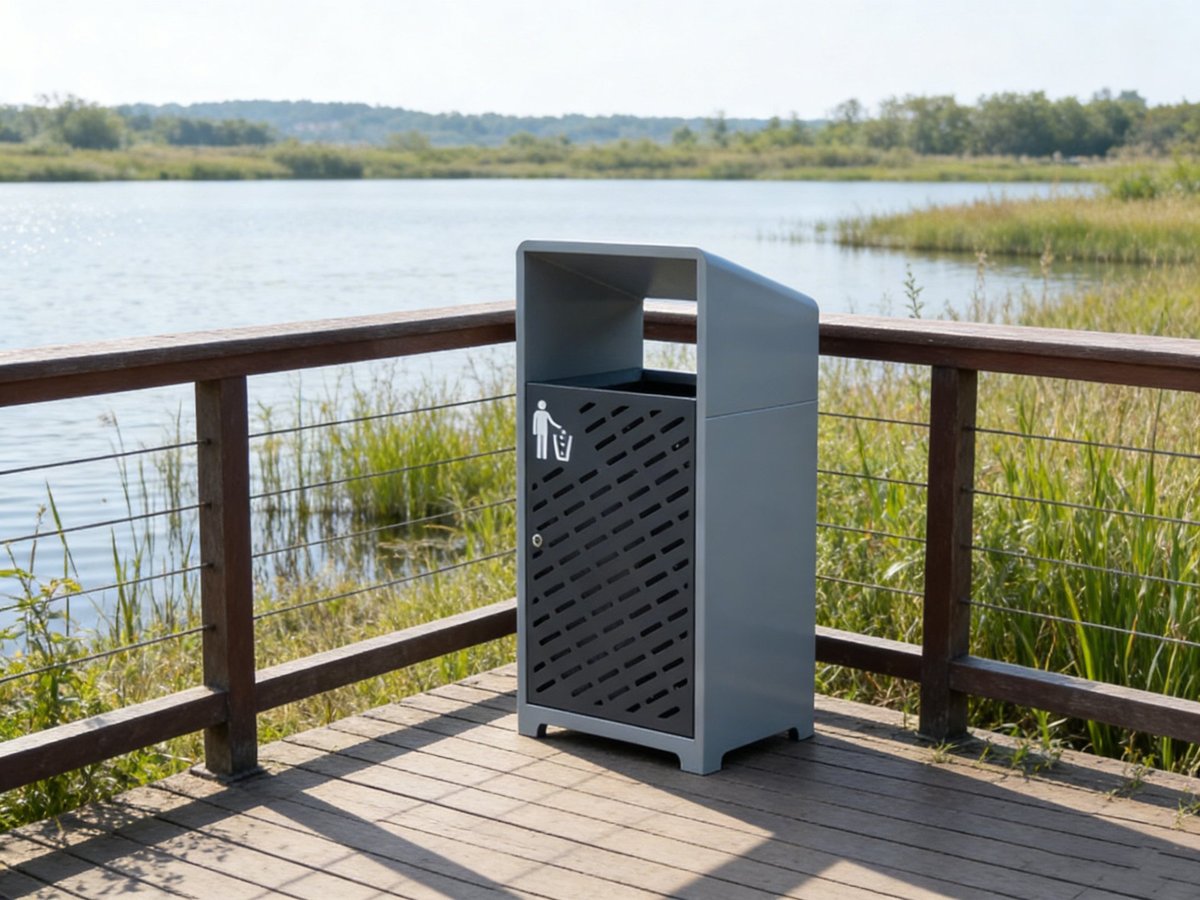
Smart city budgets keep growing, and waste management is one of the first line items where municipalities experiment with connected hardware. Sensor-equipped litter bins — sometimes called smart bins — promise fewer collection trips, lower fuel use and cleaner streets. But for a procurement officer or landscape contractor, the real question is narrower: does sensor-based bin collection actually pay back, and under what conditions? This article breaks down the cost structure, the savings drivers and a practical ROI calculation that cities and developers can run before committing budget.
What a Sensor-Equipped Litter Bin Actually Costs
A smart litter bin is a conventional bin plus three cost layers. Understanding these layers is essential because vendors often quote only the first one.
- Hardware premium. A fill-level sensor (ultrasonic, infrared or ToF) with battery, LoRaWAN/NB-IoT modem and weatherproof housing typically adds a meaningful premium over an equivalent passive bin. Retrofit sensors that clamp inside an existing bin cost less than factory-integrated electronics.
- Connectivity and platform fees. Most systems carry an annual per-bin subscription for the data platform, network access and dashboards. This recurring fee is easy to underestimate across a fleet of hundreds of bins.
- Installation and commissioning. Even retrofit units need mounting, activation, and mapping into the route-planning software. Factory-integrated units avoid this step, which matters for large tenders.
| Cost layer | Typical billing model | Often overlooked? |
|---|---|---|
| Sensor hardware | One-off per bin | Rarely |
| Platform / connectivity | Annual per-bin subscription | Frequently |
| Installation & commissioning | One-off per site | Sometimes |
| Battery replacement | Every 3–7 years | Almost always |
The battery line deserves emphasis. A sensor whose battery dies after three years silently converts a smart bin back into a passive one, and nobody notices until collection complaints rise. Specify battery life in the tender, not just sensor accuracy.
Where the Savings Come From
The business case for smart waste collection rests on four savings drivers, and they do not apply equally to every city.
1. Route optimisation. The core promise: crews only visit bins that are actually full. Studies and pilot programmes across European and North American cities commonly report collection trip reductions in the range of 20–40% once routes are re-planned around fill-level data. The upper end appears where existing routes were based on fixed schedules rather than observed demand.
2. Fuel and vehicle wear. Every avoided trip saves diesel, hydraulic cycles and vehicle hours. This saving scales with fuel prices and fleet age, so it is worth calculating with your own fleet data rather than vendor assumptions.
3. Labour reallocation. Fewer emergency pickups and less time checking half-empty bins means crew hours can shift toward cleaning, maintenance or other routes. This is often the largest single saving, and the hardest to capture, because it requires managers to actually re-plan shifts.
4. Overflow prevention. Avoiding overflowing bins reduces litter clean-up, pest control and complaint handling. These costs are real but diffuse, so treat them as a bonus rather than the foundation of the ROI case.
A Simple ROI Formula for Municipal Buyers
Before committing to a fleet-wide rollout, run this back-of-envelope calculation on one district:
Annual saving = (trips avoided × cost per trip) + (crew hours saved × loaded labour rate) + avoided overflow penalties
Payback period = total investment (hardware + install + first-year platform fees) ÷ annual saving
As a worked example: 200 bins, 30% trip reduction, USD 18 per collection trip, and 1.5 saved crew hours per day at USD 35 per loaded hour yields roughly USD 1,080 per week, or about USD 56,000 per year. If the full investment — hardware, installation and platform fees — is USD 60,000, payback lands near 13 months. If the platform subscription is USD 5 per bin per month (USD 12,000 per year), payback stretches to roughly 15–18 months. Both are defensible figures; the point is that subscription fees move payback materially and must be in the model.
| Variable | Conservative | Realistic | Optimistic |
|---|---|---|---|
| Trip reduction | 15% | 30% | 40% |
| Payback horizon | 3+ years | 12–24 months | < 12 months |
| Best suited to | Low-density routes | Mixed urban districts | High-traffic centres |
When Smart Bins Are Not Worth It
Honest procurement also means knowing when to walk away. Sensor-based collection delivers weak returns in these situations:
- Very low bin density. With a bin every 50 metres, collection is already efficient; the marginal trip saved is small.
- Manual routes with no routing software. Savings require someone to act on the data. If crews will not re-plan routes, sensors become expensive fuel gauges.
- Vandalism-prone locations. Sensors mounted at the top of open bins are exposed; specify anti-vandal hardware for high-risk sites.
- Short pilot horizons. A six-month pilot rarely captures a full seasonal cycle, so the data will understate or overstate annual savings.
For most mid-size cities, the sensible path is a phased rollout: instrument the 10–15% of bins on the highest-variability routes first, measure for a full year, then scale.
Specifying Hybrid Fleets: Smart and Passive Together
In practice, the winning strategy is rarely "make everything smart." High-traffic plazas, transit stops and waterfronts justify sensors, while quiet residential side streets work fine with conventional bins on a fixed schedule. Procurement documents should therefore allow a mixed fleet from a single supplier.
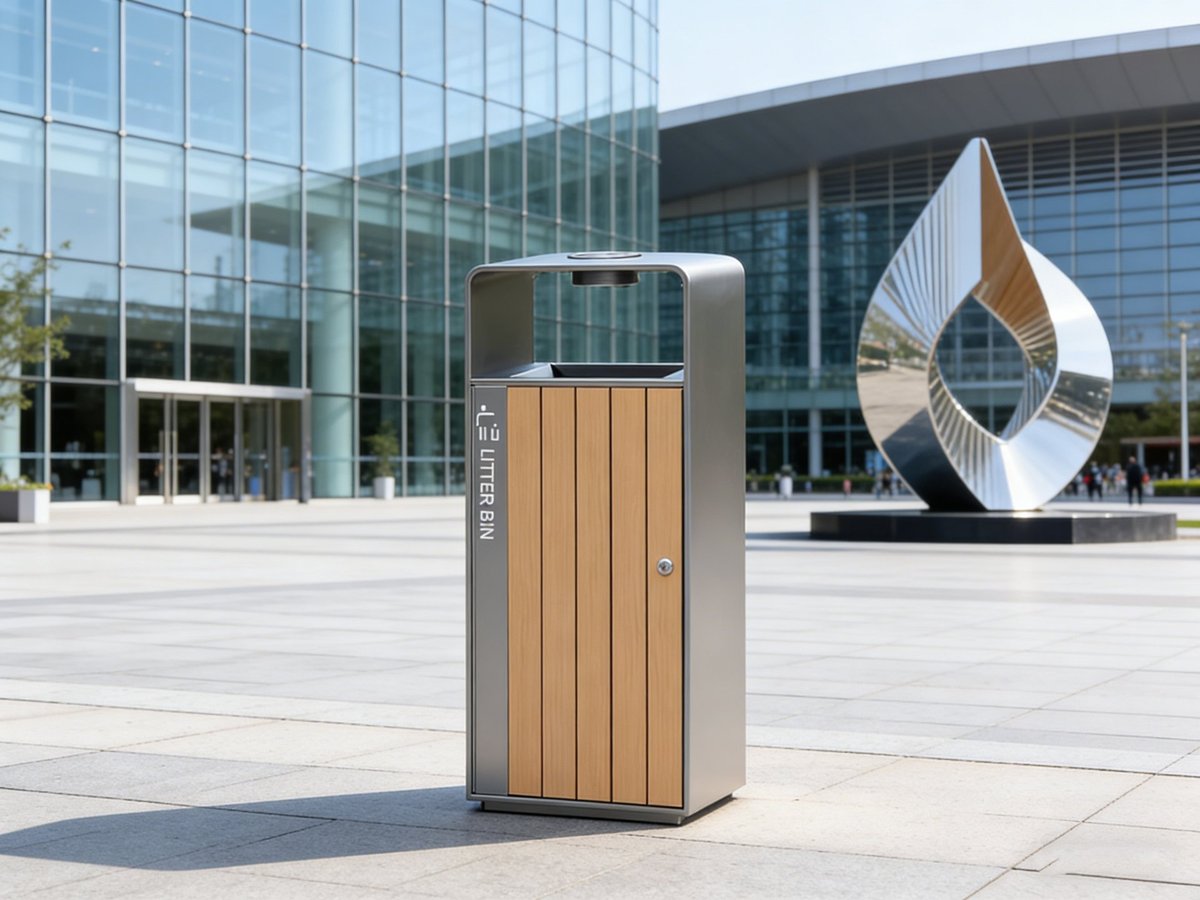
This is also where bin hardware quality still matters more than electronics. A sensor on a bin with a weak powder coating or a warped lid fails long before its battery does. When evaluating suppliers, look first at the bin body — steel thickness, coating system, drainage, anti-vandal fasteners — then at the electronics integration.
For guidance on choosing the bin itself, see our municipal buyer's checklist on how to choose outdoor trash bins for parks, and our overview of smart street furniture trends for how waste data fits into wider connected-city planning. If your tender requires classified waste streams, consider a product such as the Trisort triple-sorting bin, which separates recyclables at the point of disposal and can be combined with fill-level monitoring.
Why Work with AOTUDE
AOTUDE (https://aotude.com) is a factory-direct manufacturer of outdoor site furniture based in Foshan, China, operating a 20,000 m² production facility. We supply litter bins, benches, planters and supporting facilities to municipal and commercial projects worldwide, with a minimum order quantity of 50 pcs and full OEM/ODM support — including provisions for integrating fill-level sensors or preparing bins for third-party smart modules. Every product ships with a 5–10 year warranty backed by factory-direct quality control, so whether your fleet is smart, passive or a hybrid of both, the hardware underneath is built to outlast the technology cycle.