Urban Furniture Trends 2026: Sustainable Materials, Smart Features and Biophilic Design
2026-09-22 · 4 min read · By AOTUDE Furniture Team
The street furniture industry is quietly going through its biggest shift in a generation. Public spaces are no longer judged only on function — councils, developers and landscape architects are measured on wellbeing, sustainability targets and lifecycle economics. Here are the six trends we see moving from pilot projects into mainstream specifications in 2026, based on what our clients are tendering for and what is arriving in our own order book.
1. Circular and Recycled Materials Go Mainstream
Sustainability has moved from the brochure to the procurement checklist. Specifications increasingly name recycled content, end-of-life disassembly and documented material provenance:
- Recycled plastic lumber engineered from collected waste streams, with 50+ year service life and zero rot — now standard for boardwalks and high-abuse sites.
- High-recycled-content steel and aluminum with mill certificates to prove it.
- Design-for-disassembly: bolted rather than welded sub-assemblies, so a bench can be repaired and re-coated instead of landfilled.
Manufacturers who can document circularity credentials are increasingly the ones who win tenders — this is now a scoring criterion, not a slogan.
2. Multi-Functional Furniture Maximizes Every Square Meter
Urban space is expensive, so single-purpose furniture is giving way to pieces that do several jobs:
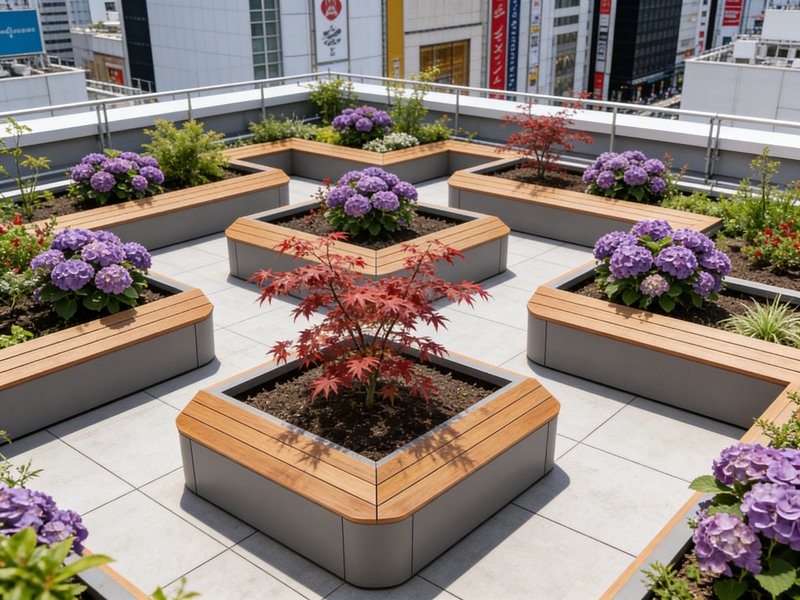
- Planter–bench combinations that define edges, add greenery and provide seating in one footprint.
- Canopies with integrated cycle parking or solar panels serving two briefs with one installation.
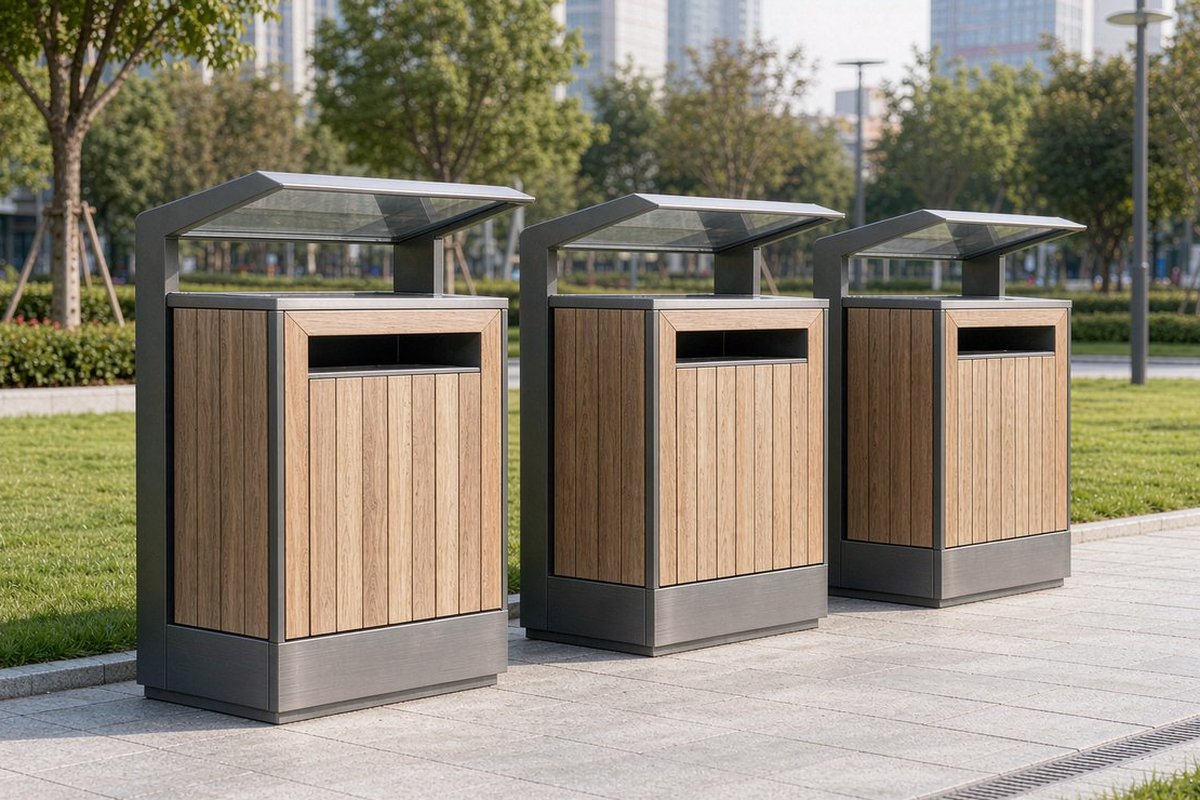
- Bins designed as streetscape objects — sculptural forms and premium finishes that visually anchor a space instead of hiding in a corner.
For campuses, transit hubs and dense districts, multi-functionality is the difference between fitting the program in and cutting it.
3. Smart Features Arrive (Quietly)
The smart-city hype has cooled into something more useful: modest, robust technology where it clearly pays for itself.
- Solar lighting integrated into shelters and benches where trenching for power would dominate the budget.
- Fill-level sensors in litter bins that turn fixed collection rounds into on-demand routes — the first smart feature with a clean, measurable ROI.
- USB charging and usage counters on high-dwell seating.
The lesson from early deployments: hardware must survive the street. Any sensor that cannot be specified to the same 10-year warranty standard as the furniture around it will cost more in servicing than it saves.
4. Biophilic Design Softens the Hardscape
Greenery is becoming structural rather than decorative:
- Planter-lined corridors replacing bollard rows for pedestrian guidance.
- Green roofs on bin stores and shelters, managing rainwater and cooling their surroundings.
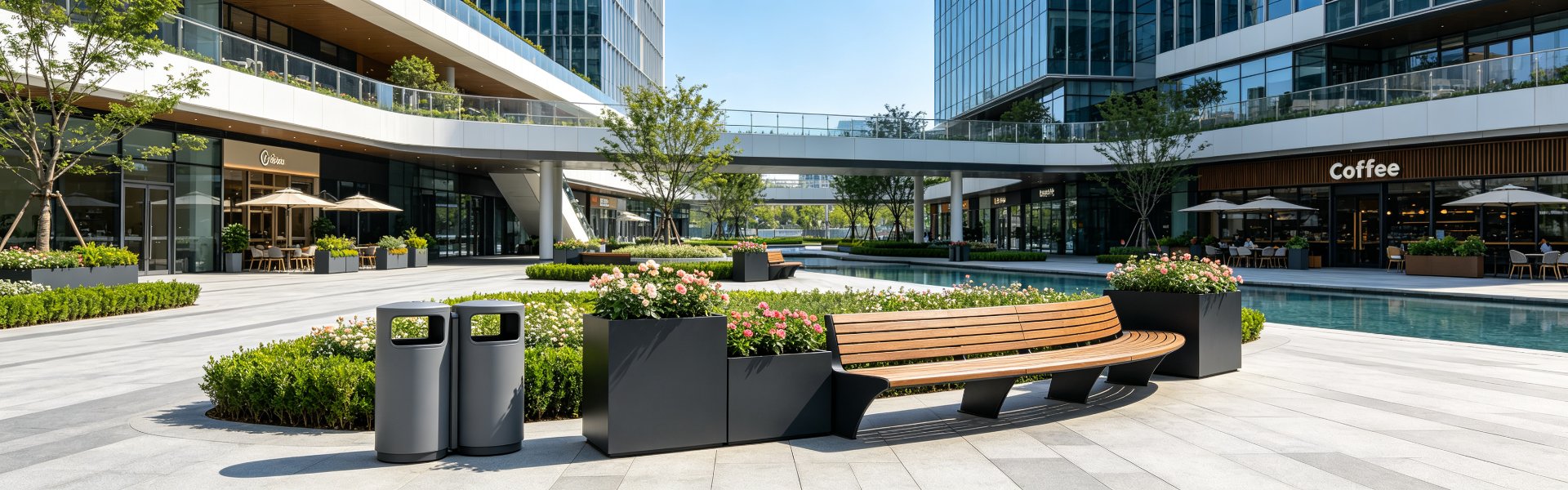
- Softer, organic product forms — curved benches and rounded planter silhouettes that reference natural shapes instead of pure industrial geometry.
The pattern we see in orders: cities are buying fewer, larger, greener pieces rather than many small gray ones.
5. Inclusive and Social Seating Becomes Standard
Linear benches that discourage conversation are losing ground to clustered, varied seating:
- Face-to-face and L-shaped arrangements that let groups sit together.
- Mixed seat heights and armrests that serve children, older adults and wheelchair users in the same space.
- Shade as a seating requirement, not an afterthought — pergola-integrated seating is one of our fastest-growing custom lines.
6. Procurement Shifts to Lifecycle Economics
Perhaps the most important trend is in the tender documents themselves. Councils increasingly evaluate cost per year of service, not purchase price:
| Old evaluation | 2026 evaluation |
|---|---|
| Lowest purchase price | 20-year lifecycle cost incl. maintenance |
| Any equivalent product | Modularity + spare parts availability scored |
| 2-year warranty | 5–10 year anti-rust warranty expected |
| Price per unit | Durability, repairability and recycled content weighted |
For buyers, this favors properly galvanized, modular, well-warranted furniture — and favors factory-direct manufacturers who can document materials and supply spares for years.
What This Means for Your Next Project
- Specify for the tender of 2027, not 2019. Recycled content, modularity and warranty length are already scoring criteria.
- Pilot one multi-functional piece before re-fitting a whole district.
- Ask suppliers for lifecycle cost per year, not unit price — the answer reveals a lot.
- Design for repair. A bench that can be re-slatted in ten years is the truly sustainable choice.
Trends fade; the direction of travel does not. Furniture that is greener, tougher, more inclusive and easier to maintain will keep winning tenders well beyond 2026 — and the manufacturers investing in those capabilities today are the ones whose products your city will still be happy with in 2040.