Litter Bin Capacity Planning: How to Size Public Waste Bins for Parks, Streets and Plazas
2026-10-04 · 7 min read · By AOTUDE Furniture Team
Litter bin capacity is one of those specification details that looks trivial on a drawing and becomes very visible in operation. A bin that is too small overflows within hours, turns a tidy plaza into an eyesore and triples the call-outs on your cleaning contract. A bin that is too large sits half-empty, wastes liner film, encourages visitors to dump household waste, and ties up capital in steel that nobody uses. Getting litter bin capacity planning right is therefore a genuine planning task for municipal departments, landscape architects and contractors — and it can be done with a simple, defensible method based on footfall, waste generation rates and collection frequency. This guide walks through that method, shows how to convert daily waste volume into bin size and service intervals, and lists the site-specific rules of thumb that keep parks, streets and plazas clean without over-buying steel.
Why Capacity Is a Planning Decision, Not a Purchase Detail
Most bin purchasing decisions start from the catalogue: "we like this 60-litre model, let's take forty." The correct sequence is the reverse — start from the waste, then choose the bin. Three variables drive everything:
- Waste generation. How much litter does the average visitor produce at this type of site? Public-space studies across Europe and Asia converge on a workable planning range of 0.1–0.5 litres of litter per visitor per hour, depending on whether food and drink are consumed on site.
- Dwell time and footprint. A commuter passing a transit stop generates little waste; a family picnicking for three hours generates several litres. Capacity planning is really dwell-time planning.
- Collection frequency. The bin is a buffer, not a disposal point. Its volume must hold everything generated between two collection rounds with a safety margin — typically 20–25% — so the site never reaches the overflow point before the crew arrives.
Once you frame capacity this way, the bin size stops being a matter of taste and becomes a small calculation that can be defended in a tender or a maintenance budget review.
Estimating Daily Waste Volume from Footfall
For most public projects you will not have measured waste data, so plan from footfall estimates and adjust after the first month of operation. Use the generation rates below as starting values:
| Site type | Planning rate (litres per visitor) | Notes |
|---|---|---|
| Transit stops, urban streets | 0.05–0.10 L | Short dwell, take-away packaging dominates |
| Office districts, campuses | 0.10–0.15 L | Lunch peaks; weekends drop sharply |
| Parks, general green space | 0.2–0.4 L | Peak on weekends and holidays |
| Plazas with food vendors, event grounds | 0.4–0.8 L | Food consumption on site is the key driver |
| Stadiums, festival sites | 1.0+ L per event visitor | Plan dedicated event servicing, not daily bins |
Worked example: a riverside park with 2,000 visitors on a peak day and a 0.3 L planning rate generates about 600 litres of litter per day. That single figure is the anchor for every decision that follows.
From Daily Volume to Bin Size and Collection Frequency
With the daily volume known, divide it across the number of collection rounds you can realistically afford. The result tells you the total installed capacity — then you split it into individual bins at the correct locations.
| Daily volume | 1 collection per day | 2 collections per day | Practical outcome |
|---|---|---|---|
| 600 L | ~750 L installed (with 25% margin) | ~375 L installed | E.g. 6 bins of 125 L, or 10 bins of 75 L |
| 1,200 L | ~1,500 L installed | ~750 L installed | Consider one 240 L wheeled liner per cluster |
| 2,400 L | 3,000 L installed | 1,500 L installed | Multi-crew rounds or on-site compactors |
Two rules follow from this table:
- Fewer, larger bins beat many small ones when collection is expensive, because servicing cost scales with the number of points, not the litres collected.
- But bins only work if people find them. Research on littering behaviour consistently shows that disposal rates collapse when the nearest bin is more than a few steps away. As a baseline, urban design guidance recommends a bin interval of 25–50 m in high-footfall areas and 50–100 m in parks — which means the spacing requirement sometimes forces more, smaller bins than the pure volume calculation suggests.
The art of bin capacity planning is balancing these two forces: volume says "bigger and fewer", behaviour says "closer together". In practice, medium bins (60–100 L) at behaviour-driven spacing, emptied on a volume-driven schedule, win in most public settings.
Sizing Rules for Different Site Types
Site type changes the calculation more than any catalogue dimension does. Apply these adjustments:
- Parks: concentrate capacity at entrances, picnic areas and playgrounds (high generation, long dwell); along trails, smaller bins at rest points are sufficient. Never let an entrance bin be smaller than 80 L on a weekend peak.
- Streets and transit stops: smaller bins (40–60 L) prevent household waste dumping; a 110 L bin on a kerbline invites shop bags.
- Plazas and food areas: size for the peak two-hour lunch window, not the daily average. A bin that is empty at 09:00 and overflowing at 12:30 was undersized for the rhythm of the site.
- Schools and campuses: capacity is easy — peaks are predictable — but vandalism resistance and fire safety matter more than litres.
- Coastal and exposed sites: wind is a capacity variable. Hoods, covers and heavier designs keep the installed capacity from escaping across the lawn.
The Hidden Capacity Loss: Sorting, Liners and Real Volumes
Four specification details silently change how much usable capacity a bin delivers:
- Sorting apertures reduce per-stream volume. A triple-sorting station labelled 3 × 45 L does not hold 135 L of general waste — it holds 45 L per stream, and streams fill unevenly. Paper fills fast, glass slowly. Either accept uneven fill or plan mixed-stream collection as a fallback. Our Trisort triple sorting bin addresses this with generous per-stream openings sized to real deposit behaviour.
- Internal liners cost litres. A rigid inner liner, its rim and the gap for bag removal can consume 10–15% of nominal volume. Always compare usable litres, not brochure litres.
- Fill limit is not 100%. Crews will never service a bin at 99% full without spilling; plan service trigger levels at 70–80% fill. The 20–25% safety margin in the calculation above exists precisely for this.
- Weather and seasonality. Wet leaves, event posters and holiday peaks can double volume for weeks. If your collection contract allows only one weekly surge round, size bins for the surge, not the average.
For a broader walk-through of material, aperture and placement choices that pair with these capacity rules, see our guide on how to choose outdoor trash bins for parks. And where collection rounds themselves are the budget problem, sensor-based servicing — covered in our sensor litter bin collection ROI analysis — can turn a fixed schedule into a fill-level-triggered one, effectively letting smaller bins behave like larger ones.
Capacity Planning Checklist for Your Next Tender
Before finalising a bin schedule in a tender document or landscape plan, check each item:
- [ ] Daily peak-day waste volume estimated from footfall × dwell-time rate
- [ ] Collection frequency agreed with the servicing budget (rounds per day/week)
- [ ] Total installed capacity = daily volume × (1 + 25% margin) ÷ rounds
- [ ] Bin spacing respects 25–50 m in high-footfall zones, regardless of volume
- [ ] Usable litres (after liners and apertures) specified, not nominal litres
- [ ] Sorting streams matched to actual waste composition on site
- [ ] Wind, vandalism and seasonal peak adjustments applied
- [ ] Trigger fill level (70–80%) written into the maintenance contract
A schedule that answers all eight points will outperform a more expensive bin programme that answers none of them.
Right-Sized Bins from AOTUDE
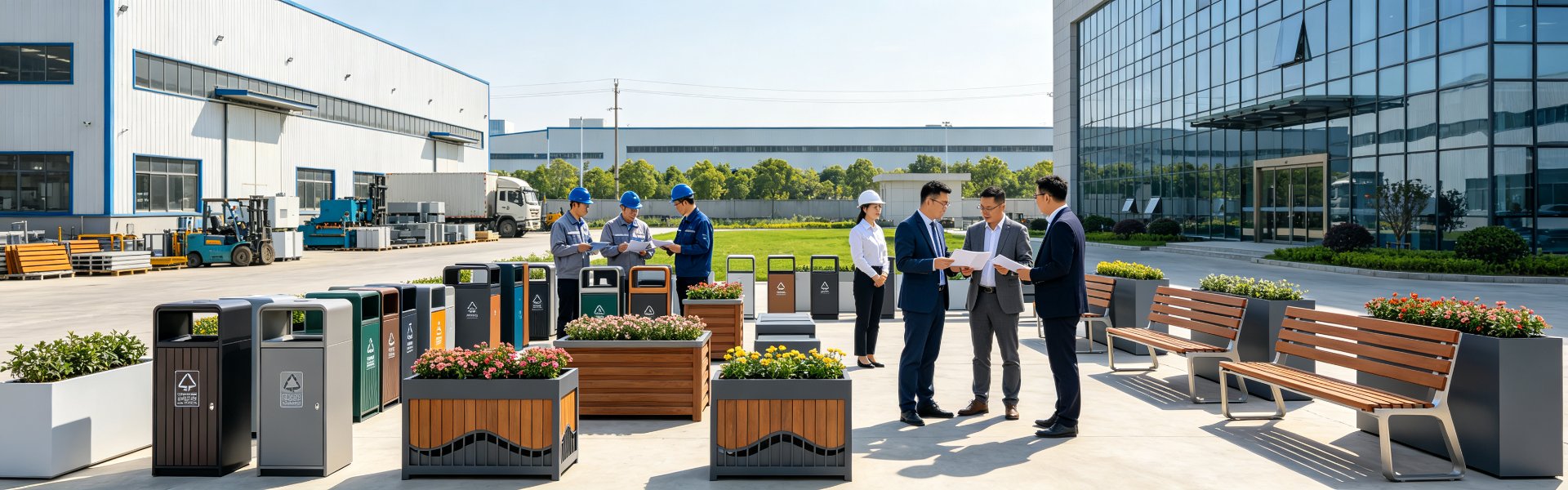
AOTUDE manufactures litter bins from 40 L street models to multi-stream 200 L+ sorting stations at our 20,000 m² factory in Foshan, China, sold factory-direct with OEM/ODM customisation of volume, aperture design, colour and branding. With MOQ from 50 pcs, powder-coated and galvanised steel construction, and a 5–10 year warranty on structural frames, we help municipal and commercial buyers build bin programmes that match real waste volumes instead of catalogue guesswork. Browse the full outdoor trash bin range or request capacity-planning support and a quotation for your next project at https://aotude.com.