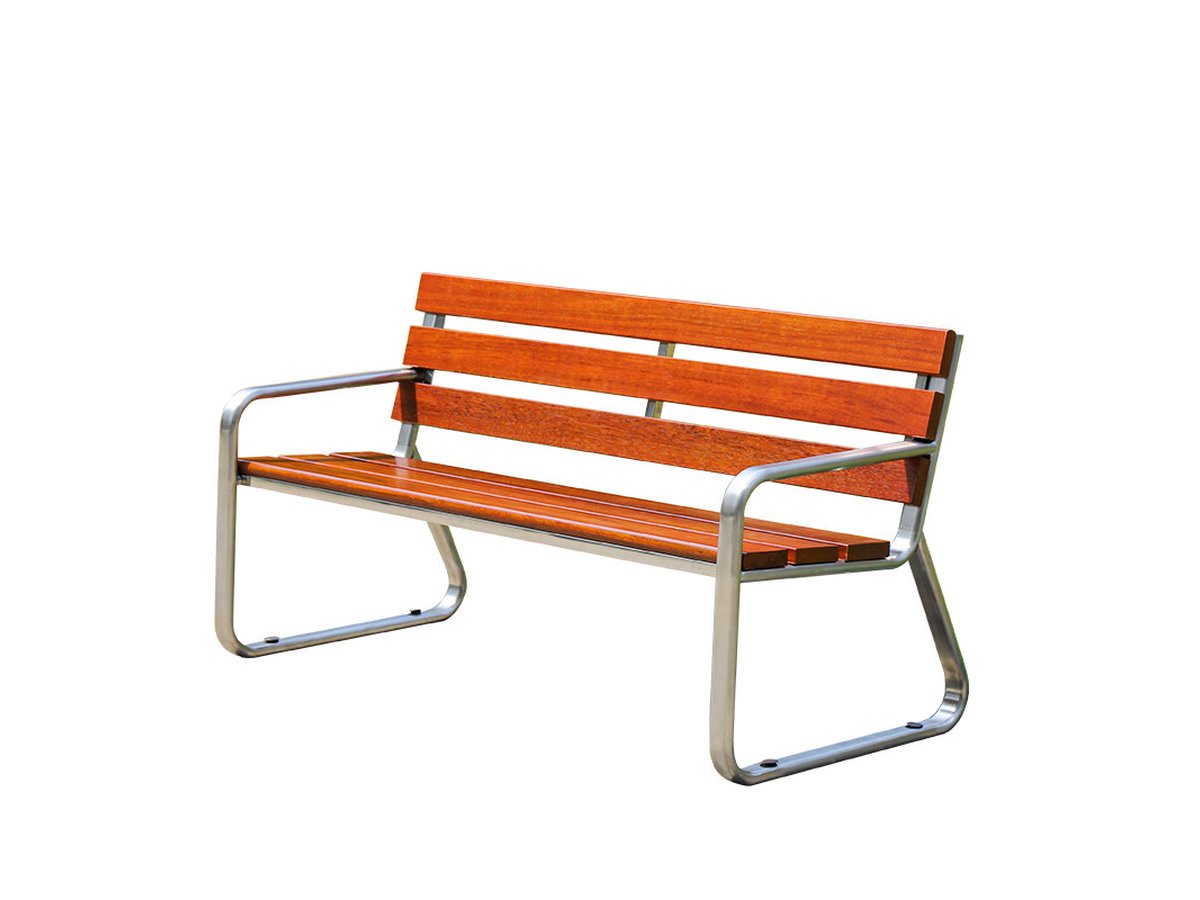
FSC-Certified Timber for Outdoor Furniture: How to Specify Responsibly Sourced Hardwood
2026-10-06 · 7 min read · By AOTUDE Furniture Team
Timber slats soften the look of every public space, which is exactly why hardwood has never left the site furniture specification. But the question municipalities ask about wood has changed. It is no longer only "is this species durable outdoors?" — it is now "can you prove where this timber came from?" FSC-certified timber for outdoor furniture has moved from a nice-to-have sustainability line to a scored criterion in public tenders across Europe, North America and Australia, and it is increasingly a legal requirement rather than a preference. For city procurement teams, landscape architects and contractors, understanding how Forest Stewardship Council certification actually works — and how it interacts with the EU Deforestation Regulation — has become part of basic furniture specification. This guide explains what the certificates cover, which documents to demand, and how to write a timber clause that is enforceable instead of decorative.
What FSC Certification Actually Certifies
The Forest Stewardship Council is an independent, international organisation that sets standards for responsible forestry. Two distinct types of certificate matter when buying outdoor furniture, and confusing them is the most common specification error:
- Forest Management (FM) certification applies to the forest itself. It verifies that the woodland is managed according to FSC principles: harvested volumes within regeneration capacity, protection of biodiversity and watercourses, respect for the rights of workers and indigenous communities.
- Chain of Custody (CoC) certification applies to every company that handles the wood after it leaves the forest — sawmills, component suppliers, furniture manufacturers, even trading companies. CoC traces material through the supply chain and separates certified from non-certified stock.
The practical consequence for a furniture buyer: your supplier almost certainly does not own a forest. What your supplier must hold is a valid chain of custody certificate, and it must cover the specific product category being sold. A manufacturer with CoC certification for indoor plywood can still be selling uncertified outdoor bench slats — the certificate has a scope, and the scope is what you audit.
FSC, PEFC and Claim Types: A Quick Comparison
FSC is not the only scheme. Programme for the Endorsement of Forest Certification (PEFC) endorses national certification systems such as SFI in North America. Most public tenders accept both, but they treat the labels differently:
| Scheme | Structure | Typical acceptance in tenders | Watch-outs |
|---|---|---|---|
| FSC | Global standard, three label types (FSC 100%, FSC Mix, FSC Recycled) | Highest; often named explicitly in European municipal specs | Check which label the invoice carries — "FSC Mix" means a controlled mix, not fully certified fibre |
| PEFC | Umbrella endorsing national schemes | Widely accepted, especially in continental Europe | Scheme quality varies by endorsing country; ask which national system backs the claim |
| Recycled claims | Post-consumer reclaimed timber or plastic lumber | Growing acceptance under circular procurement rules | Requires its own verification; "reclaimed look" is not a recycled claim |
A well-written clause simply requires "FSC or PEFC certified timber, chain of custody number stated on the invoice". That keeps competition open between compliant suppliers while keeping the paperwork enforceable.
Why Public Tenders Now Demand It
Three separate pressures have converged on the same line item:
- Procurement policy. The EU Timber Regulation and its successor rules, national green public procurement (GPP) criteria, and municipal sourcing policies in countries from the UK to Japan require or reward verified-legal and verified-sustainable timber. Public buyers increasingly score certified content, not just price.
- Green building ratings. LEED, BREEAM and similar schemes award credits for responsibly sourced materials. A landscape architect chasing credits for a civic project will specify FSC furniture because the certificate feeds directly into the building's documentation.
- The EU Deforestation Regulation (EUDR). From December 2025 for large operators, timber placed on the EU market must be shown to be deforestation-free and legally harvested, with geolocation data for the harvest plots and a due diligence statement filed by the importer. Furniture falls in scope. In practice, buying through certified chains makes EUDR compliance dramatically simpler, because the traceability homework is already structured.
The Paper Trail: Documents to Demand
Certification is only as good as the invoice trail. When the timber clause in your tender comes up for review, these are the documents that make it stick:
- A copy of the manufacturer's current CoC certificate, with the certifying body, licence code and expiry date visible — then verify it on the FSC or PEFC public database
- FSC or PEFC claim stated on order confirmations and invoices, not just on the sales brochure
- Product-level declaration that the slats in the delivered batch carry the claim — the claim applies per delivery, per invoice
- Species names with botanical names, so "teak" cannot quietly mean a lookalike
- For EU deliveries, the importer's due diligence reference under EUDR where applicable
One practical note: certification follows the paper, not the paint. If a manufacturer buys certified slats but runs them through a non-certified coating subcontractor outside a CoC-controlled process, the certified claim can break. Established manufacturers keep the whole slat process — milling, coating, assembly — inside their certified scope for exactly this reason.
Choosing the Species Behind the Certificate
Certification proves where the wood came from; it does not by itself prove the wood will survive outdoors. Pair the certificate with a durability specification. Standard-tested hardwoods used in site furniture include:
| Species | Natural durability class (EN 350) | Typical outdoor use | Notes |
|---|---|---|---|
| Teak | Class 1–2 | Premium benches, marine settings | High cost; verify genuine Tectona grandis |
| Ipe / cumaru | Class 1 | Heavy-traffic boardwalks and slats | Dense, hard on tooling; sourcing scrutiny essential |
| Oak (European) | Class 2–3 | Park benches, planters, bins | Good availability from certified European forests |
| Robinia | Class 1–2 (heartwood) | Playgrounds, natural-style furniture | Grows in European plantations; strong sustainability story |
| Acacia | Class 2–3 | Mid-range slats and bins | Cost-effective; demand correct botanical naming |
Species selection should also match the maintenance budget. Certified or not, every hardwood exterior needs an oiling and inspection cycle — the schedules differ by species, as covered in our hardwood slat maintenance guide. If low maintenance outweighs the natural-wood look in your brief, wood-plastic composite slats are the usual alternative, and the trade-offs are compared in our WPC vs hardwood analysis.
Common Pitfalls When Buying "Certified" Furniture
- Brochure certification, uncertified delivery. The certificate exists, but the specific batch ships without the FSC claim on the invoice. Make the claim a delivery condition.
- Expired or out-of-scope certificates. Check expiry dates and the certified product categories, not just the logo.
- "Plantation grown" as a substitute claim. Plantation origin alone is not a third-party verified claim; it is marketing language unless a scheme certifies it.
- Mixing certified and uncertified species in one product — a bench with certified slats and an uncertified frame can still be a problem if your clause covers all timber content.
- Ignoring the finish supply chain. For tender audits, ask whether coating and assembly happen within the certified chain of custody.
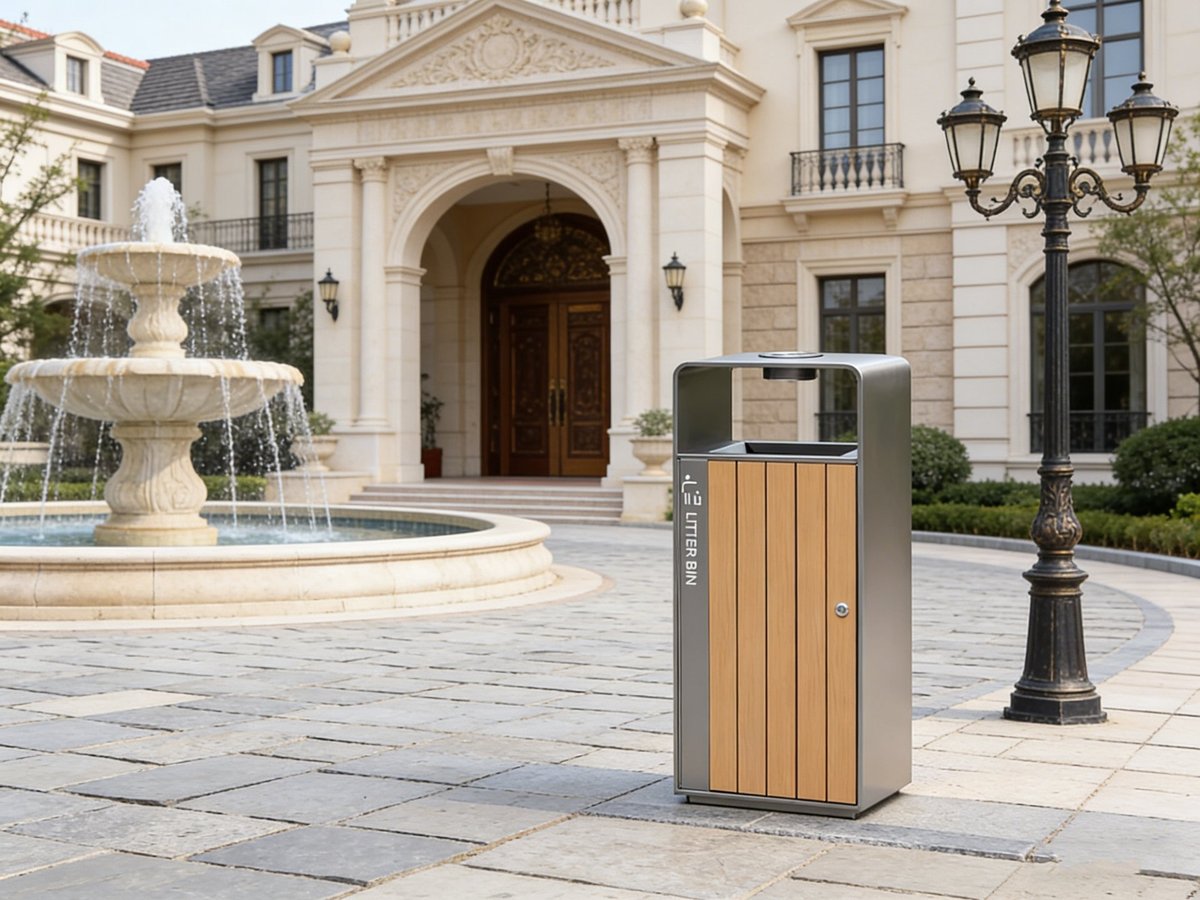
Sourcing Certified Timber Furniture from the Factory
AOTUDE manufactures park benches, litter bins, planters and site facilities at its 20,000 m² factory in Foshan, supplying municipalities, landscape architects and contractors in more than 40 countries on a factory-direct basis. For timber-specified projects, AOTUDE sources hardwood slats through certified supply chains with documented origin, pairs them with hot-dip galvanized steel structures and UV-stable powder coating, and provides the species, treatment and coating documentation your tender review requires — with full OEM/ODM support for custom profiles, dimensions and finishes. With a practical MOQ from 50 pieces, 5–10 year warranties on structures and coatings, and worldwide container shipping, AOTUDE makes responsible timber specification straightforward to buy. Browse the seating range, including wood-accented products such as the Timberline wood slat litter bin and the wider outdoor seating category, or request a certified-timber quotation at https://aotude.com.