Corten Steel Patina Timeline: How Weathering Steel Ages Outdoors
2026-10-02 · 6 min read · By AOTUDE Furniture Team
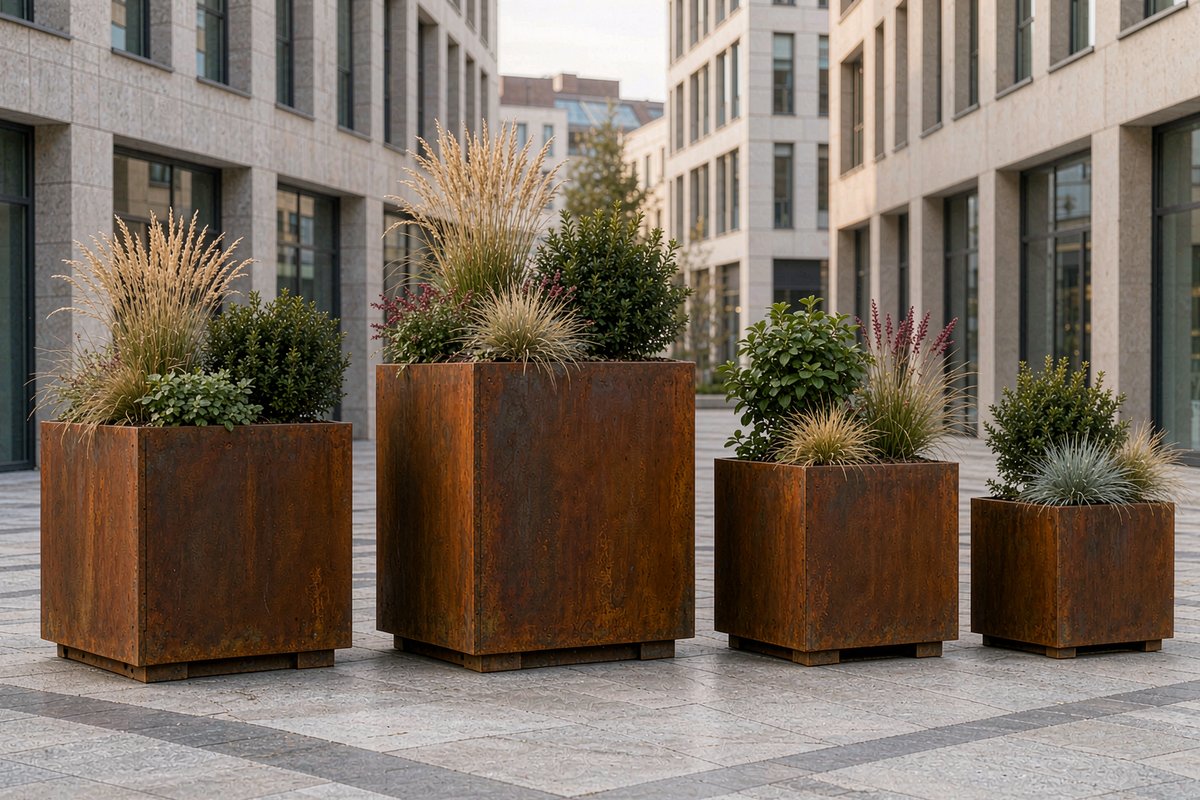
Corten steel (weathering steel) has become one of the most requested materials in landscape architecture, and almost every client asks the same first question: how long until it looks like the reference photos? The warm, rust-toned corten steel patina is not a paint finish — it is an oxide layer that forms naturally on the steel over months of exposure. Understanding the corten patina timeline matters for anyone specifying weathering steel outdoor furniture, because the appearance, runoff behaviour and even maintenance obligations of the product change during the first two years. This guide walks through what happens month by month, what accelerates or slows the process, and how to specify around the one issue that surprises buyers most: staining of adjacent surfaces.
What the Patina Actually Is
Weathering steels such as Corten A and Corten B contain small additions of copper, chromium, nickel and phosphorus. When these alloys cycle between wet and dry conditions, they form a dense, tightly adherent oxide layer instead of the flaky rust that ordinary carbon steel produces. Once mature, this layer is self-repairing: if it is scratched or chipped, new oxide forms at the damage point and the protection restores itself.
Two consequences follow from this chemistry:
- The protection is not complete on day one. Fresh weathering steel corrodes at close to ordinary steel rates until the patina densifies.
- The process needs repeated wet/dry cycles. Steel that stays permanently wet (or permanently bone-dry) develops a weaker, less stable layer.
This is why the first year of a corten bench or planter looks so different from its second and third year — and why the timeline below matters for project staging, photography and public communication.
The Corten Patina Timeline, Month by Month
The table below reflects typical behaviour in a temperate urban climate with moderate rainfall. Hot-humid coastal sites run faster; arid inland sites run slower. Treat it as a planning aid, not a guarantee.
| Stage | Typical appearance | What is happening | Practical implications |
|---|---|---|---|
| 0–2 weeks | Bright mill scale, blue-grey with orange blotches | First flash rust appears where rain hits | Do not schedule opening photos yet; protect adjacent paving |
| 1–3 months | Uneven orange-brown, streaky | Loose oxide forms; runoff staining risk is at its peak | Expect orange water marks on light concrete — plan wash-down access |
| 3–6 months | Deeper brown, less streaking | Oxide begins to densify between wet/dry cycles | Color still varies panel to panel; avoid sealing decisions yet |
| 6–12 months | Uniform dark brown, earthy tone | Patina matures; corrosion rate drops sharply | Site starts looking like the reference renders |
| 12–24 months | Deep chestnut, slightly textured | Layer stabilizes and becomes self-repairing | Runoff staining risk largely ends; no further action needed |
| 2 years + | Stable mature patina | Yearly cycles thicken the layer very slowly | Essentially maintenance-free in suitable climates |
For municipalities, the planning takeaway is simple: if a plaza opening, ribbon-cutting or photo shoot falls within six months of installation, either accept the "work in progress" look or choose pre-weathered material.
What Speeds Up — or Slows Down — Patina Formation
Site conditions dominate. When reviewing samples or setting client expectations, check the project against this list:
- Wet/dry cycling: regular rain followed by drying builds the best patina. Constant saturation (poor drainage, ground contact) keeps the layer loose and can shorten service life.
- Chlorides: within roughly one kilometre of a shoreline, salt prevents the patina from stabilizing. Coastal projects should generally not use bare weathering steel — powder-coated or galvanized systems are safer choices.
- Humidity and temperature: warm, humid climates accelerate the timeline; desert climates can leave the steel looking half-finished for years.
- Pollution: moderate urban SO₂ actually helps patina densification; very clean rural air slows it.
- Orientation and shading: north-facing, permanently shaded faces stay wet longer and patina unevenly.
Note that accelerated "pre-patinizing" treatments (acid, salt spray or proprietary solutions) exist and can deliver a mature look in days. The trade-off: accelerated layers are thinner and less adherent than naturally formed ones, so colour may continue to evolve — and early runoff staining still occurs. For municipal buyers, natural weathering before handover, where the schedule allows, usually produces the most stable result.
Runoff Staining: The Issue That Surprises Buyers Most
During the first year, rain washing over corten carries iron oxide particles onto everything below it. On light-coloured concrete, granite or limestone paving, this leaves orange-brown streaks that are genuinely hard to remove once baked in by sun and foot traffic. It is cosmetic, not structural — but it generates complaints.
Good specification prevents it:
- Detail drip edges and gap spacing so runoff discharges onto surfaces that tolerate staining (asphalt, dark aggregate, soil, planting beds).
- Keep the steel a few centimetres clear of paving where feasible; ground-level fixing details matter here.
- Where light paving is unavoidable, either pre-weather the units off site before delivery, or install temporary drip protection for the first wet season and clean affected joints early.
- Never allow water from corten surfaces to drain across coated or galvanized neighbours — staining crosses material boundaries.
Specifying Weathering Steel Furniture: A Buyer's Checklist
Before signing off a corten line item, confirm the following with your supplier:
- Correct grade and thickness: structural weathering grades (e.g. ASTM A588 / A606 Type 4 equivalents) with plate thickness suited to the product; thin sheet corners weather fastest.
- Sealed interiors on hollow products: planters and litter bins must have sealed inner basins or drainage, so soil moisture and litter moisture never sit against the steel.
- Fastener compatibility: stainless fixings; mixed galvanic contacts can cause staining rings.
- Runoff plan for the site: paving materials and detailing agreed with the landscape contractor, not discovered afterwards.
- Climate check: confirm the site is not within the coastal exclusion zone and has natural drainage.
- Realistic visual expectations: agree that the patina timeline runs 12–24 months, and document sample panels as the reference standard.
For a deeper material comparison — including where corten loses to powder-coated steel on cost and colour flexibility — see our guide on corten steel vs powder-coated steel for outdoor furniture. And because weathering steel is only one protective system among several, it is worth reading how hot-dip galvanizing extends outdoor furniture service life as the benchmark alternative.
Where Corten Fits in an AOTUDE Specification
AOTUDE manufactures weathering-steel and corten-toned site furniture at our 20,000 m² factory in Foshan, China, with full OEM/ODM support — from sealed-basin corten planters to pieces like the Corten Curve Hood Bin, where a weathering-steel hood band wraps a powder-coated drum to capture the corten aesthetic while keeping the high-wear zone easy to maintain. Buyers in this category can browse the full outdoor trash bin range to compare finishes side by side.
As a factory-direct supplier we offer MOQ from 50 pcs, custom dimensions and alloy options on request, and a 5–10 year warranty on structural frames. Whether you choose bare weathering steel with its natural patina timeline, or a pre-finished coating system for faster handover, our engineering team can review your site conditions, paving details and maintenance budget before you commit — contact AOTUDE at https://aotude.com for drawings, sample panels and a quotation.