
2026-09-22
WPC vs Hardwood Slats for Park Benches: A Buyer's Comparison Guide
Wood-plastic composite or hardwood slats for outdoor benches and seating? A practical B2B comparison of durability, cost, maintenance, thermal behavior and procurement considerations for municipal and landscape projects.
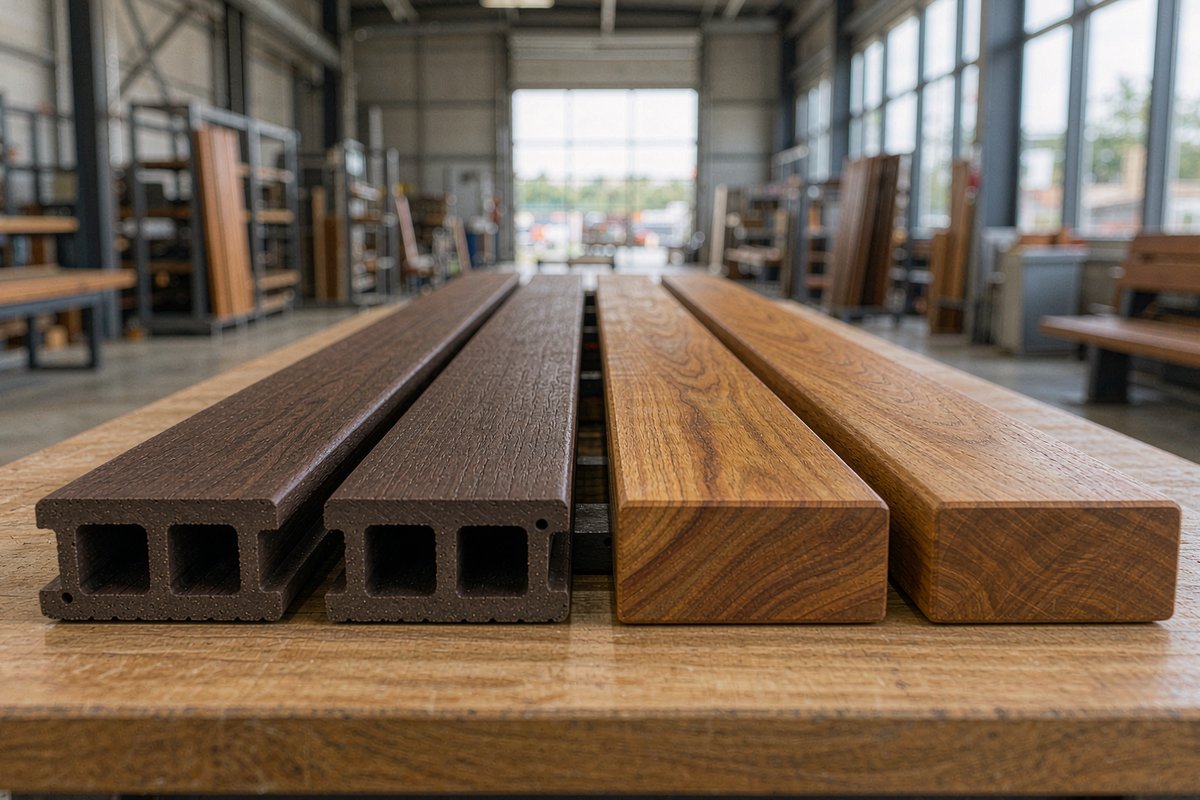
Walk through any newly delivered park furniture shipment and you will see two competing slat materials on the frames: wood-plastic composite (WPC) and hardwood. Both appear on municipal tenders, both look good on day one, and both are marketed as "low maintenance." Over a 10-year horizon, however, they behave very differently — and choosing the wrong one for your climate and budget shows up in maintenance line items within two years. This guide compares WPC and hardwood slats the way procurement teams, landscape architects and contractors actually need it: durability, cost, upkeep, comfort and sourcing.
What Each Material Actually Is
WPC (wood-plastic composite) is an extruded blend of wood fiber (typically 50–60%) and polymer (HDPE or PVC) with UV stabilizers and pigments. It is produced in continuous profiles with consistent dimensions, and quality WPC for site furniture uses hollow-chamber or solid co-extruded profiles with a protective outer layer.
Hardwood slats for outdoor furniture usually mean FSC-certified teak, ipé, balau, acacia or oak, cut from solid timber and finished with oil or left to silver naturally. Hardwood's appeal is authentic grain, repairability and a premium tactile quality that composites still struggle to match.
Comparison at a Glance
| Factor | WPC slats | Hardwood slats |
|---|---|---|
| Initial cost | Moderate, stable pricing | Higher; prices fluctuate with timber markets |
| Water absorption | <1%, no rot or splitting | Absorbs moisture; swells or cracks if species is wrong |
| Maintenance | Wash with water; no oiling | Oiling every 12–24 months in most climates |
| Lifespan (public use) | 10–15+ years | 10–20+ years for teak/ipé; far less for softwoods |
| Splinters / cracks | None | Possible on edges and fixings over time |
| Color range | Any RAL-matched tone | Natural tones only (stains fade) |
| Thermal comfort | Hotter surface in full sun | Stays cooler |
| Repairability | Replace full profile | Sand, refinish, spot-repair |
Where WPC Wins
- High-vandalism and zero-maintenance sites: transit hubs, school campuses, roadside rest areas where no one will oil a bench annually
- Coastal and wet climates: WPC does not rot, and quality profiles resist salt spray without any coating
- Brand-color requirements: city branding programs that need a specific color can match it in WPC, which hardwood cannot offer
- Consistent procurement: extruded profiles arrive dimensionally stable, so bolt holes line up batch after batch — a real advantage for phased municipal orders
Where Hardwood Wins
- Signature and heritage landscapes: nothing reads "premium" like genuine teak grain in a botanical garden or historic square
- Thermal comfort in hot climates: solid timber stays noticeably cooler than dark WPC in direct summer sun — a genuine comfort issue for full-sun plazas
- Repair economics for large inventories: existing hardwood stock can be sanded and refinished rather than replaced
- Sustainability narratives: FSC-certified hardwood supports a documented responsible-timber story
The Specification Details That Decide Everything
Material choice matters less than specification discipline. For either material, verify:
- WPC profile quality — insist on UV-stabilized, co-extruded (ASA or HDPE outer layer) profiles; cheap single-layer WPC chalks and fades within 2–3 years
- Steel frame compatibility — WPC moves slightly with temperature, so fixing holes must allow for expansion; galvanized or stainless hardware is mandatory for both materials
- Hardwood certification — ask for FSC/PEFC chain-of-custody documents, not just verbal "certified timber" claims
- Slat thickness — 20–24 mm minimum for public seating in either material; thinner slats flex and crack at fixings
- Drainage gaps — 8–10 mm spacing between slats so water never pools on the seat
Cost Over 10 Years
A realistic budget model for 100 benches in a temperate municipal network:
- WPC + galvanized steel frame: higher purchase price than softwood, but near-zero maintenance for a decade. Total 10-year cost is typically 30–50% lower than any option that requires annual recoating
- Teak: highest upfront cost, lowest maintenance within the hardwood family
- Untreated softwood: cheapest invoice, most expensive decade — expect replacement, not maintenance
The pattern we see across export projects: WPC suits quantity-driven, maintenance-light municipal procurement, while hardwood suits design-led projects with dedicated grounds staff.
Sourcing Both from One Factory
For importers and contractors, the practical question is supply. AOTUDE, a factory-direct outdoor furniture manufacturer in Foshan, China, produces park benches and seating in both WPC and FSC-certified hardwood options, with hot-dip galvanized + powder-coated steel frames, OEM/ODM customization from 50 pcs per SKU, and 5–10 year structural warranties. Requesting slat samples of both materials before awarding a tender takes one week and prevents the most common — and most expensive — material mismatch. Learn more at https://aotude.com.
Bottom line: choose WPC for volume, color flexibility and near-zero upkeep; choose hardwood for premium landscapes where authentic grain and cooler surfaces justify the care it needs. Specify the details above, and either material will serve the public comfortably for a decade or more.