Solar Bench Adoption: What Municipalities Should Know Before Specifying PV-Powered Street Seating
2026-10-05 · 6 min read · By AOTUDE Furniture Team
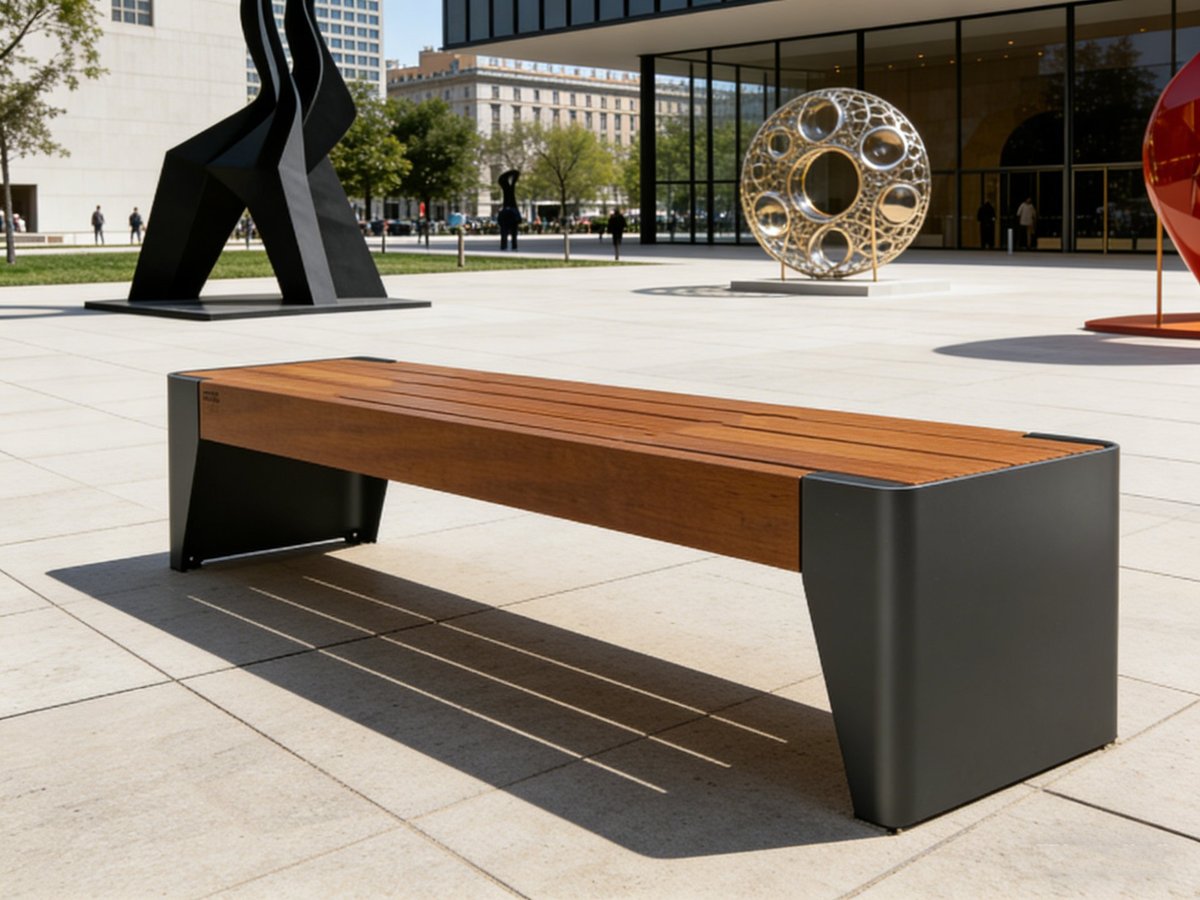
Five years ago, a solar bench was something you photographed at a smart-city expo. In 2026 it is something you write into a park tender. Falling photovoltaic and battery costs, the growth of device-charging expectations in public space, and the simple fact that trenching electrical cable across a park can cost more than the furniture itself have pushed solar bench adoption into the mainstream of municipal procurement. For city planners, landscape architects and contractors evaluating this category for the first time, the technology is straightforward — but the difference between a bench that performs for a decade and one that becomes a maintenance liability lies entirely in the specification details. This guide explains how solar-powered street seating works, where it genuinely pays off, and which checks to run before the purchase order goes out.
Why Solar Benches Are Entering the Specification
Three forces are converging, and each one alone would justify a pilot:
- Off-grid economics. Bringing mains power to a remote lawn, trailhead or riverside path means trenching, ducting, cabling and reinstatement — costs that routinely reach into five figures per run. A self-contained PV bench eliminates the entire civil works package.
- User expectations. Public seating now competes with the "third place" experience of cafés. USB-C charging at the seat measurably increases dwell time in plazas, campuses and transit waiting areas — which is precisely what most public-realm briefs ask for.
- Sustainability reporting. Cities with carbon-reduction targets find it easier to defend a bench that generates its own energy than one that quietly draws from the grid for exterior lighting.
The trend mirrors what is happening across smart street furniture: as our 2026 urban furniture trends overview noted, the technology is no longer the story, and the specification discipline around it is. Solar seating is the seating-side twin of the solar-compacting and IoT litter bins now appearing in municipal waste frameworks — same off-grid logic, same rule that the body must outlive the electronics.
What a Solar Bench Actually Contains
Strip away the marketing and a PV bench is five subsystems. Understanding each one tells you where quality is won or lost:
| Component | Typical specification | What goes wrong in cheap versions |
|---|---|---|
| PV panel | 30–100 W mono- or polycrystalline, tempered glass, flush-mounted in the canopy or backrest | Low-efficiency panels shaded by their own housing; glass that clouds within two seasons |
| Battery | LiFePO4 300–1000 Wh, rated for 2000+ cycles | Lead-acid or unlabeled cells that die after one winter; no low-temperature protection |
| Charge controller | MPPT with overcharge, over-discharge and short-circuit protection | Bare-bone PWM boards with no thermal cutoff |
| Outputs | 2–4 USB-A/USB-C ports, IP-rated covers, optional LED area light under the canopy | Ports that fail at the first jet-wash; lighting that drains the battery overnight |
| Housing | Galvanized steel frame, UV-stable powder coating, sealed electronics compartment | Electronics accessible with a screwdriver; coating thinner than 60 µm |
The structural parts — frame, slats, coating — should meet exactly the same standard you would demand of any long-life street furniture. The electronics are the module with the shorter life; the bench is the platform.
Where Solar Seating Pays Off — and Where It Does Not
Run every candidate site through this filter before committing budget. Solar benches deliver real value when:
- Trenching for power is prohibitively expensive — the further from existing infrastructure, the stronger the business case
- Footfall is high and dwell time is long: transit interchanges, university campuses, hospital grounds, waterfront promenades, event lawns
- Sunlight is reliable — a south-facing (northern hemisphere) position with six or more effective sun hours; deep and permanent shade is a disqualifier
- The operator has a maintenance route that can include occasional panel cleaning and a battery replacement cycle
They are usually a poor investment when sites are heavily shaded by tree canopy, when vandalism risk is extreme and the housing is not engineered for it, or when nobody has budgeted for the battery's end-of-life replacement in year five to seven. A solar bench in permanent shade is an expensive conventional bench with extra failure points.
Sizing the Power: A Reality Check on Loads
The most common specification error is oversizing ambition and undersizing the battery. Typical consumption looks like this:
| Load | Draw | Realistic daily demand |
|---|---|---|
| Phone charging (4 ports, mixed use) | 10–20 W peak | 60–150 Wh |
| LED area light, dusk-to-dawn | 5–15 W | 40–120 Wh |
| Wi-Fi hotspot or small display | 10–30 W continuous | 240–720 Wh |
| Environmental sensor only | < 1 W | 10–20 Wh |
Charging plus evening lighting fits comfortably in a 500 Wh-class system on a well-sited panel. Continuous connectivity — Wi-Fi, displays, advertising screens — belongs on grid power, not on a bench-sized battery. Cities that ask a PV bench to run a screen end up with dark hardware by February. Specify the loads first, then size the panel and battery against the worst month of the year at the site's latitude, not the annual average.
Durability and Vandalism: The Part Most Pilot Projects Underestimate
A solar bench is a small power station left unattended in public. Plan for it:
- Electronics must be inaccessible without tools, behind locked, concealed fasteners — ideally inside the frame rather than bolted to it
- Panels should be flush-mounted under a metal edge, not proud of the surface where a pry bar finds purchase; tempered, laminated glass survives far more than thin plastic covers
- IP65 sealing minimum on ports and enclosures — benches get jet-washed, flooded and dusted
- Mechanical fallback: when the battery ages out, the seat must remain a perfectly good bench. Electronics should never be structural
- Cable routing through the frame, not through exposed conduit that invites tampering
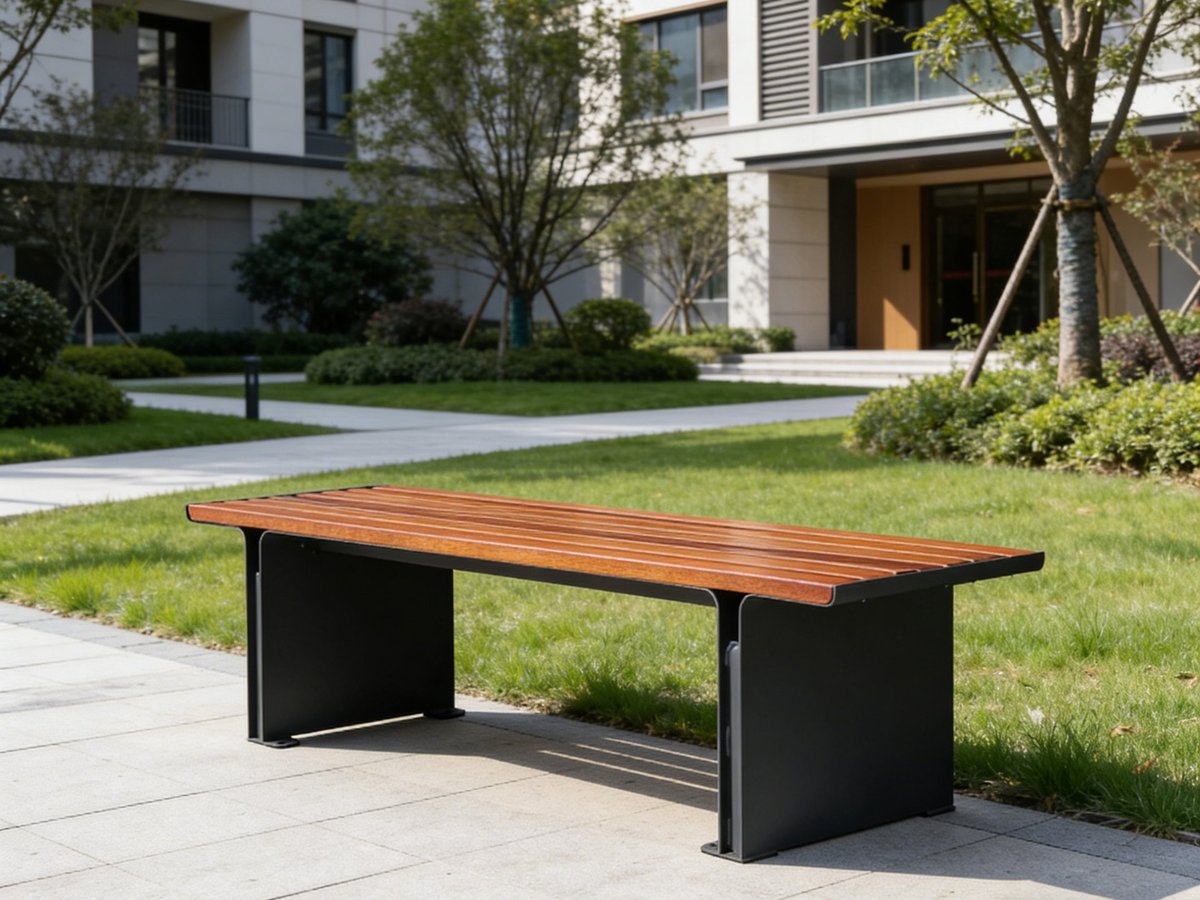
This mirrors the specification logic for any connected street furniture: body first, electronics second. A PV module can be replaced in an afternoon; a corroded frame cannot. That is why the seating platform itself — browse the outdoor seating category for the current range — should be chosen to the same structural standard as a flagship steel street bench, with the solar package treated as an integrated module on top.
Specification Checklist Before You Order
- Panel wattage and battery capacity stated for the worst sun month at your latitude
- LiFePO4 chemistry with documented cycle life and a low-temperature charging cutoff
- Separate warranties: 5–10 years on structure and coating, a defined term on electronics
- IP65+ rating on all ports, connectors and the electronics compartment
- Tamper-resistant, tool-locked access to all electronics
- Spare-parts availability for charge controllers and USB modules — electronics will need service before the frame does
- A mechanical fallback: the bench works as a bench with the electronics removed
Sourcing Solar-Ready Seating from the Factory
AOTUDE manufactures park benches, litter bins, planters and site facilities at its 20,000 m² factory in Foshan, supplying municipalities, landscape contractors and distributors in over 40 countries on a factory-direct basis. For solar bench projects, AOTUDE supplies smart-ready seating platforms — hot-dip galvanized steel structures with clean internal cable routing, weather-sealed electronics compartments and tamper-resistant hardware — engineered to integrate the PV panels, batteries and charging modules your system partner specifies, with full OEM/ODM support for custom dimensions, colors and branding. With a practical MOQ from 50 pieces, 5–10 year warranties on frames and coatings, and worldwide container shipping, AOTUDE turns solar bench adoption from a pilot gamble into a repeatable procurement line. Explore the seating range or request a solar-ready specification at https://aotude.com.