Bench Slat Replacement: A Retrofit Guide for Timber Slats
2026-11-06 · 8 min read · By AOTUDE Furniture Team
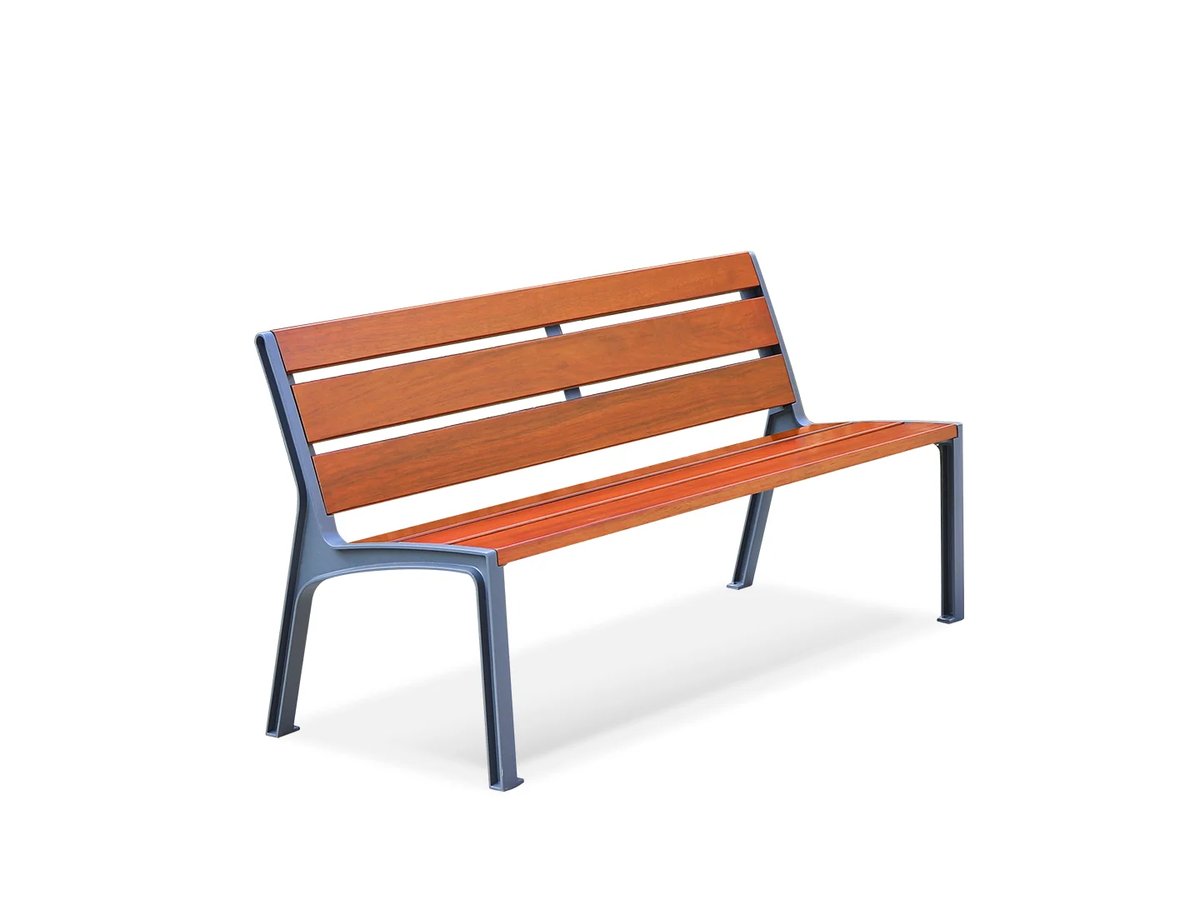
On almost every park bench we inspect, the frame outlives the seat. A galvanized or powder-coated steel frame routinely reaches fifteen to twenty years of service, while the timber slats bolted to it are usually the first component to fail — split at the screw line, cupped along the grain, bleached grey and checked, or missing entirely after a vandalism event. Replacing the whole bench because the boards have gone is one of the least efficient decisions a parks department can make. A structured bench slat replacement programme keeps the structural asset, cuts capital spend, and usually delivers the work with a two-person crew and hand tools. This guide covers the decisions that determine whether a timber slat retrofit lasts another decade or fails within two winters: how to assess condition honestly, what to measure before you order, which fixing method suits which frame, and how to phase the work across a whole estate.
Why Slats Fail Before Frames Do
Timber is the exposed, thin, repeatedly wetted component in the assembly. Slats take direct rain on the top face, hold water in the gap between boards, dry from one side only, and are penetrated by fasteners that create stress concentrations along the grain. Add ultraviolet light, freeze–thaw cycling and mechanical abuse, and the failure sequence is predictable: surface greying, then checking at the ends, then water ingress at the screw holes, then splitting along the fixing line, then movement and looseness.
Frames fail differently and far more slowly. If the coating system is intact and the base plates are above standing water, a steel frame is usually still serviceable when the third generation of slats is being fitted. Our hardwood slat maintenance guide covers the oiling and inspection routine that extends slat life in the first place; this article assumes that routine has been run and the decision to replace has already been taken.
Condition Assessment: Decide Per Slat, Not Per Bench
The most common procurement error is treating a bench as a single pass/fail item. In practice, slats fail at different rates depending on orientation, shading, drainage and how heavily the bench is used. A three-tier assessment lets you replace only what is genuinely finished and keeps a defensible record for budget arguments.
| Defect observed | Threshold worth acting on | Recommended action |
|---|---|---|
| Surface greying, no fibre loss | Cosmetic only | Clean and re-oil, no replacement |
| End checking, cracks under 2 mm | Stable | Monitor at next inspection; treat end grain |
| Splits running through a fixing hole | Any length | Replace that slat — the fixing has lost purchase |
| Cupping or twist over 3 mm across the width | Visible rocking underfoot or seating discomfort | Replace |
| Rot or soft fibre at the ends | Probe with a knife, soft to 5 mm depth | Replace |
| Fixings spinning or pulling out | Thread stripped in timber | Replace slat and upgrade the fixing detail |
| Missing or stolen slats | Any | Replace with security fixings, review the whole run |
Record the result as a slat count per bench rather than a bench count. A typical 1.8 m backrest bench carries five seat slats and four back slats; knowing you need 60 seat slats and 40 back slats across a site is what allows a single production run instead of ten small orders.
Measure the Frame Before You Measure the Slat
Replacement slats are matched to the frame, not to the old board. Old timber has shrunk, cupped and been re-drilled, so using it as the template quietly builds the previous error into the new set. Capture the following on site, per bench model:
- Frame centres and slat length — measure the clear span between the frame uprights, then add the intended end overhang (usually 5–15 mm per end).
- Slat profile — depth × width, not nominal "2×4". Common profiles are 40 × 40 mm, 45 × 45 mm and 30 × 70 mm; a 2 mm difference in width changes the gap and the visual rhythm of the whole bench.
- Fixing pitch — centre-to-centre distance of the holes in the frame, and whether the frame uses drilled through-holes, welded lugs, or slotted channel.
- Available depth under the seat — this determines whether a bolt-head or a clip can be used without fouling the frame.
- Frame condition — rust at the slat contact line, deformation of slat supports, and whether the base plates are still sound. A slat retrofit on a distorted frame will rattle from day one.
Photograph each model with a tape measure in frame. Two or three reference photos per model will save an entire site visit when the order is queried three months later.
Choosing the Fixing Method
The fixing detail, not the timber species, decides how long the retrofit stays tight. Three approaches dominate:
| Fixing method | How it works | Best for | Watch out for |
|---|---|---|---|
| Through-bolt with dome or countersunk head | Bolt passes through slat and frame web, nut and washer behind | Heavy-use civic benches, vandal-prone sites | Exposed head is a lever point; needs a washer to spread load |
| Concealed screw from below into slat | Coach screw up into the slat through a frame lug | Clean appearance, public plazas | Slat must be thick enough for screw depth; water traps at the lug |
| Clip or bracket system | Stainless or aluminium clip grips the slat, screwed to frame | Fast slat-by-slat replacement, mixed profiles | Clips must match the profile exactly; grit jams the clip channel |
Whichever you choose, three details are non-negotiable. Use stainless fasteners of the correct grade for the environment — 304 is adequate inland, 316 where chlorides are present, as set out in our stainless steel grades guide. Isolate stainless from aluminium or bare steel with a nylon or EPDM washer to avoid a galvanic couple at the wettest point in the assembly. And drill fixing holes oversized by 2 mm so the timber can move; a slat clamped rigidly will split at the hole within a season.
Leave a 3–5 mm expansion gap at each end of every slat, and keep the gaps between slats uniform — a consistent 8–15 mm reads as a designed rhythm, while irregular gaps look like a repair job and collect debris. Fit slats with the crown (bark side) up so the board cups away from standing water rather than pooling it.
Hardwood or WPC for the Replacement Set
Both materials are viable for a timber slat retrofit, and the choice should follow the maintenance regime the site can actually sustain rather than the lowest unit rate. Natural hardwood — ipe, accoya or a good certified teak substitute — takes an oiled finish, feels warm, and can be sanded and refinished in place. It needs re-oiling every 12–24 months. Wood-plastic composite slats need no oiling, resist graffiti cleaning chemicals better, and hold colour, but they are heavier, less stiff over long spans, and cannot be sanded back if scratched. Our comparison of WPC versus hardwood slats sets out the trade-offs in detail; the practical rule is that a site with an active maintenance crew and a shading canopy suits hardwood, while an exposed coastal or high-vandalism site usually suits composite.
Do not mix the two materials in one bench. They move differently, weather differently, and the visual mismatch is the first thing the public notices.
Phase the Work, Don't Replace Everything at Once
A retrofit programme run bench by bench, each on its own small order, is expensive and slow. Group the estate by frame model, order each model's slat set in one production run, and repair in batches of ten to twenty benches so that a park is never fully out of service. Keep a small buffer of pre-drilled slats in store — roughly five per cent of the run — to cover vandalism between maintenance cycles.
Where the frame is sound but the fixings have stripped, replace the fixing detail rather than the slat. A stainless hanger bolt and a fresh 8 mm hole in sound timber will outlast a reused screw in an enlarged hole every time.
Handover Checks
Before signing off a batch, verify: every slat sits flat with no rocking; gaps are uniform and free of swarf; all fasteners are the specified grade and torqued consistently; end gaps allow movement; the frame has been spot-primed at any scratches exposed during fitting; and the bench is clean of timber dust that would stain paving in the first rain. Photograph a completed bench of each model as the reference standard for the rest of the programme.
Sourcing Replacement Slat Sets
AOTUDE manufactures outdoor furniture and replacement slat sets from our 20,000 m² factory in Foshan, selling direct to municipalities, landscape architects and contractors. We cut slats to your measured profile and fixing pitch, supply stainless fasteners matched to your environment, and offer hardwood and composite options for the same frame. Per-model MOQ starts from 5 pcs, with most models at 20 pcs and custom runs from 50 pcs — which is what makes a model-by-model retrofit programme practical rather than a single bulk order. OEM and ODM work is available for frame-specific profiles, and finished furniture carries a 5–10 year warranty. Send us your measurements and a photo of the frame at aotude.com and we will quote the slat set; browse the full park bench range for reference profiles, including the cast-leg hardwood bench whose slat detail is typical of the frames we supply replacements for.