Public Planter Refits: Soil Media Replacement and Replanting Cycles
2026-11-16 · 9 min read · By AOTUDE Furniture Team
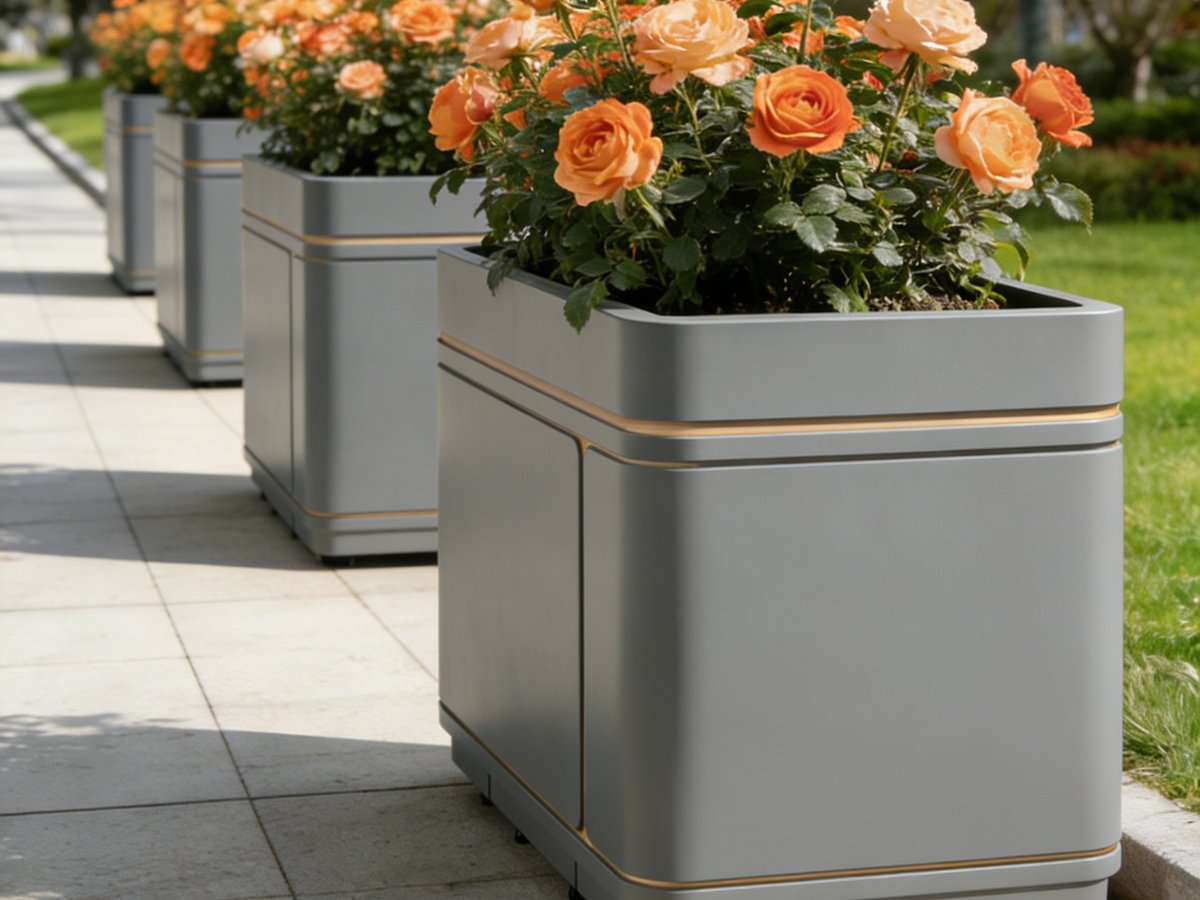
Most public planters fail twice. The first failure is the one everybody notices — the planting dies and the container stands empty for a season. The second failure is quieter and much more expensive: the planting is replaced on top of the same exhausted soil media, so the new plants struggle, the irrigation runs longer, and the refit has to be repeated 18 months later. Public planter maintenance is not a planting problem dressed up in horticultural language; it is a substrate problem, and the refit cycle that municipal grounds teams and landscape contractors plan around is really a soil replacement cycle.
This guide covers how to tell when a planter needs a full media refit rather than a spot amendment, what a replacement mix should contain, how to sequence the work around public use, and how container construction decisions made years earlier determine whether a refit takes two days or two weeks.
Why Planters Degrade From the Inside Out
A planter on a plaza, street or rooftop is a closed, heavily loaded, frequently irrigated root environment. Nothing about it behaves like open ground. Four processes run simultaneously, and each one gets worse the longer the container stays in service.
Compaction and fines migration. Irrigation water carries silt and organic fines downward through the profile. They accumulate at the interface with the drainage layer, sealing it, while the upper profile compacts under root pressure and watering. Hydraulic conductivity of the media can drop by an order of magnitude within three to four seasons.
Organic matter burn-off. The compost fraction that gave the mix its structure and water-holding capacity mineralises. What was 20–30% organic content by volume becomes a dense mineral mass that holds water at the surface and repels it a centimetre down — the classic "hydrophobic crust" that makes crews believe the planter is dry when the root zone is saturated.
Salt accumulation. De-icing salt, irrigation water with elevated hardness, and fertilizer salts all concentrate because there is no leaching path to subsoil. Electrical conductivity climbs, leaf margins scorch, and salt-sensitive species decline first — usually the ornamental ones that carried the design intent.
Root binding. Even in a large container, a shrub that has been in place for six or seven years fills the available volume with woody root. There is no scope for the root system to extend, so every drought hits harder than the last.
The visible symptom — dead plants — appears last. By the time the planter looks tired, the substrate has usually been failing for two seasons.
Diagnose Before You Dig: Refit or Amend?
Not every tired planter needs a full replacement. A structured diagnosis separates a two-hour amendment from a two-day refit, and it protects the maintenance budget from being spent on the wrong intervention.
| Symptom on site | Most likely cause | Right intervention |
|---|---|---|
| Water ponds on the surface for more than a few minutes | Crusting, hydrophobic surface, or sealed drainage layer | Full media replacement |
| Media pulls away from the container wall, gap at the rim | Shrinkage from organic loss and drying | Full media replacement |
| Plants wilt between irrigation cycles despite scheduled watering | Root binding or compacted profile | Replace media and root-prune or replace specimens |
| White salt crust on the rim and surface | Accumulated salts, no leaching | Leach heavily first; replace if crust returns within a season |
| Drainage outlet stains or efflorescence on paving below | Fines blocking the outlet or geotextile | Clear outlet, replace drainage layer, inspect media |
| One plant failing, neighbours healthy | Localised root disease or mechanical damage | Spot amendment and specimen replacement |
| Planting healthy but container coating failing | Coating damage at the base or rim | Container refurbishment, media can stay |
The rule of thumb used by many grounds teams: if two or more structural indicators (ponding, shrinkage gap, root binding) are present, the planter is due a refit regardless of how the planting looks.
Specifying the Replacement Mix
Replacement media is where refits are won or lost, and it is the part most often left to "whatever the supplier delivers". A public planter mix has to do four jobs at once: drain freely, hold enough water for a week between visits, resist compaction, and stay structurally stable for five years. That combination is not a generic topsoil.
A workable specification for large street and plaza planters, expressed as a proportion of total volume:
| Component | Share by volume | Function | Watch for |
|---|---|---|---|
| Structural aggregate (coarse sand, fine gravel or lightweight aggregate) | 40–55% | Keeps pore space open, resists compaction | Gap-graded material that still packs |
| Mineral loam or subsoil | 25–35% | Root anchorage, nutrient reserve | Clay content above about 20% |
| Mature compost | 15–25% | Structure, biological activity, water holding | Immature compost that keeps shrinking |
| Slow-release base fertilizer | per supplier rate | Establishment nutrition | Over-application on salt-sensitive species |
Two numbers belong in the tender documents alongside the mix: bulk density and hydraulic conductivity. Specifying them costs nothing and prevents the most common substitution — a heavier, cheaper, denser mix that looks identical in a photograph and waterlogs by the second winter. Ask for the test results, not the description.
Whatever mix is selected, it should be installed at a level that leaves 25–50 mm of freeboard below the rim. Filling to the rim looks generous on handover day and guarantees soil spill onto paving at the first heavy rain.
The Refit Sequence
A refit that runs in the right order takes a crew two to three days for a typical streetscape run. Run out of order and the same job stretches across two weeks of return visits.
- Isolate and protect. Barricade the container, protect adjacent paving, and confirm the work does not block a pedestrian route or an accessible path of travel.
- Remove planting and media. Lift shrubs whole where they are being retained; otherwise cut and bag green waste separately from media, because the two waste streams are handled by different contracts.
- Inspect the container, not just the soil. This is the moment to find coating damage, rust at the base, failed sealant at the outlet, distorted rims and loose lifting anchors — all of it is far cheaper to fix with the container empty.
- Clear and rebuild drainage. Remove the old geotextile, clear the outlet, replace the drainage aggregate, and reinstate a fresh filter fabric. Never reuse fabric that has blinded over.
- Refill in lifts. Place media in 200–300 mm layers and settle each one with water, not with foot traffic. Compaction by boot is how a well-specified mix becomes a poorly drained one.
- Replant to a structure plan. Set the permanent structural planting first, then seasonal colour around it.
- Mulch to 50–75 mm with a coarse, inorganic or well-composted mulch that will not float or blow out of the container.
- Recommission irrigation. Flush lines, check emitter output at the furthest head, and reset the schedule for a new, uncompacted profile — the old run times are now too long.
- Record the refit. Media specification, volume, planting list and date belong in the asset record. The next refit cycle depends on it.
How Container Design Affects Refit Cost
Two planters of identical appearance can have completely different lifetime maintenance costs, and the difference is visible only when the container is empty.
- Drainage outlets sized and positioned for a 20-year service life, not for a drainage-rate calculation on a drawing.
- Removable or liftable access to the drainage layer — a bolted base panel or a generous outlet — turns a media excavation into a manageable job.
- Coating continuity into the base and over the rim. Chipped rims and unprotected base edges are where refits turn into container replacement.
- Internal liner systems that can be lifted out with the root ball intact where root binding is expected.
- Leveling and lifting provisions so a container can be reset after settlement without being demolished.
Public planter maintenance budgets are set by access, not by horticulture. A container that cannot be emptied efficiently will be refitted late, badly, or not at all.
Planning the Cycle
Refit intervals are driven by exposure and irrigation intensity far more than by plant choice:
| Situation | Typical refit interval | Main driver |
|---|---|---|
| Irrigated plaza planters, moderate climate | 5–7 years | Organic matter loss, compaction |
| Streetscape planters with winter de-icing salt nearby | 3–5 years | Salt accumulation, drainage sealing |
| Rooftop or podium planters, exposed and wind-loaded | 4–6 years | Media loss, surface crusting, drying |
| Seasonal bedding displays changed twice a year | 2–3 years | Repeated disturbance, structure collapse |
| Low-maintenance structural planting, no irrigation | 7–10 years | Slow compaction, root binding |
Two operational habits stretch those intervals considerably. First, top up rather than top dress: replacing 50–75 mm of spent surface media each spring restores infiltration without a full refit. Second, keep de-icing salt away from planter rims and flush the profile once after the last salting event of the season.
A Refit Checklist for Grounds Teams
- Confirm the diagnosis: ponding, shrinkage gaps and root binding are structural, not cosmetic.
- Empty and separate green waste from spent media before leaving site.
- Inspect container coating, base edge, outlet and lifting points while empty.
- Replace the filter fabric every refit — never reuse.
- Specify media by bulk density and hydraulic conductivity, and ask for test results.
- Keep 25–50 mm freeboard below the rim.
- Settle each lift with water, never with compaction.
- Mulch 50–75 mm and keep mulch clear of irrigation heads.
- Reset irrigation run times for a new profile.
- Log media spec, planting list and date in the asset record.
Containers Built to Be Refitted
AOTUDE manufactures steel, aluminium and GFRC planters in Foshan with refit cycles in mind: continuous sealed welds, coating continuity into the base, drainage details that can be serviced from outside, and leveling provisions that survive settlement. Because we supply direct from our 20,000 m² factory, specification changes — different outlet positions, larger volumes, lifting anchors, custom colour and powder-coat finish — are handled as normal production rather than as special projects, and OEM/ODM work is routine.
Per-model MOQ starts from 5 pcs for most catalogue planters, with 20 pcs typical per model and custom runs from 50 pcs. Every unit carries a 5–10 year warranty against manufacturing defects in structure and coating. If you are specifying planters for a streetscape or plaza programme and want the maintenance cycle designed in from the start, send us your drawing and quantities — we will come back with a specification review and a quotation.
For the design-side decisions that determine how a planter performs in service — drainage layers, outlet details, irrigation options and winter behaviour — see our planter drainage and irrigation guide. If you are combining seating with planting, the bench-planter integration guide covers layout and structure. The full container range, including the Lumen street planter, is listed under outdoor planters.