
MOQ
Per-model, from 5 pcs
Lead time
Confirm with sales (production + sea freight)
Quality & testing
ISO 9001 process, CMA/CNAS test reports on request
Trade terms
FOB / CIF, 30% deposit
Commercial bike racks and vehicle-protection bollards are the two pieces of street furniture that get specified last and fail first. A rack that only supports one wheel damages frames; a bollard that is surface-fixed on a thin slab shears off on first impact. Both problems are solved at the anchoring and geometry stage, not with a heavier paint finish.
The AOTUDE range covers inverted-U and multi-loop racks that support the frame at two points, vertical stands for dense parking where footprint is tight, fixed protective bollards, and removable or belt-barrier posts for controlled vehicle access. Bodies are hot-dip galvanized steel, 304 stainless or powder-coated steel, with reflective sleeves available for roadway edges.
For contractors and developers we supply layout drawings and spacing recommendations rather than just product: how many racks fit a bay, how far apart posts should stand for vehicle exclusion, and how the fixing detail changes between asphalt, block paving and a suspended slab. Mixed containers with benches and bins are standard.
On-centre spacing is jurisdiction-dependent, but the planning band still has to start somewhere: bike rack spacing guidance covers rack types, approach clearance and fixing options.
Key features
- ✓Inverted-U and multi-loop racks — two-point frame support
- ✓Vertical stands for high-density, low-footprint parking
- ✓Fixed, removable and belt-barrier bollard formats
- ✓Hot-dip galvanized, 304 stainless or powder-coated steel
- ✓Layout drawings, spacing advice and anchoring details included
5 Bike Racks & Bollards models
Every model below is manufactured in our Foshan plant. Open a model for dimensions, finish options and tiered FOB pricing, or send a drawing for a custom length.
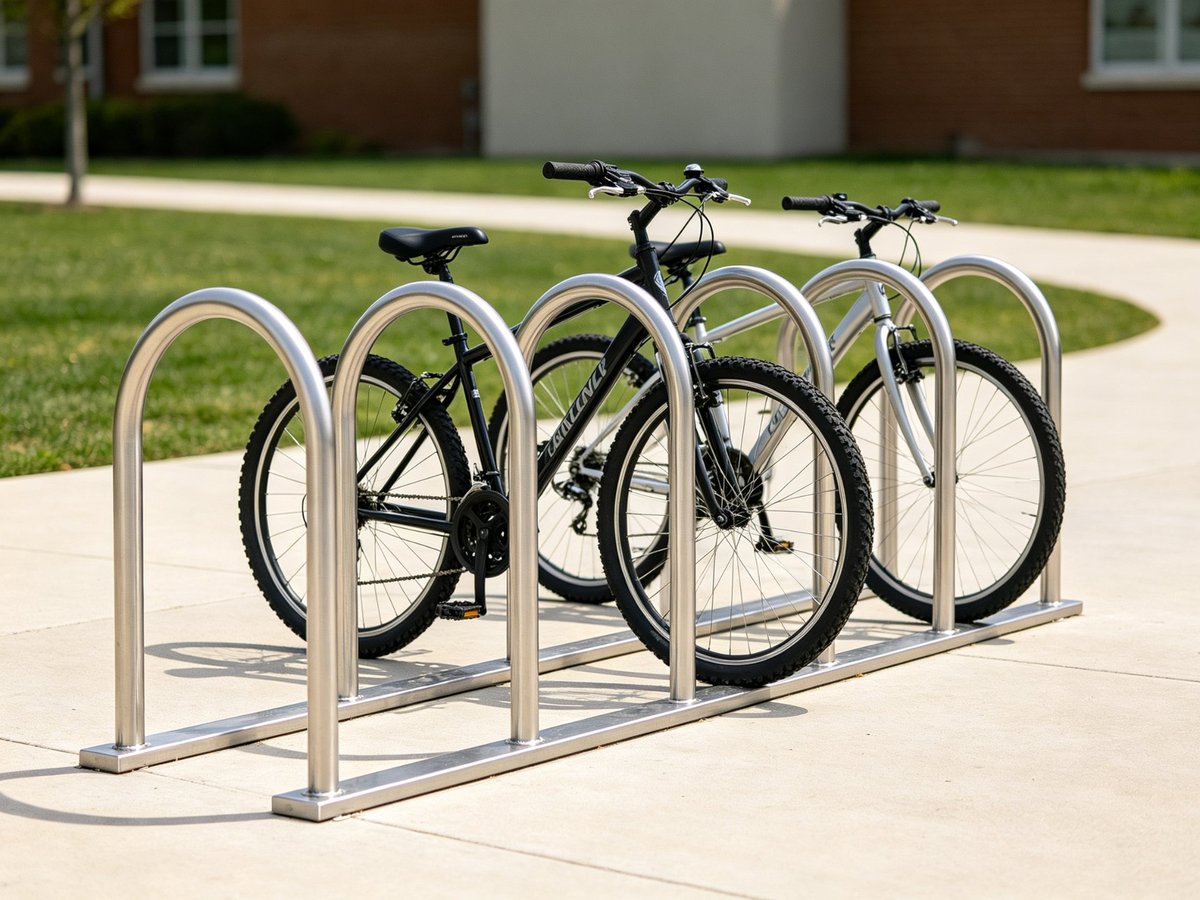
SteelArch Multi Bike Rack
High-capacity stainless steel bike rack holding up to six bicycles on twin continuous base rails, ideal for campuses and stations.
Request a quote · MOQ 50 pcs
View specifications →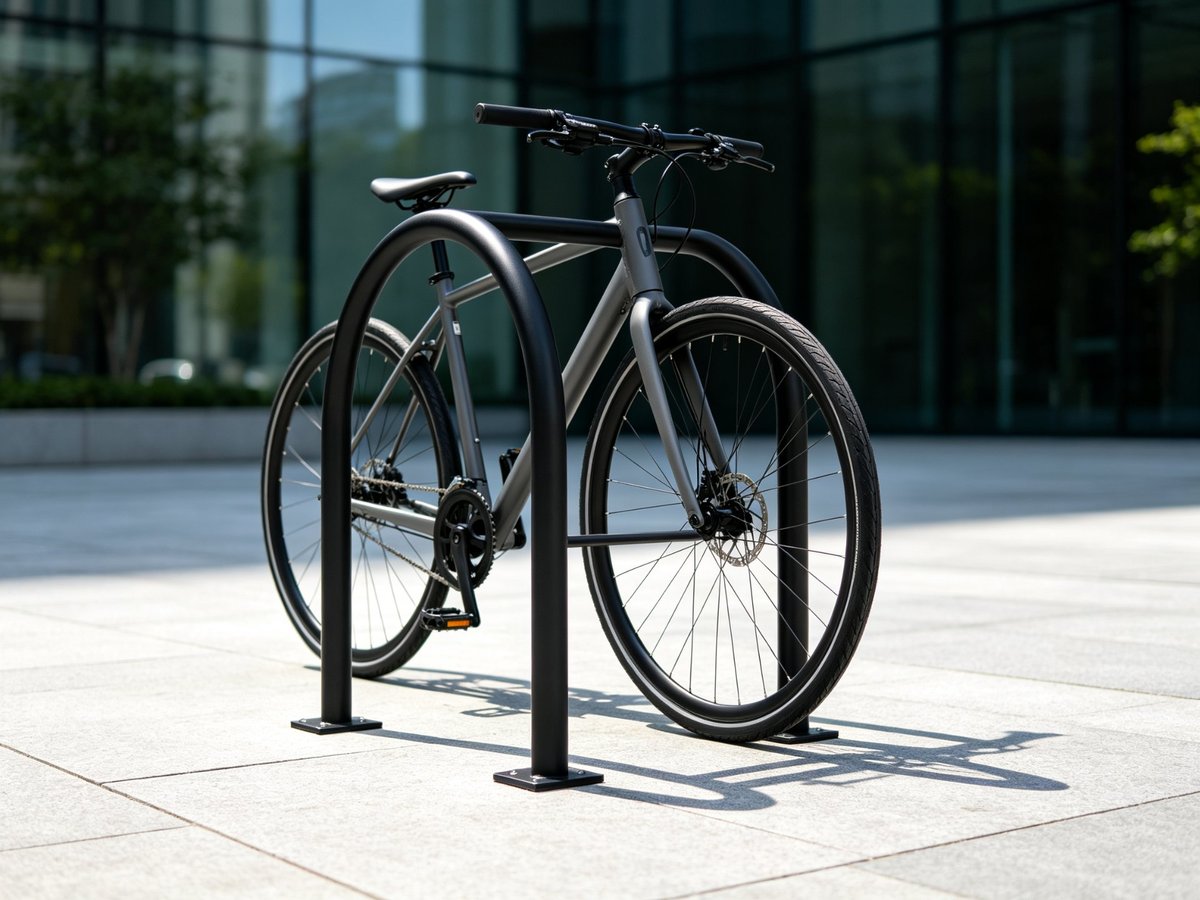
Velo-Safe Bike Rack
Galvanized inverted-U bike rack supporting two bicycles, with optional naming plate and integrated locking bar.
Request a quote · MOQ 100 pcs
View specifications →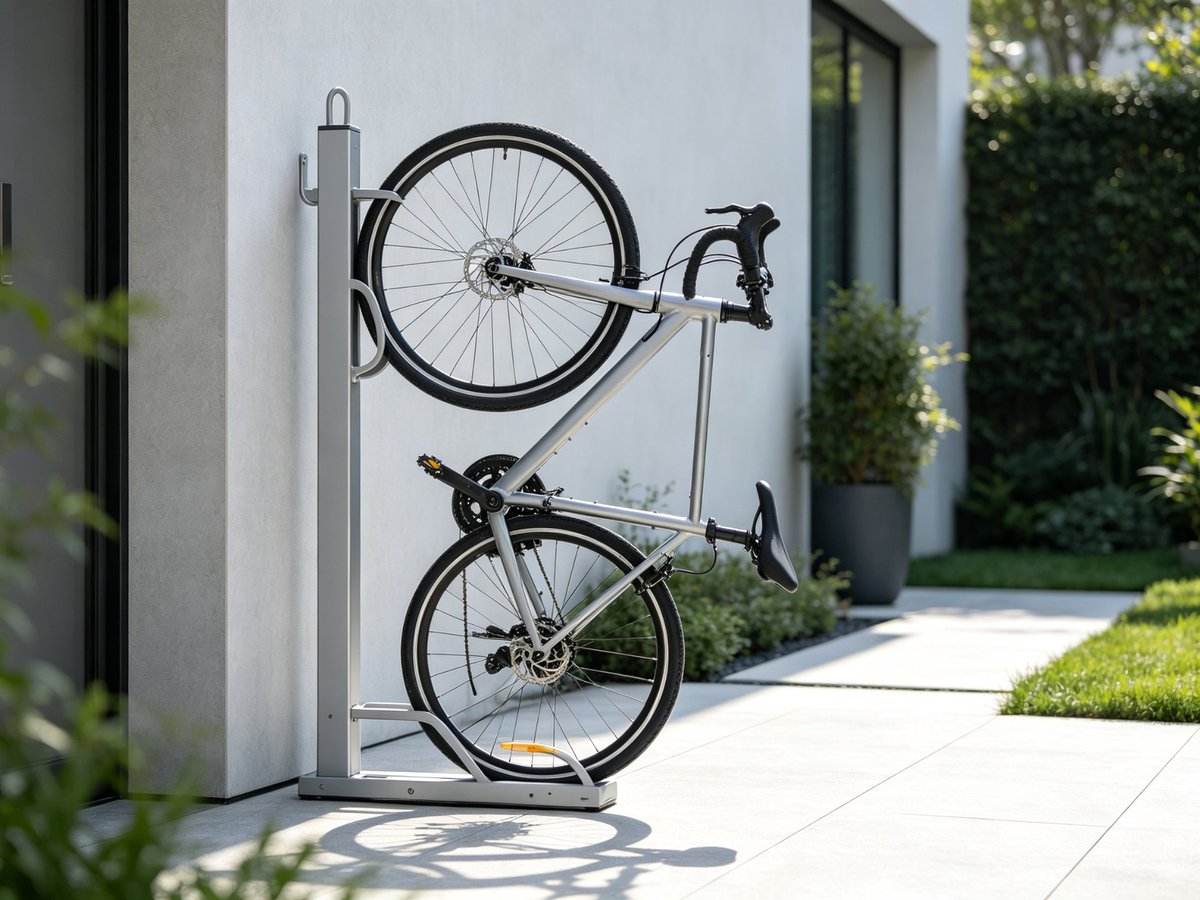
VertiPark Bike Stand
Space-saving vertical bike stand that parks one bicycle upright on a weighted base - no wall drilling, perfect for covered walkways and lobbies.
Request a quote · MOQ 50 pcs
View specifications →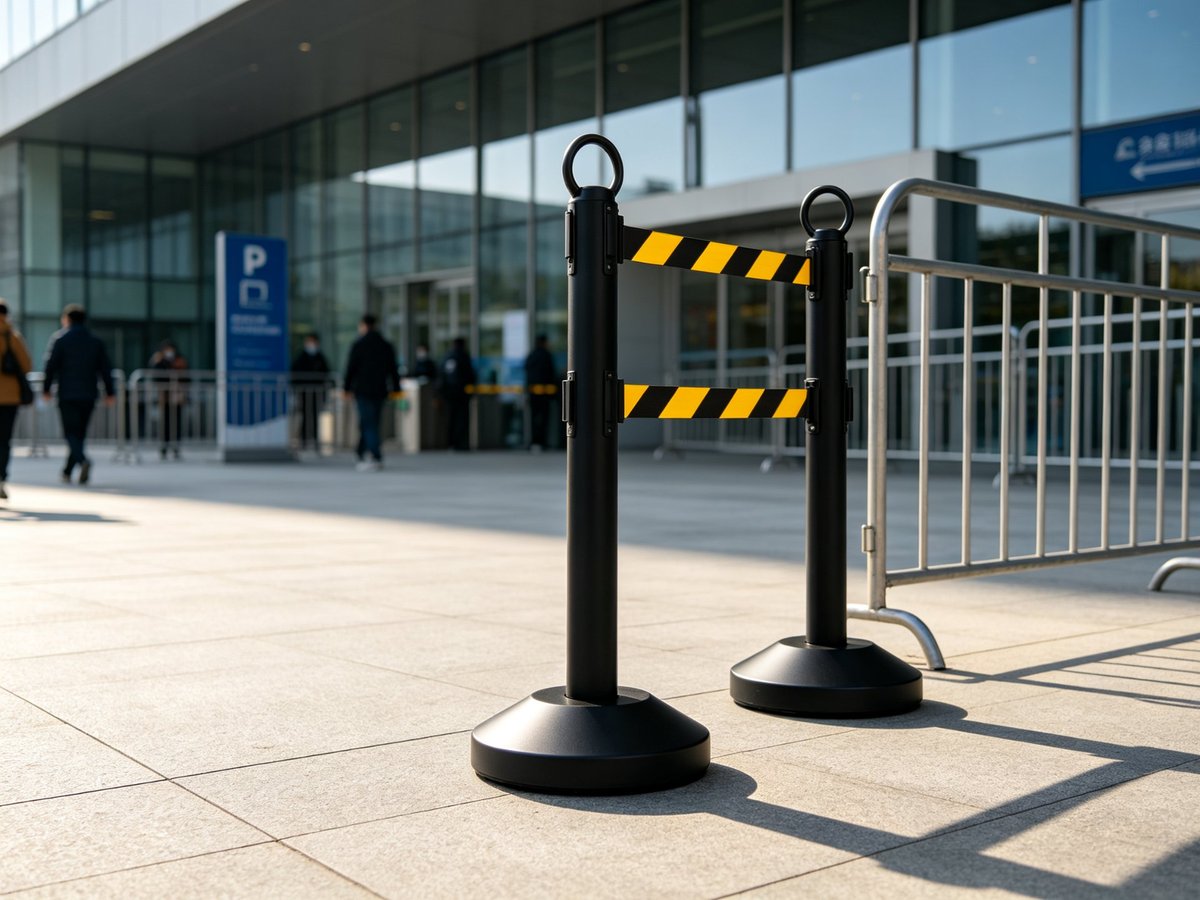
Guardian Belt Barrier Bollard
Retractable-belt crowd control bollard with 2 m belt, weighted round base and all-weather black finish for stations, venues and worksites.
Request a quote · MOQ 50 pcs
View specifications →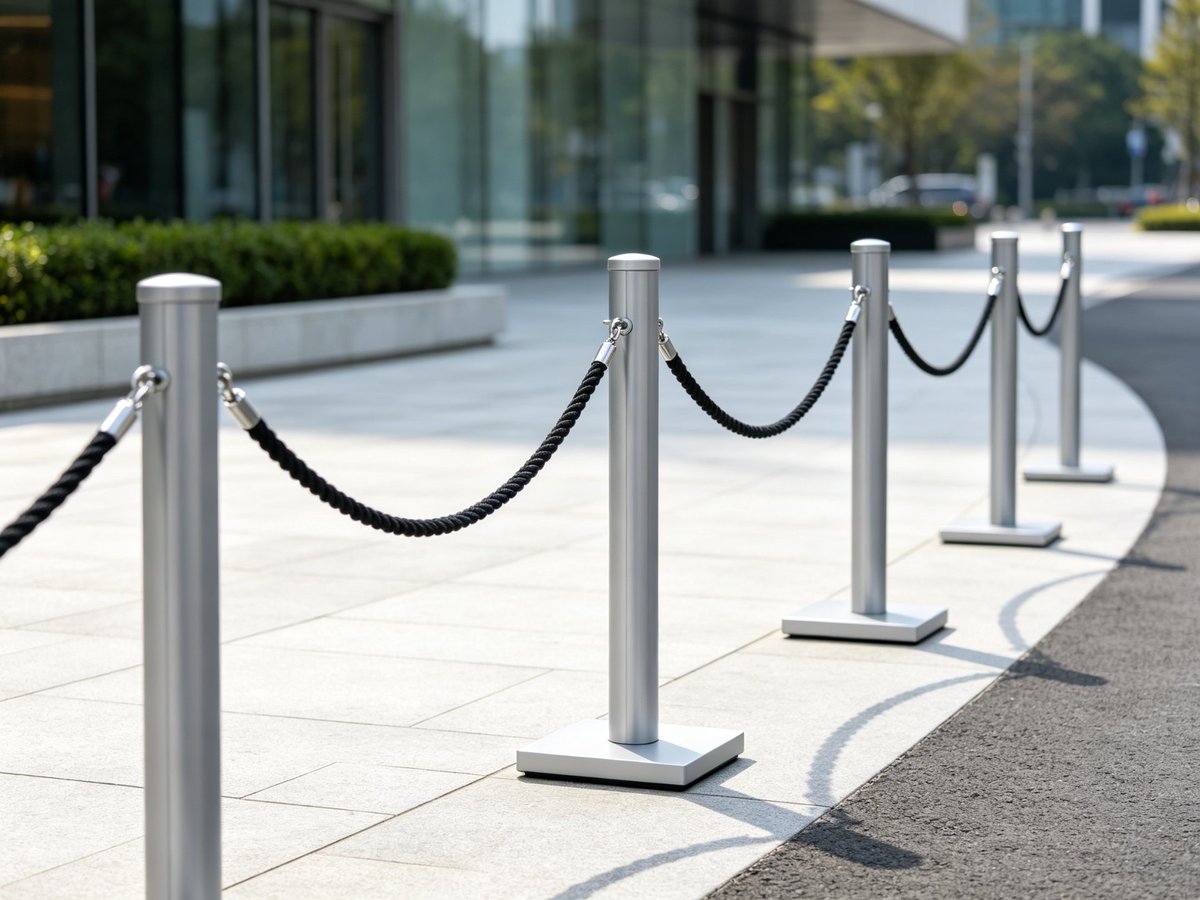
Guardian Rope Post Bollard
Elegant stainless steel rope-post bollard system for guiding pedestrian flow and protecting plazas - accepts 30 mm rope between posts.
Request a quote · MOQ 50 pcs
View specifications →Model specifications
| Model | Dimensions (mm) | Body material | Parking positions |
|---|---|---|---|
| SteelArch Multi Bike Rack | 1500 x 700 x 500 mm | Ø 48 mm SS304 brushed stainless steel | Confirm per project |
| Velo-Safe Bike Rack | 750 x 700 x 500 mm | Ø 48 mm hot-dip galvanized steel | Confirm per project |
| VertiPark Bike Stand | 1850 x 600 x 400 mm | Ø 40 mm powder-coated steel, ABS contact pads | Confirm per project |
| Guardian Belt Barrier Bollard | H 950 mm, base Ø 360 mm | Ø 63 mm powder-coated steel, ABS belt cassette | Confirm per project |
| Guardian Rope Post Bollard | H 1000 mm, base 350 x 350 mm | Ø 76 mm SS304 brushed stainless steel | Confirm per project |
Parking positions per unit and recommended on-centre spacing are pending factory confirmation for our specific models. Published guidance varies by jurisdiction and by whether the rack is inverted-U, loop or vertical — we quote the layout drawing for your project rather than a single universal number.
Which build fits which site
A short decision table for specifiers — the same logic our engineers apply when reviewing a project drawing.
| Requirement | Recommended build | Why |
|---|---|---|
| Frame-safe parking, standard bay | Inverted-U multi rack | Supports frame at two points; one rack serves two bikes |
| Tight footprint, high density | Vertical stand | Half the wall length per bike, but harder for heavier frames |
| Vehicle exclusion at a plaza edge | Fixed steel bollard | Simple, cheap, and reads clearly to drivers |
| Occasional service or emergency access | Removable or belt-barrier bollard | Opens without demolishing the post |
| Coastal or salt-spray frontage | 304 stainless body | Resists chloride pitting without a coating maintenance cycle |
Bollards for Public Spaces: Fixed, Removable, Belt-Barrier
Bollards for public spaces come in three formats, and they are not interchangeable. A fixed post — a steel tube bolted to a base plate or embedded in a footing — draws a permanent line where vehicles must not go. A removable post lifts out of a ground socket, so the same opening still takes a service van or an ambulance. A belt-barrier post carries a retractable cassette, which lets one line of posts be opened and shut through the day. The format follows the traffic decision, not the design: if nothing but a pedestrian ever passes, a fixed post is the cheapest obstruction; if a maintenance crew must reach the square, the post has to move.
Stated plainly, because a wrong assumption here is expensive: our catalogue carries two bollards, and both are belt-and-rope formats rather than fixed posts — the Guardian Belt Barrier (H 950 mm, base Ø 360 mm) and the Guardian Rope Post (H 1000 mm, base 350 × 350 mm). Both are built for line marking, queue guidance and separating pedestrian areas from service traffic. Neither is certified to a vehicle impact rating.
That is the honest boundary of the product. Where the brief is genuine vehicle impact protection — a secured perimeter, a kerb line with a vehicular threat — specify a post that holds a published vehicle-impact test certificate to the relevant standard, from a manufacturer that issues the report. What our posts do well is the everyday job: reading as a boundary, carrying a belt or rope line, and standing up to weather in galvanized or stainless finishes.
Bollard height and spacing are decided by the line the posts have to draw, not by the catalogue: height sets how clearly a row reads from a driver's eye level, and spacing follows the widest gap the site must still admit — a service bay, an ambulance route, a delivery window. The table below lines the three formats up against those two decisions, with the heights and base dimensions of the posts we actually build.
| Format | Height | Base / fixing | In the catalogue |
|---|---|---|---|
| Fixed steel post | Set per project drawing | Embedded shaft, or base plate with expansion anchors | Not a catalogue item — quoted as a custom run from 50 pcs per model |
| Removable socket post | Set per project drawing | Lift-out ground socket with locking lid | Not a catalogue item — quoted as a custom run from 50 pcs per model |
| Belt / rope post | 950 mm (belt) / 1000 mm (rope) | Base Ø 360 mm, or base 350 × 350 mm | Guardian Belt Barrier and Guardian Rope Post |
Materials, coating and quality control
The same four stages apply to every model in this range, whether it is a catalogue item or a bespoke project — which is why a bench, a bin and a planter from one order will still match after five years outdoors.
Steel
Mild steel sheet and tube, laser-cut and MIG-welded; gauge selected per load path rather than a single house gauge.
Corrosion protection
Hot-dip galvanizing to ISO 1461 on request, or a zinc-rich primer where hollow sections make dipping impractical.
Powder coating
Outdoor-grade polyester powder coat over a conversion coating, cured to the coating supplier's schedule; any RAL colour.
Quality control
Incoming material check, weld inspection, coating thickness and adhesion, pre-shipment inspection with photo record.
Test reports (salt spray, coating thickness, material certificates) are issued with the shipment when requested and can be supplied at tender stage. We do not publish test figures for a product until the report for that specific build exists.
Frequently asked questions
How far apart should bike racks be spaced? +
Published guidance differs by jurisdiction and by rack type, so we provide a layout drawing for your site rather than a single number. As a working rule, inverted-U racks are set so handlebars and pedals clear each other, and the bay depth allows a bike to be wheeled in — send the bay dimensions and we will lay it out.
What is the difference between an inverted-U rack and a vertical stand? +
An inverted-U rack supports the bike frame at two points and takes roughly half the wall length per bike than a Sheffield stand in a tight row; a vertical stand hangs the bike by one wheel, which halves the footprint again but is awkward for heavy or step-through frames.
How are racks and bollards fixed to the ground? +
Base plates with expansion anchors for paved surfaces, or embedded shafts cast into a concrete footing for lawns and new-build. On suspended slabs or thin pavers the anchor type and embedment depth matter more than the post — tell us the substrate and we will specify the detail.
Are removable bollards secure enough for vehicle exclusion? +
A removable or belt-barrier post controls access, it does not stop a determined vehicle. Use fixed bollards where the threat is a vehicle mounting the kerb, and removable posts only where the same opening must be used by service vehicles.
Can racks and bollards be galvanized, painted or stainless? +
All three. Hot-dip galvanized is the default for cost and durability; powder coating over galvanizing gives colour; 304 stainless suits coastal sites and premium streetscapes. Reflective sleeves and cast logos are available on custom runs from 50 pcs per model.
Selection guides and technical notes
Deeper reading for specifiers and procurement teams working on this product line.
2026-10-07
Bike Rack Anchoring and Mounting Surfaces: A Specification Guide for Municipal Bike Parking
2026-09-26
Site Furniture Installation Guide: Container Packing, Shipping and On-Site Setup
2026-09-22
How to Maintain Outdoor Site Furniture: A Seasonal Care Checklist for Parks and Streetscapes
2026-09-24
Bike Rack Layout Best Practices for Public Spaces: A Planner's Spacing and Specification Guide
2026-10-12
Bollard and Barrier Selection Guide: Specifying Fixed, Removable and Flexible Bollards for Public Spaces
2026-10-03
Urban Furniture Installation Methods: A Contractor's Guide to Surface-Mount, In-Ground and Free-Standing Fixings
See also the site furniture specifications hub for material comparison, coating build-up and dimensional conversions.
Send your drawing, get a costed BOM
Tell us the site, the quantity and any dimensional constraint. Our engineers reply with a specification and price within one working day.
Request a Quote