Slip-Resistant Outdoor Furniture Surfaces: A Specifier's Guide
2026-11-13 · 9 min read · By AOTUDE Furniture Team
When rain sweeps across a public plaza, the difference between a bench that stays usable and one that becomes a liability is rarely the frame — it is the surface. Specifying slip-resistant outdoor furniture is one of those details that seems minor until a grounds team logs a fall incident, or a seaside promenade's smooth steel seats stay empty for eight months of the year. For municipal purchasers, landscape architects and contractors, surface grip belongs in the specification alongside load ratings and coating systems, not as an afterthought.
This guide explains what makes seating and table surfaces slippery, which surface treatments genuinely improve grip, how drainage interacts with slip resistance, and how to write testable requirements into a tender document.
Why Slip Resistance Matters for Public Seating
Public furniture works in conditions that indoor furniture never sees: driving rain, morning dew, irrigation overspray, spilled drinks, algae films in shaded corners, and decades of wear that polish a once-textured surface smooth. A seated person has a high centre of mass and little lateral control, so even a short slide on a wet seat can produce a real injury — and a claim.
There is also a utilisation argument. Cities invest heavily in waterfronts, shaded parks and transit plazas precisely because people enjoy them in all weather. Furniture that drains and dries quickly extends the usable season. Furniture with smooth, ponding surfaces quietly removes those spaces from circulation every time it rains.
Finally, slip resistance overlaps with accessibility thinking. Users with limited mobility, older adults and parents lifting children all rely on stable seating surfaces. A wet, glassy bench slat is a barrier to exactly the users that age-friendly public space strategies try to retain. (For ergonomic and rest-point planning, see our guide to age-friendly public seating.)
What Actually Makes a Seat Surface Slippery
Three factors combine, and a specification that only addresses one of them will disappoint:
- Water film. A continuous layer of water between a smooth surface and clothing or skin acts as a lubricant. The faster water is removed — by drainage holes, by spacing between slats, by texture that breaks the film — the higher the residual grip.
- Texture lost to wear and weathering. Many surfaces start textured and end smooth. Powder coatings can polish under years of wiping and abrasion; timber slats can wear shiny along the centre line where most people sit; biofilms of algae and airborne grime add a slick layer in shaded, damp locations.
- Material hardness and finish. Brushed stainless offers more bite than mirror polish; a fine-sanded timber slat offers more than a lacquered one. Smoothness is a design choice, and in outdoor furniture it should be made deliberately, not by default.
The good news is that the highest-leverage decisions — surface type, drainage geometry and finish texture — are made at specification stage, at little or no cost premium.
Surface Options Compared
No single surface wins everywhere. The table below compares the common options for public seating and picnic tables against the criteria that matter outdoors.
| Surface type | Wet grip | Drainage / drying | Vandal resistance | Typical maintenance | Best suited to |
|---|---|---|---|---|---|
| Perforated steel plate | Good — texture plus drainage holes | Excellent, dries in minutes | High | Occasional wash | Picnic tables, coastal and transit seating |
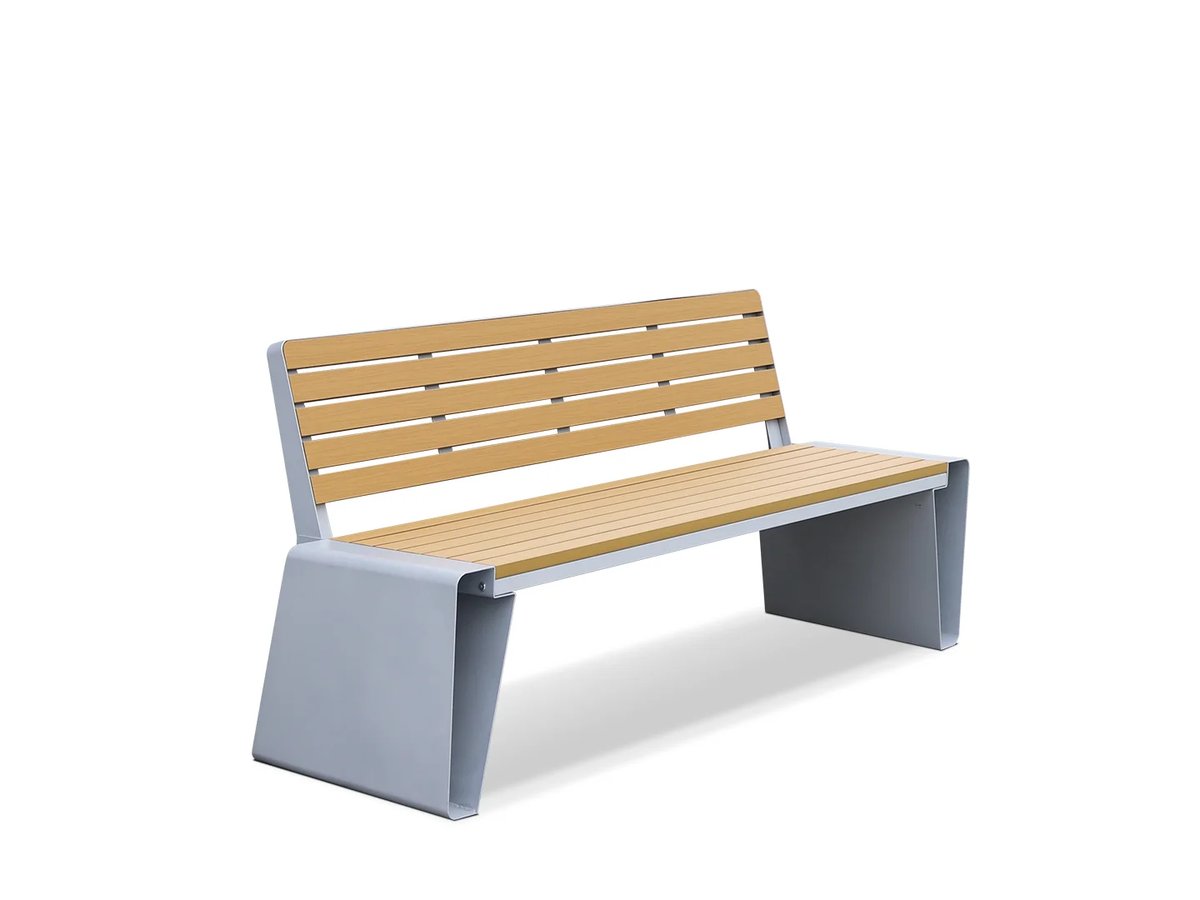
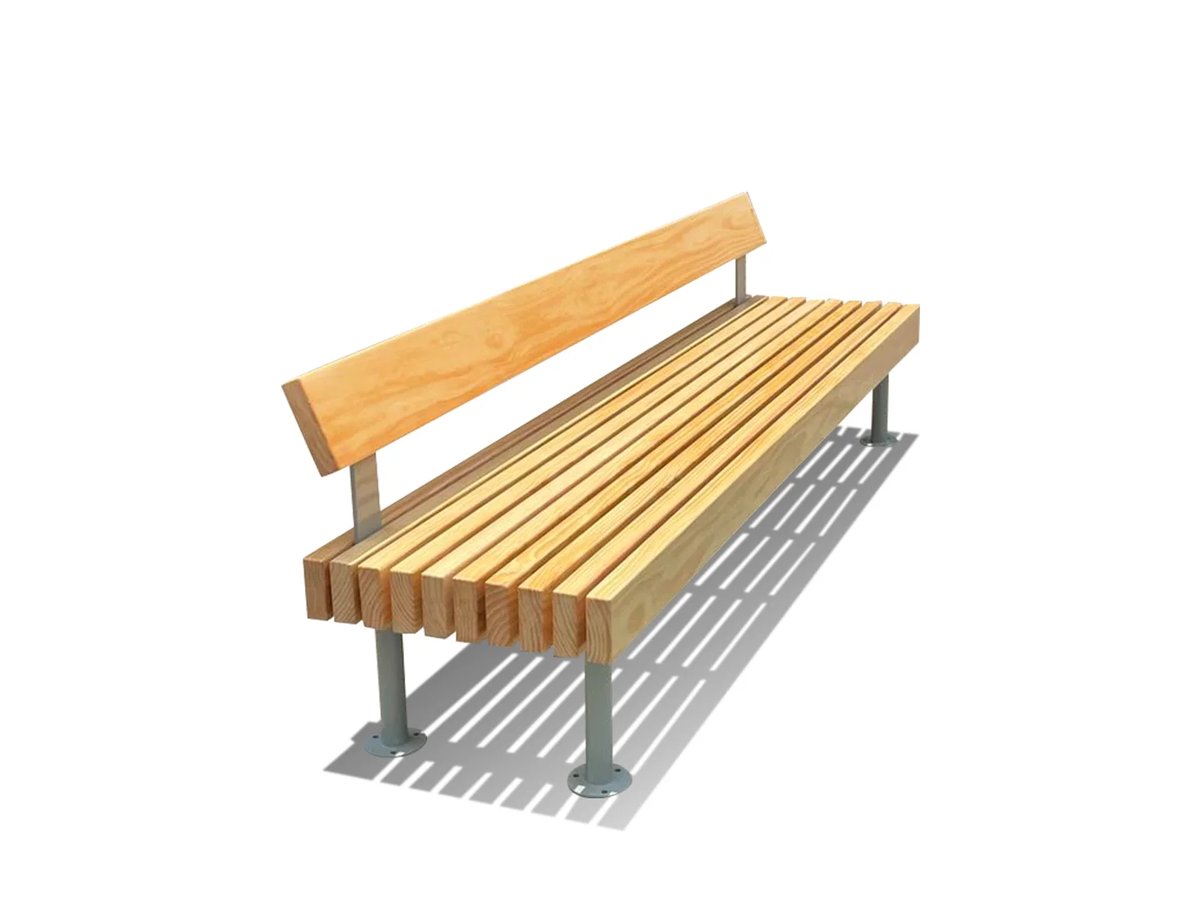
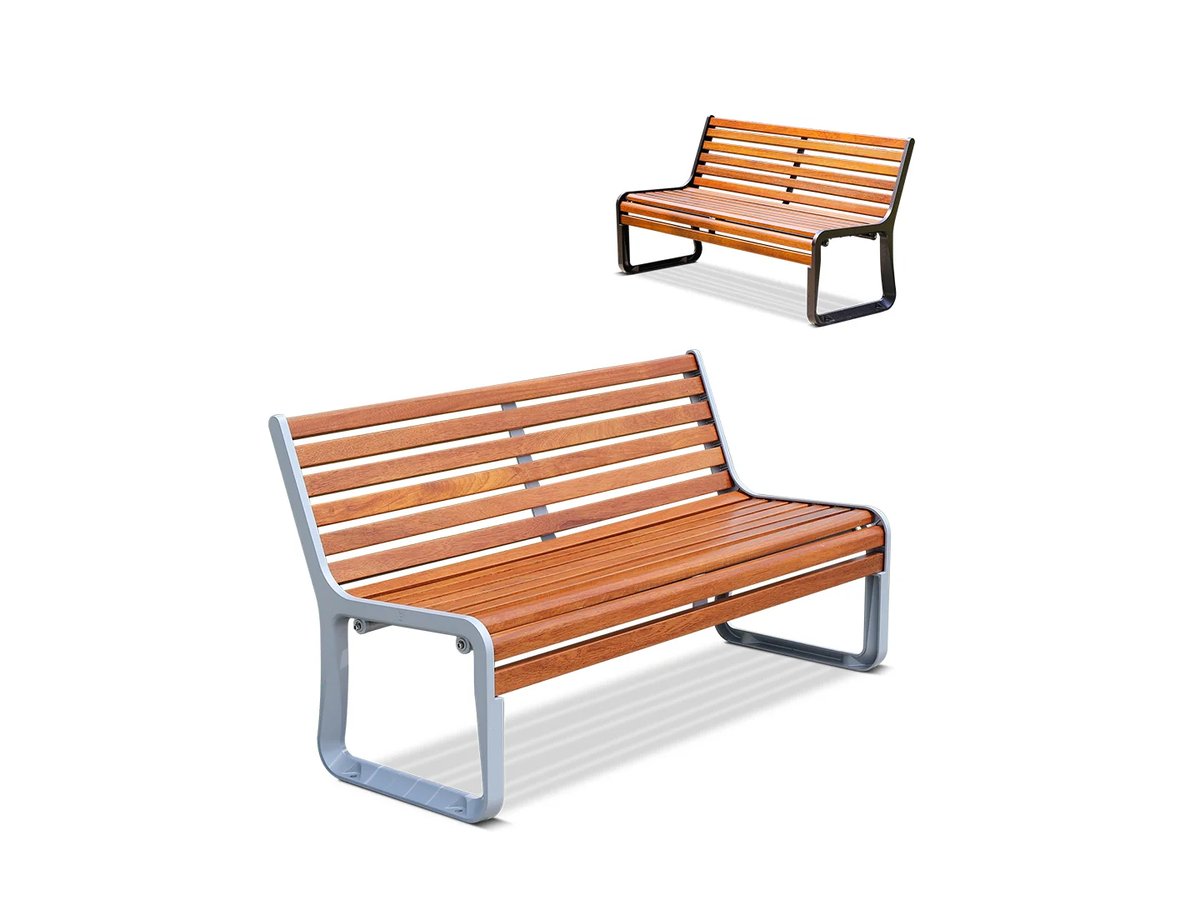
| Timber slats (hardwood) | Good — grain provides natural bite | Good between slats | Medium | Periodic cleaning, oiling | Parks, plazas, promenades |
| WPC / composite slats | Moderate — add grooving for wet areas | Good between slats | Medium | Low; wash only | High-humidity sites, pool surrounds |
| Smooth powder-coated steel | Poor when wet unless textured coat specified | Poor — water sheets and ponds | High | Wash; inspect coating | Sheltered, roofed locations |
| Textured powder coat (grit additive) | Good | Moderate | High | Wash gently to preserve texture | Seats, backrests, armrests |
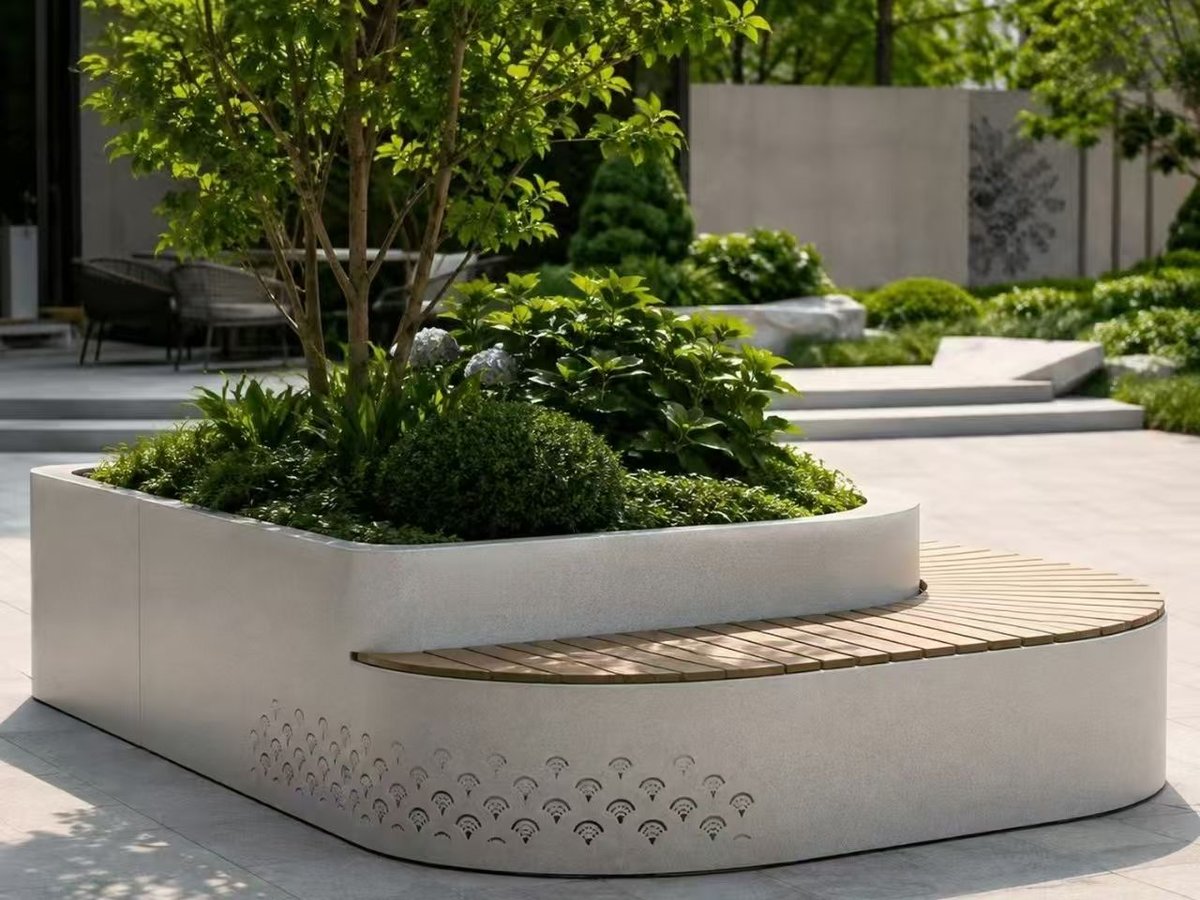
| GFRC / concrete | Moderate to good with exposed aggregate | Moderate | Very high | Low; algae watch in shade | Monolithic plazas, combined bench-planter units |
Two patterns emerge. First, surfaces that drain — perforated plate, spaced slats — beat surfaces that merely resist water. Second, texture must survive wear: a fine-blasted finish that polishes away in three years was never a slip-resistance strategy.
Perforated Metal: Drainage as Slip Control
Perforated steel is the classic answer for all-weather public furniture, and it earns that status twice over. The open area punched through the seat plate lets rain fall straight through instead of ponding, and the hole edges themselves create thousands of small traction points underfoot and under-sitting. A perforated steel picnic table is typically walk-up ready minutes after heavy rain — which is why it dominates highway rest areas, coastal boardwalks and stadium concourses.
Specification details matter:
- Hole pattern and open area. Larger open area drains faster but reduces seat contact comfort and can catch heels of small children. A balanced round-hole pattern in the 40–50% open-area range is the usual sweet spot for seating.
- Edge quality. Perforations should be clean-punched or deburred; burrs snag clothing and start coating failures that eventually undo the surface itself.
- Coating inside the holes. A zinc-rich primer plus powder coat should carry into the perforation walls; uncoated hole edges are where corrosion starts on cheap product. Our article on perforated metal in outdoor furniture covers patterns, open-area maths and gauges in depth.
A worked example is the perforated steel park bench — heavy-duty plate seating with tubular armrests, specified as vandal-resistant seating that drains and dries fast. In exposed coastal or transit applications, this surface class removes the wet-seat problem rather than merely managing it.
Timber and WPC: Grain, Grooving and Spacing
Timber slats remain the most comfortable seating surface outdoors, and their slip behaviour is better than commonly assumed — provided the spec controls the finish and the geometry:
- Leave the grain, skip the film finishes. A penetrating oil or open-pore finish keeps the wood grain raised enough to grip; thick film lacquers gloss over the grain and turn slick when wet. Maintenance regimes should respect this — our hardwood slat maintenance guide details cleaning and re-oiling cycles that preserve both appearance and grip.
- Fine-sawn texture over fine-sanded. For high-traffic public seating, a lightly saw-textured slat face holds its bite far longer than a polished surface.
- Slat gaps are drainage. Gaps of 8–12 mm between slats let water drop through and allow airflow to dry the faces. Specifying tight-gap seating "for looks" is a classic wet-bench mistake.
- Grooved WPC for wet zones. Composite slats around pools and water features should be specified with longitudinal grooves; ungrooved smooth WPC is one of the slipperiest surfaces in the category when wet.
Test Methods and Tender Wording
Furniture-specific slip standards are limited — most codified tests were developed for flooring — but that does not stop a specifier from referencing them in a measurable way. The two most commonly borrowed methods:
- DIN 51130 ramp test (R9–R13 ratings). Developed for workplace flooring; R10–R11 is a reasonable analogue for public seating surfaces that users sit onto and push off from. Use it as a target for coatings and plates, not as a legally binding furniture standard.
- Pendulum test (e.g. BS 7976), reported as PTV. A portable, site-applicable test: PTV 36+ is broadly regarded as low slip risk in wet conditions. Because the device is portable, it can even be run on delivered samples.
When writing these into a tender, avoid vague clauses like "non-slip surfaces required" — they are unenforceable and invite the cheapest interpretation. Better wording:
- "Seat surfaces shall maintain a wet pendulum value (PTV) of not less than 36 when tested on the finished product sample."
- "Where perforated plate seating is offered, open area shall be between 40% and 50%, with deburred holes and coating continuity through the perforations."
- "Timber seat slats shall be supplied with a saw-textured face and penetrating finish; film-forming lacquers are not accepted on seating surfaces."
- "Samples submitted for approval shall include one seat-surface coupon per material, retained for comparison at handover."
Acceptance testing against retained samples is what turns a specification from prose into a quality gate.
Maintenance Keeps Surfaces Non-Slip
Grip is not a fit-and-forget property. Biofilms of algae and general grime can halve the wet friction of any surface within a season or two, especially in shade. A practical regime:
- Schedule routine washing rather than waiting for visible soiling; a textured surface holds dirt precisely because it is textured.
- Use fan-spray pressure settings and avoid polishing abrasives that smooth a blasted finish.
- After re-oiling timber, wipe excess so slats cure with grain texture, not a varnish-like sheen.
- Inspect perforated seats during annual coating checks to confirm holes have not clogged or corroded shut.
Cities that fold these checks into existing grounds schedules keep their slip specifications valid for the life of the asset, not just the warranty period.
Specifying Slip-Resistant Furniture from AOTUDE
AOTUDE manufactures commercial outdoor furniture — park benches, picnic tables, litter bins, planters and combined seating-greening units — at its 20,000 m² factory in Foshan, China, selling factory-direct to municipalities, contractors and landscape practices worldwide. Most surface families described above are in the standard catalogue: perforated steel seating and tables, hardwood slat benches with penetrating finishes, and textured powder-coat options for sheltered locations. Every model has its own minimum order — per-model MOQ from 5 pcs, with most models at 20 pcs and custom runs starting at 50 pcs — and the OEM/ODM team can adapt hole patterns, slat profiles and finishes to a project's slip-resistance requirements. All products are backed by 5–10 year warranties. Browse the full range at https://aotude.com or request surface samples alongside your quotation.
If you are comparing surface families for a coastal or transit project, the specification logic in this article pairs naturally with our perforated metal specification guide and the park benches category, where both perforated-plate and hardwood-slat seating are available for side-by-side shortlisting.