Galvanic Corrosion in Outdoor Furniture: How to Specify Mixed Metals
2026-11-05 · 7 min read · By AOTUDE Furniture Team
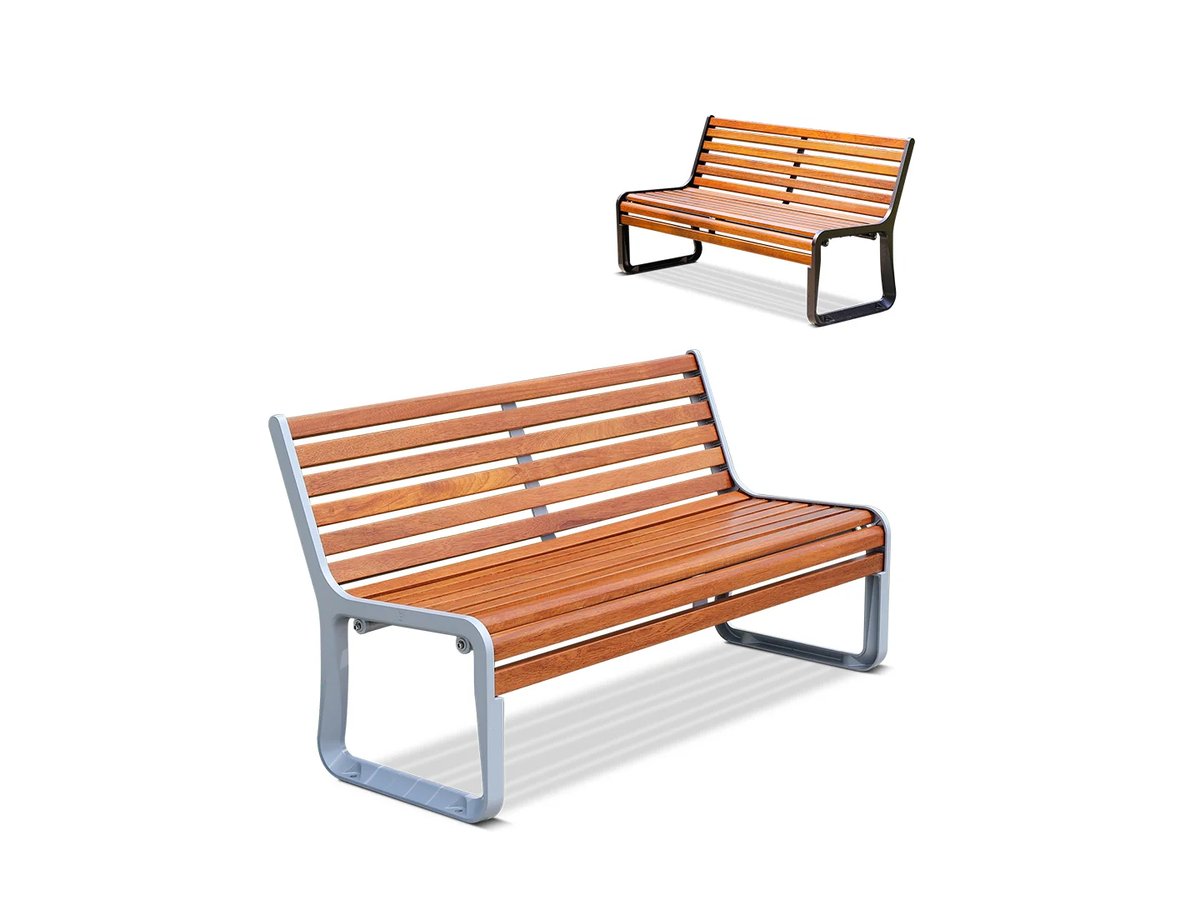
Modern street furniture is almost never made of one material. A typical park bench combines a steel or aluminium frame, stainless fixings, timber or WPC slats and a galvanized base plate bolted into concrete. That mix is what makes outdoor furniture both good-looking and structurally efficient — but it also creates the single most misunderstood failure mode in the category: galvanic corrosion. When two dissimilar metals touch in the presence of moisture, the less noble metal becomes the anode and quietly sacrifices itself, often out of sight inside a joint. For municipal buyers, landscape architects and contractors, understanding galvanic corrosion in outdoor furniture is not academic; it is the difference between a bench that lasts fifteen years and one that sheds red rust or seizes solid within three. This guide explains the mechanism, the risk pairs we most often see in real projects, and how to write a specification that prevents them.
What Galvanic Corrosion Actually Is
Galvanic corrosion is an electrochemical reaction that needs three things at once: two metals with different electrical potentials in direct electrical contact, and an electrolyte bridging them — rainwater, condensation, sea spray or de-icing salt runoff. Remove any one of the three and the reaction stops.
The rate of attack depends less on the potential difference itself than on the area ratio. A small anode feeding a large cathode is the dangerous configuration: a stainless screw in an aluminium plate, or a carbon-steel bolt through a stainless panel, concentrates all the current onto a tiny surface. The same pair reversed — a large aluminium part with a small stainless contact point — corrodes far more slowly. This is why the fixings, not the frame, are usually where mixed-metal furniture fails first.
Climate modulates everything. In a dry inland plaza, a risky pairing may survive a decade; on a coastal promenade with daily salt spray, the same detail can show white aluminium oxide or rust bleeding within one winter. Our article on coastal salt-air maintenance covers the wider coastal regime; this piece stays strictly on the metals themselves.
The Galvanic Series, Simplified
You do not need a full electrochemical chart on site. A simplified ranking is enough to flag risky combinations: carbon steel and zinc sit at the active (anodic) end, aluminium just above them, then 304 and 316 stainless steel, each acting as the cathode to everything below it in a wet joint.
| Metal (in a wet joint) | Role vs. the metals below | Practical note |
|---|---|---|
| Zinc (hot-dip galvanizing) | Always the anode | Sacrificial by design; attack on the coating is normal, attack on the base steel means the coating is gone |
| Carbon steel | Anode to stainless, aluminium, copper alloys | Rust bleeding at fixings is the classic symptom |
| Aluminium | Anode to stainless, steel, copper alloys | Shows white, powdery oxide; severe in chloride environments |
| 304 stainless | Cathode to most things; can pit itself in chlorides | Passive but not invulnerable near the coast |
| 316 stainless | The most noble metal commonly used | Safe as a fastener, but isolate it from aluminium in wet service |
Two consequences follow directly from this table. First, stainless fasteners are almost always the correct choice mechanically — but they are the most cathodic part in the assembly, so where they meet aluminium or zinc, isolation matters more, not less. Second, corten steel is an extreme case: its rust layer is deliberately conductive and its run-off is mildly acidic, so weathering-steel elements — such as our corten steel litter bin — should be detailed as standalone units rather than bolted directly against galvanized structures.
The Risk Pairs We See Most Often
In warranty claims and field inspections, a handful of pairings account for the overwhelming majority of galvanic failures in public furniture:
- Stainless screws in aluminium extrusions. The small-cathode/large-anode trap. In coastal towns, the aluminium around the screw thread oxidizes, the joint loosens, and slats start to rattle within a year or two.
- Carbon-steel bolts through stainless frames. The bolt is the anode and rusts from the inside of the joint. From the street it looks like a "stainless bench rusting", and the blame usually lands on the wrong party.
- Galvanized base plates against corten or copper-bearing timber. The zinc coating is consumed far faster than in normal soil or air exposure, shortening the life of the anchorage itself.
- Furniture in contact with freshly treated or ACQ pressure-treated timber. Modern wood preservatives are copper-rich and aggressively corrode ordinary zinc-plated and even some stainless fixings — a detail that catches out contractors reusing indoor hardware outdoors.
- Steel anchors cast into concrete without protection. Concrete is alkaline and, with moisture moving through it, acts as an electrolyte; uncoated steel footings corrode at the interface and can heave or stain the paving.
None of these failures is dramatic at first. That is exactly the problem: by the time the symptom is visible from a maintenance walk, the joint is usually already weakened or seized.
How to Specify Against It
Preventing galvanic corrosion is a detailing exercise, not a materials-shopping exercise. A specification that works contains the following clauses:
- Fasteners in A2 (304) stainless as standard, A4 (316) within roughly one kilometre of salt water. Our guide to stainless steel grades for outdoor furniture explains when A2 is sufficient and when the upgrade pays for itself.
- Isolation at dissimilar contacts. Nylon or EPDM washers, sleeves and bushes between aluminium and stainless or steel surfaces; a drip of sealant on the joint keeps the electrolyte out as well as the current.
- Coat both faying surfaces, not just the visible one. A painted steel plate bolted to an unpainted bracket leaves the interface raw — the exact spot where crevice and galvanic attack combine.
- Drain, do not trap. Joints that hold water keep the electrolyte in permanent contact. Specify drainage gaps at slat fixings and open the bottoms of closed sections.
- Match hardware to the coating system. Hot-dip galvanized bolts for galvanized structure, not bright zinc-plated general hardware, which vanishes in two seasons outdoors.
- Ban mixed fastener stock on site. The cheapest failure is also the most common: a crew topping up stainless screws with whatever is left in the van.
For buyers comparing frame materials in the first place, the frame-level trade-offs are covered separately in our comparison of steel versus aluminium outdoor furniture frames; galvanic control is the layer of detailing that sits on top of either choice.
Inspection and Maintenance
Galvanic failure is progressive, so an inspection routine catches it cheaply. Twice a year — and quarterly within a kilometre of the coast — walk the site and look for four signatures: white powdery oxide around aluminium joints, rust weeping from fixing heads on "stainless" assemblies, slats that have developed play, and coatings blistering in a ring around fasteners. Where a joint has seized, resist the temptation to cut it out with an angle grinder against a stainless frame; document it and plan a controlled replacement of the fixing. Catching a single corroded screw in year two costs minutes; replacing a corroded-through aluminium rail in year five costs a crew day.
Specifying Mixed-Metal Furniture From the Factory
The cleanest way to manage galvanic risk is to buy the assembly, not just the metal. As a factory-direct manufacturer based in Foshan, China, with a 20,000 m² production facility, AOTUDE engineers mixed-material benches, bins, planters and bike racks as complete assemblies: stainless hardware specified per environment, isolation bushes where aluminium meets stainless, coatings applied before assembly on both faces, and drainage detailed into every closed section. We manufacture per model with an MOQ from 5 pcs (most models at 20 pcs, custom runs from 50 pcs), so even a pilot installation can be built to the same specification as the citywide rollout. OEM and ODM projects are welcome — send us your drawings and we will flag galvanic-risk details before tooling, not after the first warranty call. Every product line is backed by a 5–10 year structural warranty, and the full catalogue is browsable at https://aotude.com.
Mixed metals are not a liability when they are detailed correctly. Specify the pairings, isolate the contacts, drain the joints — and the failure mode that quietly destroys public furniture simply never gets a foothold.