
2026-09-21
Corten Steel vs Powder-Coated Steel: Which Is Better for Outdoor Site Furniture?
Weathering steel or painted steel? An engineer's comparison of corten and powder-coated steel for park furniture: corrosion behavior, cost, aesthetics, maintenance and where each material wins.
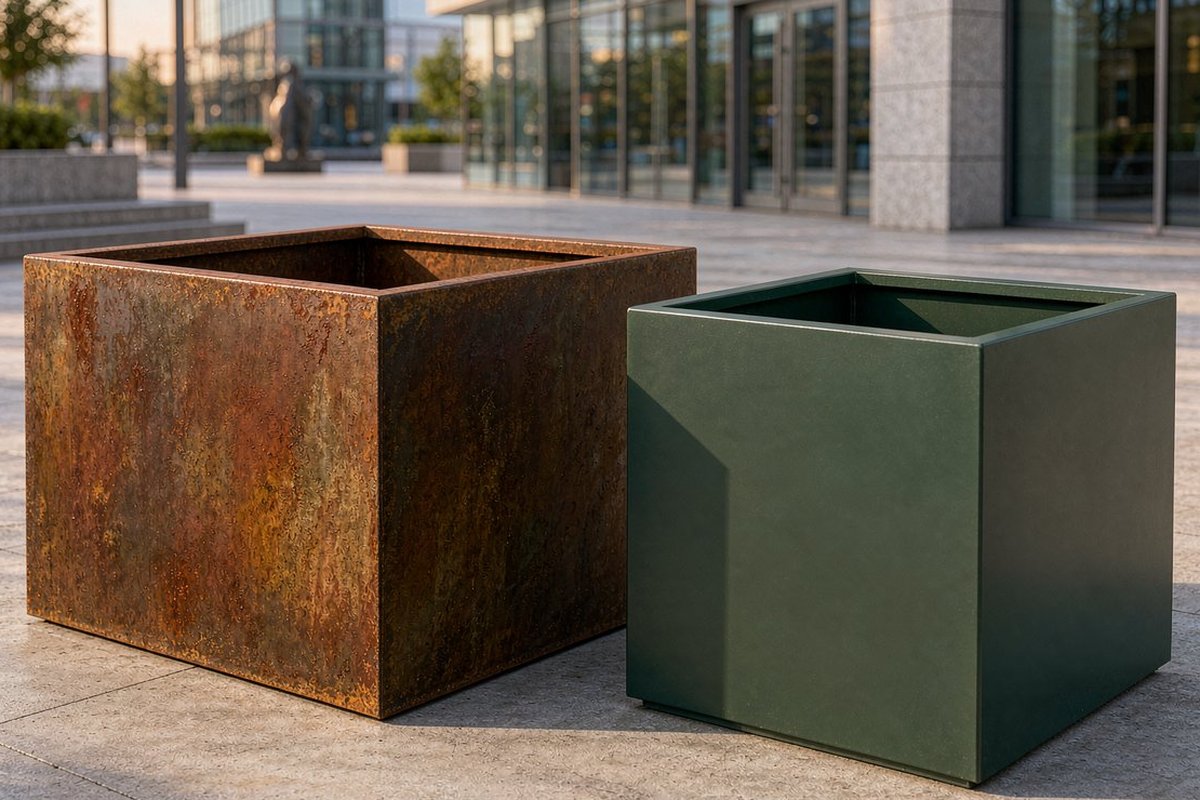
Corten (weathering) steel has become a signature look in landscape architecture — the warm rust-toned patina reads premium and ages gracefully. Powder-coated steel, meanwhile, remains the workhorse of municipal procurement. Clients ask us constantly: which should we specify? The honest answer is that each wins in a different context. Here is the engineering comparison we use when advising projects.
How Each Material Fights Corrosion
Corten steel contains copper, chromium and nickel additions that let it form a dense, self-repairing oxide layer (patina). Once formed — typically over 6–18 months of wet/dry cycles — the patina slows further corrosion dramatically. It is not "rusty steel" in the cheap sense; it is steel engineered to rust in a controlled way and then stop.
Powder-coated steel relies on a barrier: a hot-dip galvanized layer beneath an electrostatically applied polyester powder coat, cured at high temperature. The coating blocks moisture and oxygen entirely. Its weakness is purely mechanical — a deep scratch down to bare steel can start localized corrosion at the damage point.
Comparison at a Glance
| Factor | Corten steel | Powder-coated steel |
|---|---|---|
| Initial cost | ~20–40% higher | Baseline |
| Corrosion protection | Self-healing patina | Barrier coating (galvanic + paint) |
| Color options | Patina only (rust tones) | Any RAL color |
| Maintenance | Essentially none | Touch-up scratches; repaint after 10–15 years in harsh climates |
| Runoff | Patina water can stain light pavements in the first year | None |
| Coastal/marine environments | Not recommended within ~1 km of shoreline | Recommended (galvanized + coated) |
| Signature aesthetics | Excellent for heritage/natural palettes | Best for brand colors and modern plazas |
Where Corten Wins
- Heritage districts and natural parks where the rust tone blends with brick, stone and timber
- Signature landscape projects where furniture is part of the design statement
- Low-maintenance budgets — no repainting program at all
One caution: corten's early-year runoff can stain pale concrete. Detailing with drip edges and specifying light-colored paving carefully avoids most complaints.
Where Powder-Coated Wins
- Coastal cities — weathering steel needs salt spray to form its protective layer and can corrode continuously in marine atmospheres; galvanized + coated steel is the correct choice
- Brand-colored environments — corporate campuses, franchises and city branding programs need specific RAL colors, which only powder coating provides
- Budget-driven tenders — equivalent 10-year performance at a lower initial price when properly galvanized underneath
What to Check in Either Case
1. Steel gauge — 1.5–2 mm minimum on exposed panels for public furniture
2. Weld quality — continuous welds, especially on corten (spot welds collect moisture)
3. Coating system on "coated" steel — insist on galvanization beneath the powder coat, not paint on bare steel
4. Real corten compliance — ask for the mill certificate; true weathering steel (e.g., ASTM A588 / S355J0W equivalents) is different from ordinary steel left to rust
Our Recommendation
Specify corten when the project's identity justifies the premium and the site is inland. Specify galvanized + powder-coated steel everywhere else — it remains the most cost-effective, color-flexible and marine-safe solution for public furniture.
AOTUDE manufactures both: weathering-steel bins and planters for signature landscapes, and a full galvanized + powder-coated range in any RAL color, factory-direct from Foshan, China, with OEM customization from 50 pcs. Request samples of both finishes before you decide — the difference in person is usually obvious.