Heat-Resilient Streetscapes: Outdoor Furniture for Hot Climates
2026-11-04 · 7 min read · By AOTUDE Furniture Team
Cities in the Middle East, Southern Europe, Australia and the southern United States are spending more and more of their public-realm budget fighting heat — not just with shade sails and trees, but with the furniture they put on the pavement. A steel bench left in full sun can reach 65–70 °C on a summer afternoon, hot enough to make it unusable and, for people in shorts, genuinely unsafe. Designing a heat-resilient streetscape means treating every bench, bin and planter as a thermal object with its own surface behaviour. This guide sets out how municipal teams, landscape architects and contractors can specify outdoor furniture for hot climates, and how those choices differ from the green-infrastructure strategies covered in our companion piece on urban heat island mitigation with site furniture.
Why Surface Temperature, Not Air Temperature, Decides Comfort
Air temperature is what the weather report shows; surface temperature is what a park visitor actually touches. On a 35 °C day, dark powder-coated steel in direct sun can run 30–35 degrees hotter than the air, while timber in the same position may only be 10–15 degrees above it. Three factors drive the gap:
- Solar absorptance — dark, matte surfaces absorb most of the incident radiation; light and mid-tone finishes reflect far more of it.
- Thermal mass and conductivity — steel conducts heat into the palm of a hand quickly, making it feel hotter than the same touch temperature on wood or GFRC.
- Exposure time — surfaces keep absorbing after midday; a west-facing bench at 4 pm is often the hottest seat in the park.
The practical consequence: two benches with identical geometry can differ by 20 °C at the touch point purely because of colour, material and orientation. That is a specification decision, not an accident of the weather.
Typical Touch Temperatures by Seat Material
The table below gives indicative surface temperatures for common seat materials in direct summer sun on a 35 °C day. Values vary with colour, coating and wind, so treat them as a comparative guide for specification rather than laboratory data.
| Seat material (mid-day sun) | Indicative surface temp | Touch comfort | Notes for specifiers |
|---|---|---|---|
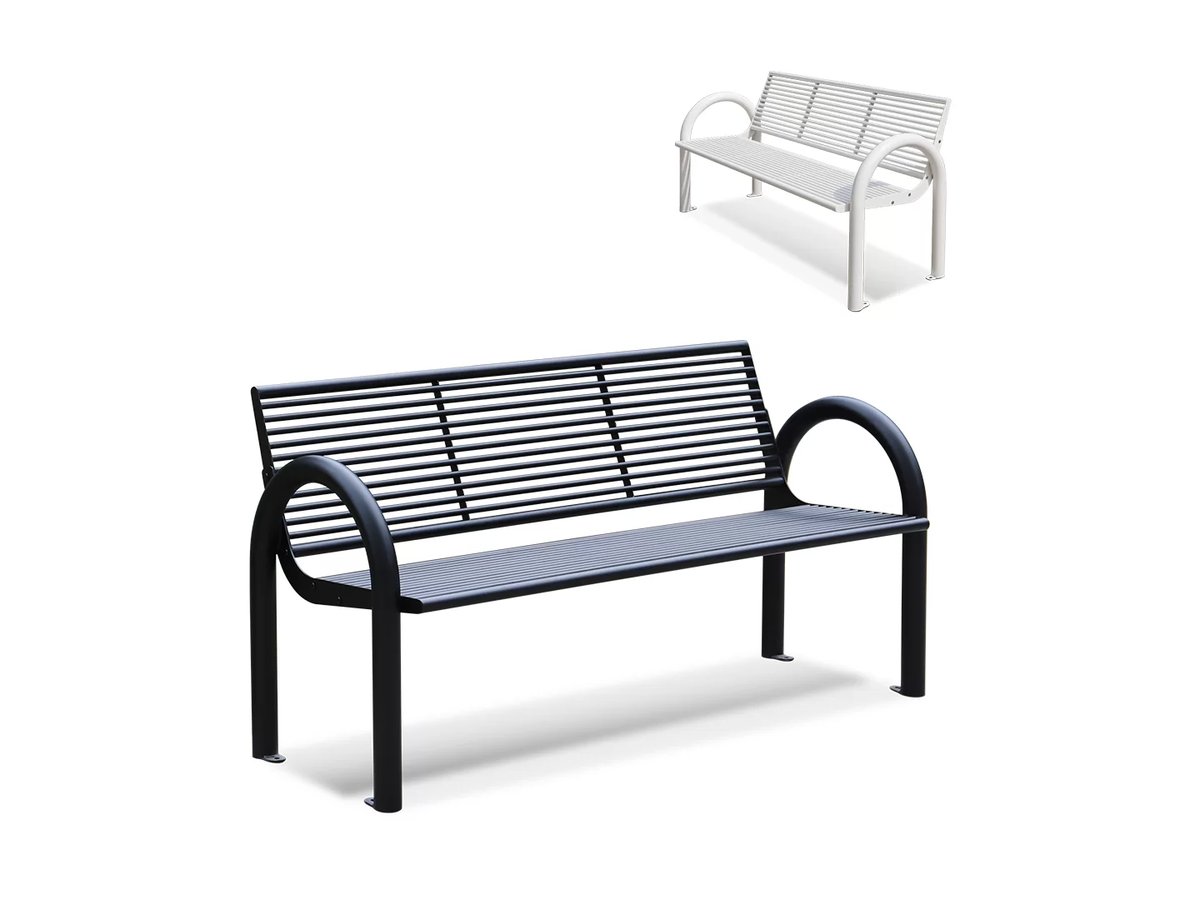
| Dark powder-coated steel | 60–70 °C | Unsafe bare-skin contact | Avoid dark RALs on sun-exposed seats |
| Light powder-coated steel | 45–55 °C | Hot but tolerable briefly | Combine with shade or perforation |
| Perforated steel plate | 45–55 °C | Tolerable | Open area allows convective cooling |
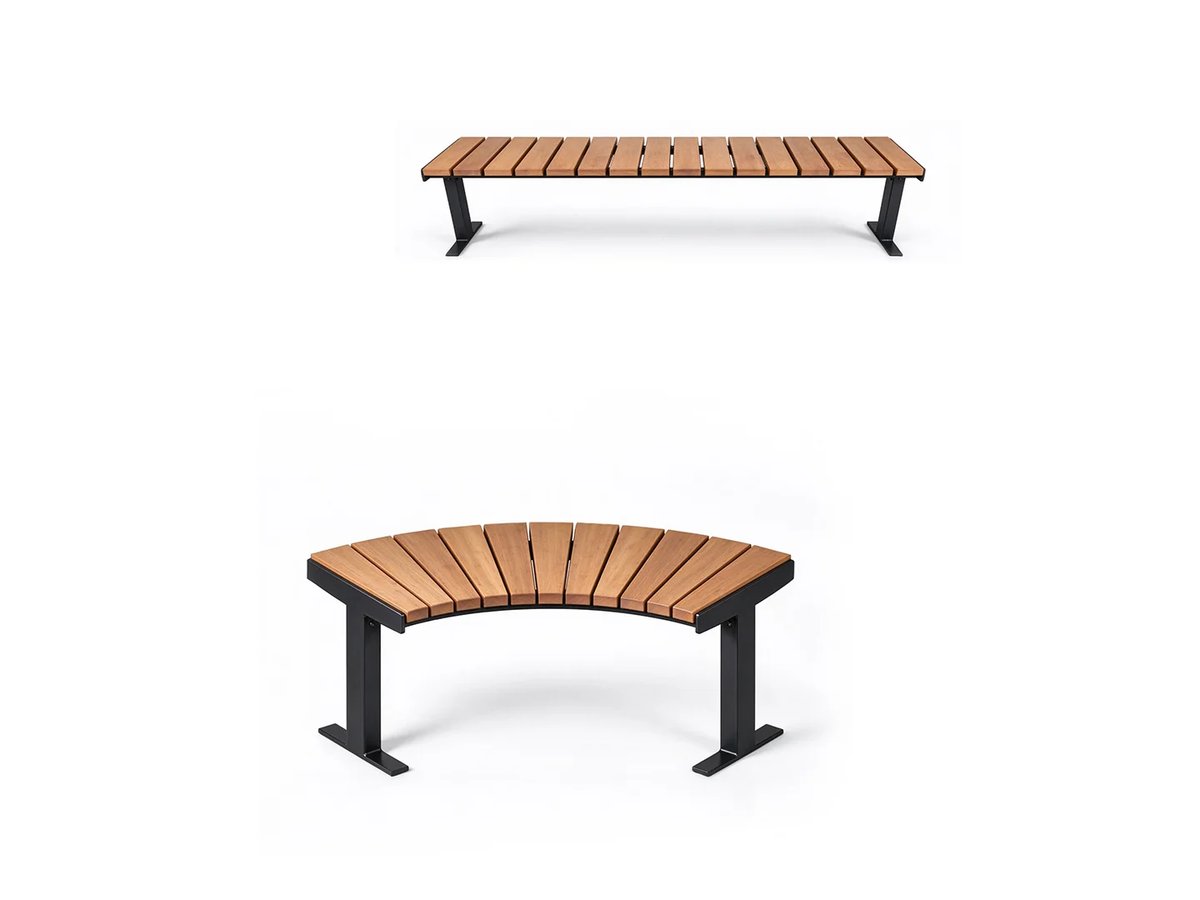
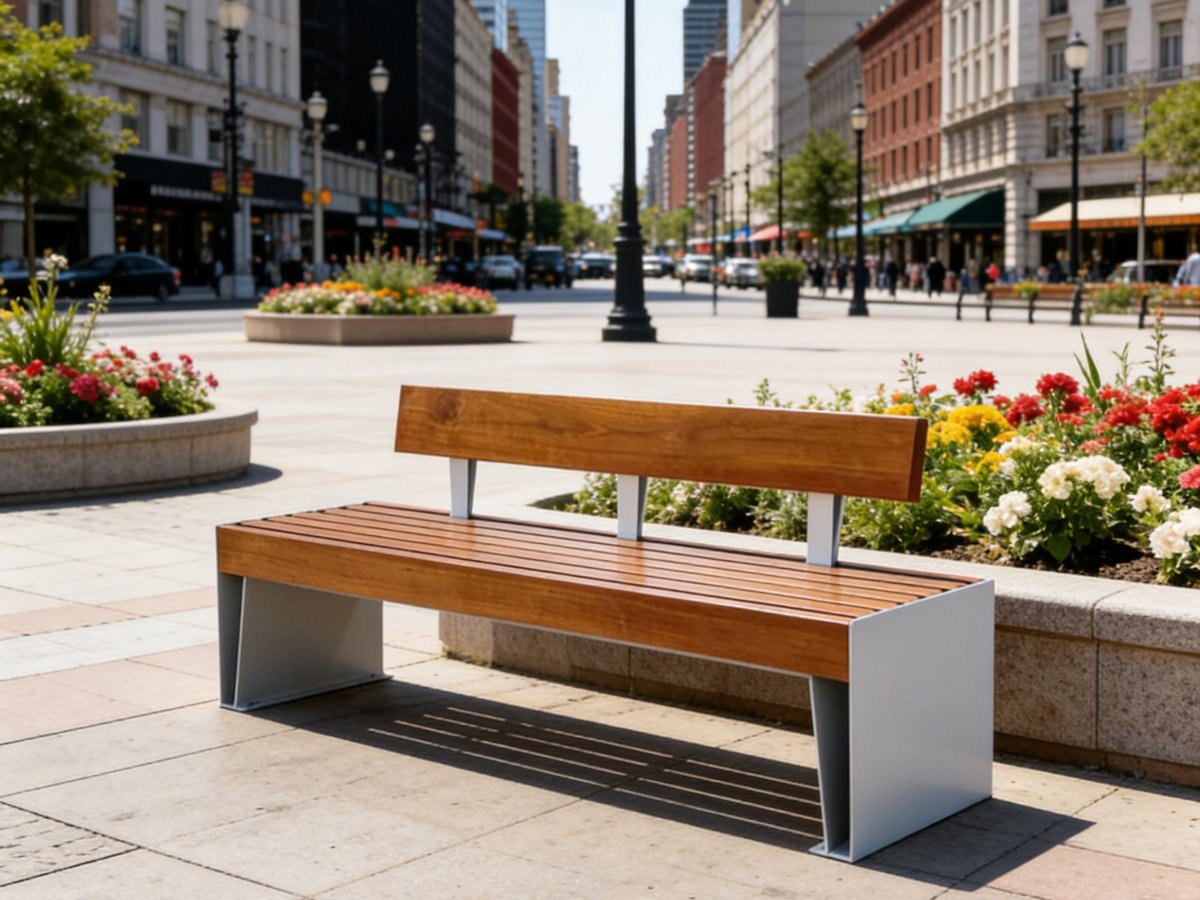
| Hardwood slats | 40–50 °C | Comfortable | Low conductivity; slats shed heat quickly |
| WPC slats | 45–55 °C | Warm | Darker WPC compounds run hotter |
| GFRC / concrete | 40–50 °C | Comfortable | High mass, slow to cool after sunset |
One clarification worth making in tender documents: perforation does not dramatically lower peak temperature, but it cuts contact area dramatically — and that is what users feel. A perforated seat at 50 °C is usable because skin only bridges a fraction of the surface and air moves through the openings. For a closer look at how open-area percentages and pattern choice work, see our guide to perforated metal in outdoor furniture.
Specify for Heat: A Six-Point Checklist
Municipal specifiers working in hot climates can use the following checklist during design review:
- Ban dark-coloured seat surfaces in unshaded locations. Set a maximum solar absorptance (or simply a minimum lightness value) for any coating on touchable surfaces.
- Prefer slatted or perforated contact surfaces over continuous plate in sun-exposed seating — they reduce contact area and speed cooling after sunset.
- Use timber or WPC slats where bare-skin comfort is a priority, especially on benches intended for elderly users and children.
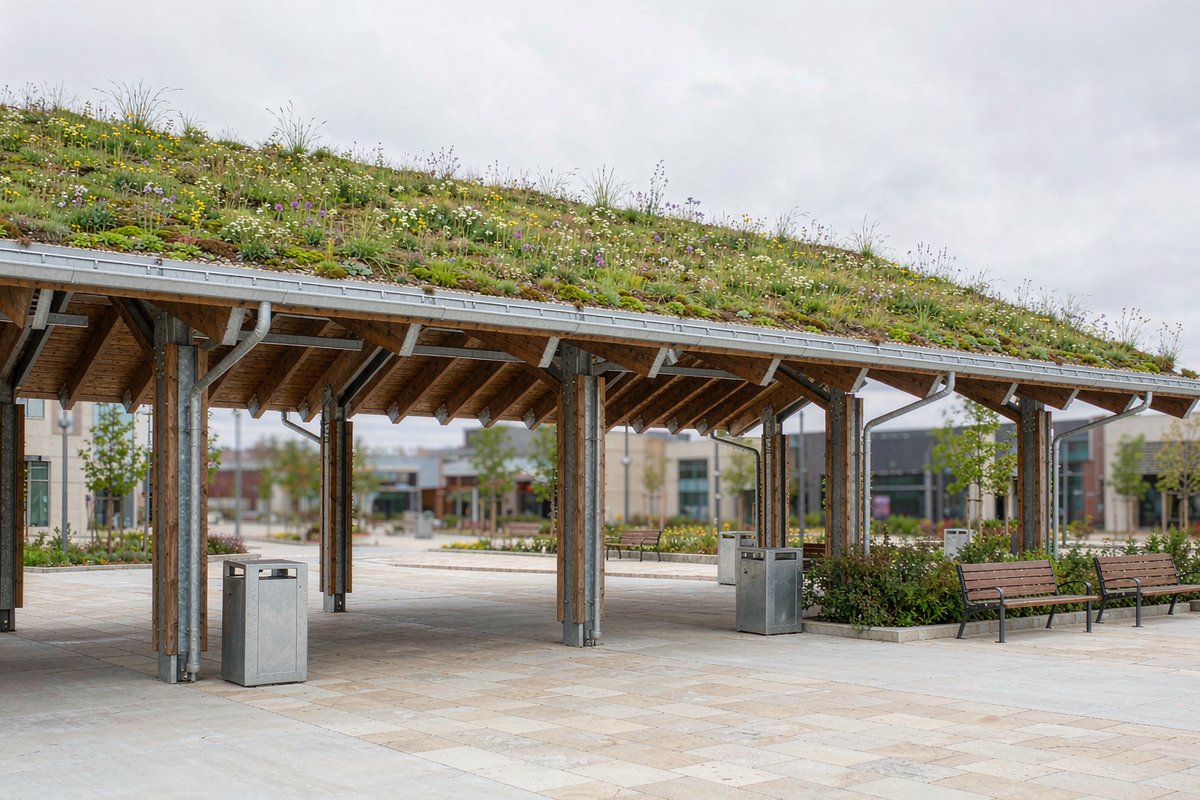
- Place seating in shade before specifying it. A light-coloured bench under a tree canopy or arcade outperforms a "cool material" bench in full sun.
- Orient backrests and bins so large metal faces are not west-facing, where they absorb the afternoon peak.
- Plant generously around furniture. Planters and tree pits cool the surrounding pavement through evapotranspiration; a bench beside a planted zone measures several degrees lower than one against a west wall.
Shade Placement Beats Cool Materials
The cheapest degree of cooling is shade. Where the masterplan already includes trees, align seating runs on the northern or eastern edge of canopies (in the northern hemisphere) so they stay shaded through the hottest hours. Where trees will take years to establish, temporary shade comes from umbrellas, pergolas or building cornices — and the furniture layout should anticipate the final shade footprint, not today's bare plaza.
A useful rule of thumb for hot-climate projects: spend the budget on placement first, material second, coating colour third. Reorienting a bench three metres to sit under an existing fig tree achieves more than upgrading its coating. This also links to planting strategy — the root-zone and clearance principles in our guide to site furniture around existing trees pair naturally with heat-resilient layouts.
Waste and Recycling Bins in High Heat
Bins are the forgotten thermal casualty of hot streetscapes. Dark steel waste containers in full sun accelerate odour, soften plastic liners and discourage use. Three adjustments matter:
- Specify light or mid-tone finishes for bins placed in open plazas; reserve dark colours for shaded runs.
- Perforated or vented bin bodies release heat and reduce condensation inside liners — the same perforation logic used on seating applies. Our Lakeside perforated litter bin is a common choice on sun-exposed promenades for exactly this reason.
- Increase collection frequency assumptions in the tender rather than doubling bin volume; hot-weather odour management is a service question, not a capacity one.
For sizing the network itself, the principles in our litter bin capacity planning guide apply unchanged in hot climates — only the service intervals shift.
Planters as Micro-Coolers
Large planters do double duty in heat-resilient design: they hold the planting that cools the air through evapotranspiration, and their mass moderates the temperature of the paving around them. For hot-climate schemes:
- Choose light-coloured GFRC or powder-coated bodies to avoid adding a heat-storage object to the plaza.
- Specify adequate soil volume and drainage — drought-stressed plants stop transpiring and a planter becomes just another hot box. Drainage and irrigation plumbing are covered in our dedicated planter drainage guide.
- Cluster planters to cast shade on seating, especially where tree pits conflict with utilities.
Maintenance Implications of Hot Climates
Heat accelerates every degradation mechanism in outdoor furniture: powder coating chalks faster under high UV, timber finishes fail sooner, and thermal cycling opens joints that then admit water. Hot-climate maintenance plans should therefore:
- Inspect coatings annually rather than on a generic two-year cycle, prioritising west-facing faces.
- Re-oil hardwood slats more frequently than temperate-climate schedules suggest — typically every 6–12 months.
- Expect fastener and anchor checks after the first summer, when thermal expansion has settled the installation.
None of this changes the specification; it changes the inspection calendar. Teams that adopt a hot-climate schedule from day one avoid the repainting cycle that catches most coastal and desert projects by year three.
How AOTUDE Supports Hot-Climate Projects
AOTUDE (https://aotude.com) manufactures commercial outdoor furniture in a 20,000 m² factory in Foshan, China, and ships factory-direct to municipal, landscape and contracting clients worldwide. For heat-resilient streetscapes we routinely support:
- Light and mid-tone powder coating options across RAL palettes, matched to solar-reflectance requirements on sun-exposed seating.
- Perforated and slatted contact surfaces on benches and bins to cut touch temperatures in unshaded locations.
- Hardwood, WPC and GFRC material options for projects where bare-skin comfort is a priority.
- OEM/ODM customisation — hole patterns, slat spacing and colourways can be adapted to the shading strategy of the masterplan.
- Per-model MOQ from 5 pcs (most models from 20 pcs, custom runs from 50 pcs), so pilot zones can be furnished before a city-wide rollout.
- 5–10 year structural warranties and documented, traceable supply chains for public procurement.
If you are preparing a tender for a hot-climate public realm project, browse our park benches range or request a quote — our team can advise on colour, perforation and material choices that keep furniture usable through the hottest months.