Street Furniture Design for Disassembly: A Circular Spec Guide
2026-10-27 · 7 min read · By AOTUDE Furniture Team
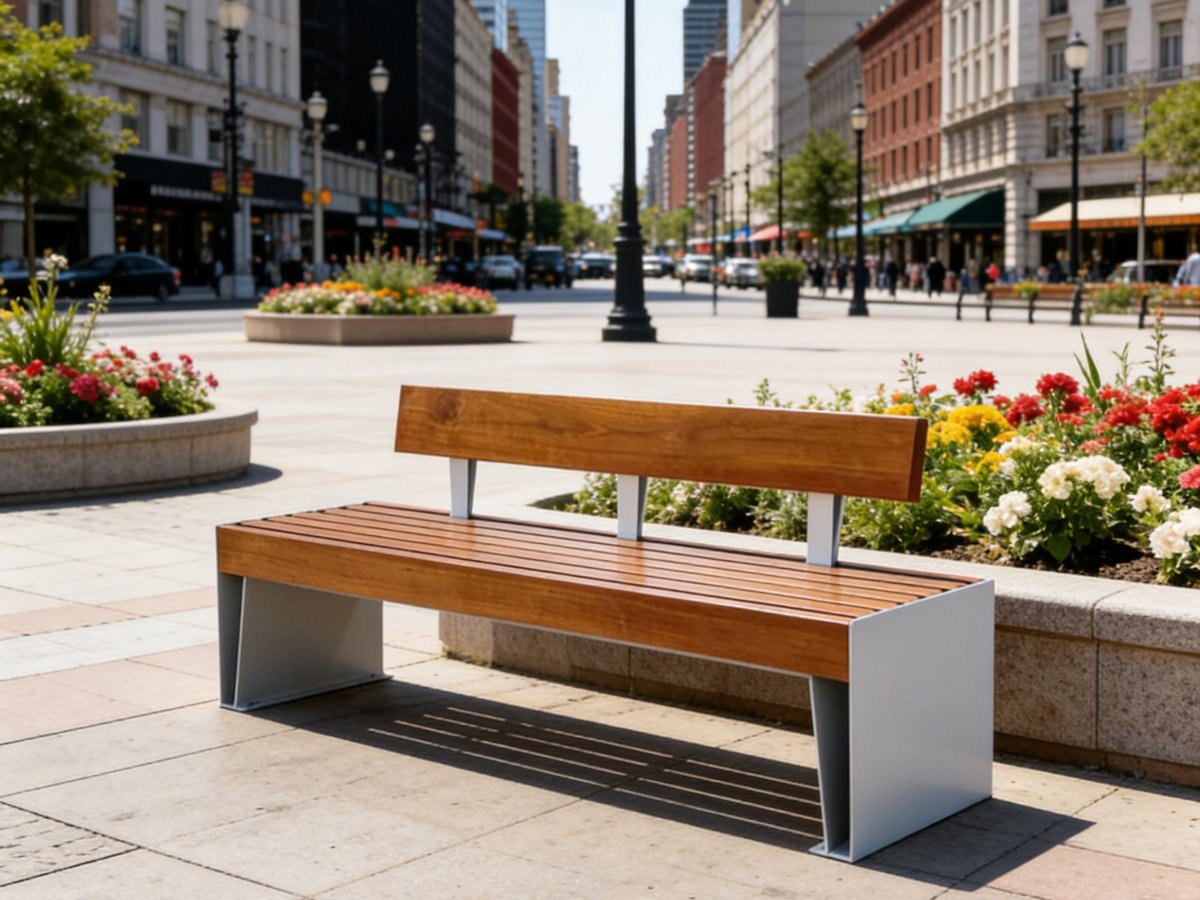
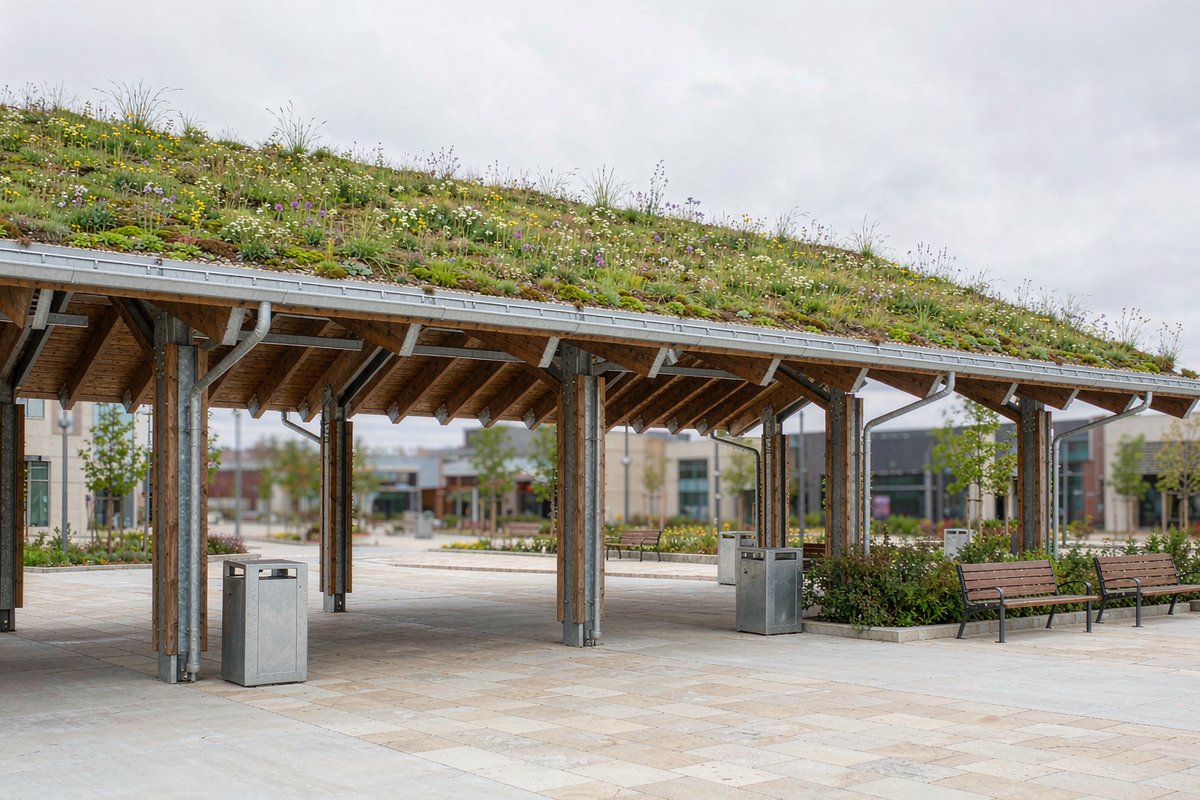
Every piece of street furniture has a second project at the end of its first one: the decommissioning. Most specifiers never think about it because it happens after their involvement ends — but city asset managers increasingly do think about it, because they are the ones left holding benches and bins that cannot be separated into recyclable streams. This is why design for disassembly (DfD) is moving from a sustainability talking point into a practical procurement requirement for public-space furniture. The principle is simple: a bench or litter bin designed so its parts can be separated with standard tools, without destroying the components, can be repaired, relocated, resold or recycled instead of landfilled whole.
This article explains what design for disassembly means at the level of joints, materials and fasteners, why it is appearing in circular-economy tenders, and which specification clauses actually deliver it. If you are preparing a tender with end-of-life requirements, this guide pairs well with our earlier article on shifting tender evaluation criteria for street furniture, which covers how circularity is scored; here we go one level deeper, into the product itself.
Why Disassembly Became a Procurement Issue
Three pressures are converging on municipal buyers:
- Landfill and incineration costs. A mixed-material bench — steel frame, glued composite boards, bonded plastic end caps — costs more to dispose of than to buy in some European municipalities. Separating the materials on site is slow, so whole units go to residual waste.
- Circular-economy targets. Cities with zero-waste or circular procurement programmes increasingly require evidence that furniture can be repaired and its materials recovered, not just a recycled-content percentage.
- Budget realism. A bench whose hardwood slats and feet can be replaced individually delivers a 20–30 year service life from one frame purchase. A sealed unit that fails as a whole is replaced as a whole — and capital budgets rarely stretch to wholesale replacement.
The result: questions about repairability and material recovery now appear in tender questionnaires, and manufacturers who cannot answer them with specifics — fastener types, joint methods, material labelling — lose points against those who can.
Bolted vs Welded: The Joint Decision That Defines End-of-Life
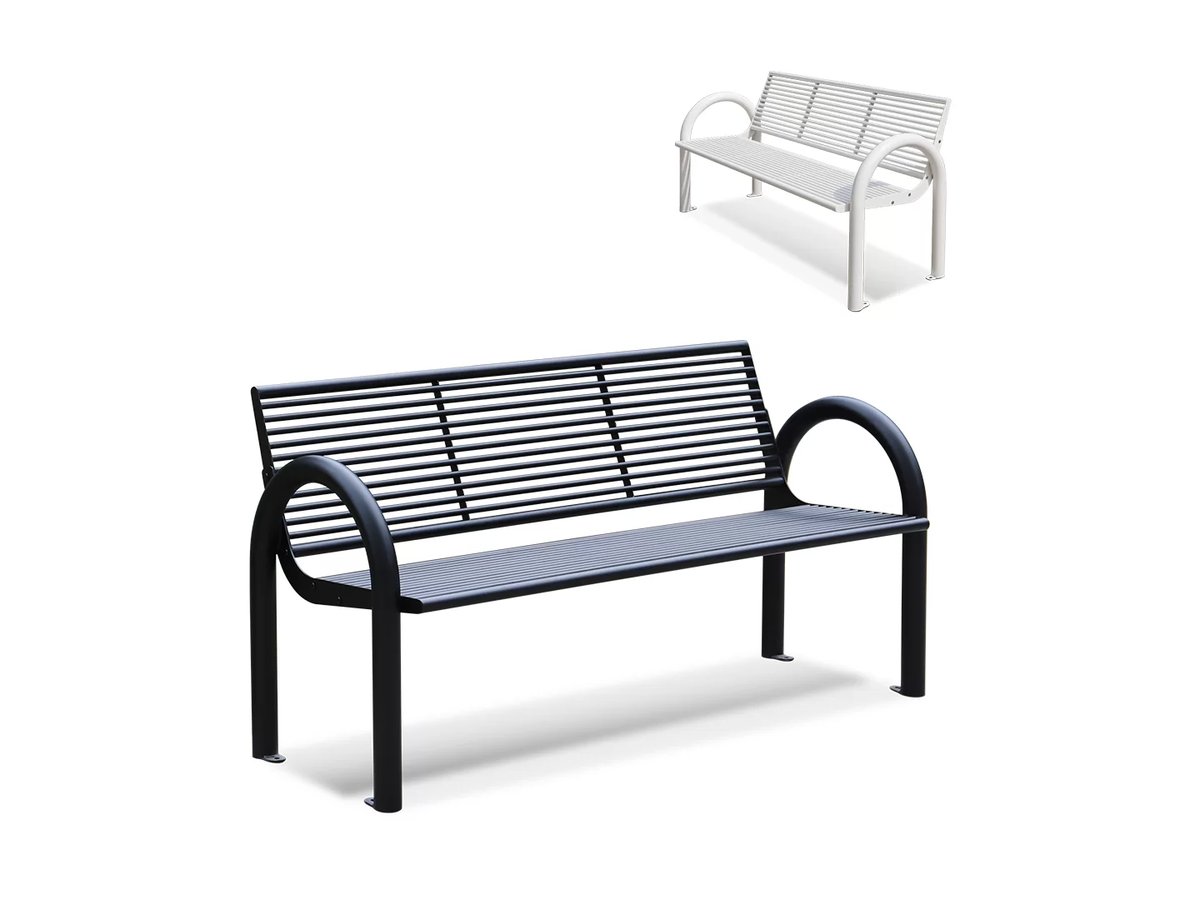
The single most consequential choice in street furniture design for disassembly is how parts join. Welding is cheaper per joint and stiffer, which is why it dominates low-cost ranges. But a welded assembly cannot be separated without cutting, and cutting destroys the part and contaminates the recycling stream with mixed debris. Bolted connections cost slightly more in hardware and assembly time, and they convert the end-of-life problem into a wrench-and-sort exercise.
| Criterion | Fully welded design | Bolted (mechanically fastened) design |
|---|---|---|
| End-of-life separation | Cutting required; parts destroyed | Standard hand tools; parts survive |
| Repairability | Component replaced by cutting and re-welding on site | Individual slats, legs and brackets swapped in minutes |
| Material segregation at recycling | Mixed-stream contamination risk | Steel, timber and hardware separated cleanly |
| Relocation and reuse | Whole unit only; awkward for long runs | Modules unbolted, stacked and moved cheaply |
| Typical first cost | Lower | Slightly higher (fasteners, machining) |
| Life-cycle cost for 20+ year assets | Higher — whole-unit replacement cycles | Lower — frame retained through multiple refurbishments |
Neither answer is wrong for every asset. A simple welded litter bin destined for a 7-year life may never justify bolted construction. But for long-life seating — the assets cities keep for decades — through-bolted slats on a bolted-together frame is the specification that keeps options open.
Material Choices That Keep Recycling Streams Clean
Disassembly only pays off if the separated parts are actually recyclable, so material selection and joint design have to be considered together. Steel is the easiest story: it is infinitely recyclable, and neither hot-dip galvanizing nor powder coating prevents recovery — galvanized steel goes into normal steel recycling, where the zinc is captured and recovered in the process. Frame thickness matters here too, because recycling value tracks with recoverable metal mass; our guide to steel gauge and frame thickness for outdoor furniture explains how to specify it.
The harder problems are at interfaces:
- Dissimilar-metal contact. Where stainless hardware meets galvanized steel or aluminium, isolation washers prevent galvanic corrosion — and also keep the recycling stream single-metal.
- Composite boards. Wood-plastic composites are rarely accepted by either timber or plastic recyclers. If circularity is a goal, hardwood slats (biodegradable, reusable, often resold second-hand) or mono-material boards are cleaner choices than hybrids.
- Bonded foam and adhesive-fixed parts. Anything glued on is a part that ends up in residual waste. Adhesives should be limited to areas where separation genuinely never matters.
- Coating strategy. Powder coating is compatible with steel recycling, but avoid painting over multiple substrates in one assembly — it is one more thing the recycler has to guess at.
A useful test for any drawing: ask the manufacturer to mark every material type and connection method. If they hesitate, the assembly probably mixes materials in ways even the factory cannot easily unwind.
A Disassembly Checklist for Specifiers
When reviewing product drawings or sample units, run this checklist:
- Standard fasteners only. Hex bolts and sockets rather than proprietary or one-way fixings; maintenance crews should need one common tool set.
- Accessible joints. Every fastener reachable without dismantling another part; hidden welds that trap bolts are a red flag.
- Sacrificial interface parts. Feet, wear plates and slat pads designed to be the parts that wear out — and to be replaced individually.
- Individually replaceable seat boards. Slats fixed with through-bolts and barrel nuts, not staples or adhesive.
- Material marking. Moulded or stamped material codes on major plastic parts; steel and aluminium identifiable at a glance.
- No mixed-stream composites in structural parts.
- Spare parts availability committed in writing, with part numbers in the maintenance manual.
Two or three weaknesses can be acceptable if documented; a design that fails most of these lines will not survive contact with a circular procurement evaluation.
Writing Disassembly Into the Tender
Circles are closed by contract, not by intention. The clauses that make design for disassembly enforceable are short and specific:
- Reparability requirement: all seating slats, feet and fixing components replaceable individually with standard tools, demonstrated at sample review.
- Material disclosure: a bill of materials identifying substrate, finish and joint method for every component.
- End-of-life statement: manufacturer confirms that the product separates into recyclable material groups using hand tools.
- Spare parts commitment: availability of replacement components for a defined period (10 years is a defensible figure) after purchase.
- Take-back or refurbishment option: priced as an option, so the city can choose it when decommissioning actually arrives.
These clauses cost compliant manufacturers little and eliminate the worst offenders early in evaluation.
Modular Systems: The Practical Starting Point
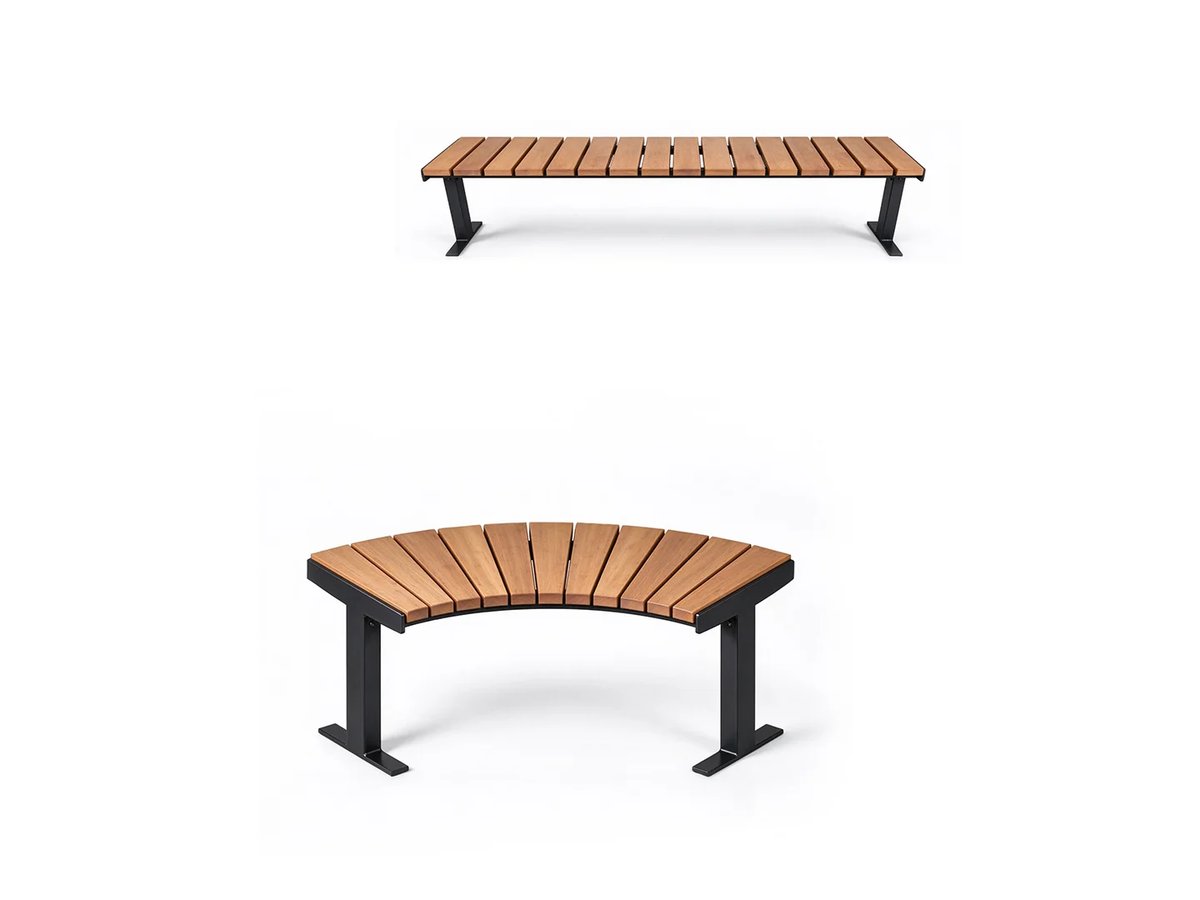
Full DfD compliance is easiest to achieve on modular platforms, because the design intent — interchangeable parts on a shared frame — is already the product concept. Bench systems built from bolted straight and curved segments, such as the Modular Curve Bench, can be reconfigured, extended, repaired segment by segment and ultimately separated into clean material groups, all with the same fastener set. For procurement teams, specifying from a modular range also future-proofs the streetscape: a plaza laid out this year can absorb new segments, a tree ring or an S-curve run years later without replacing the original units.
Browse the full park bench category to compare modular and fixed designs, and shortlist by joint type before you compare prices — end-of-life value is decided at the joint, not at the checkout.
AOTUDE (aotude.com) manufactures outdoor site furniture factory-direct from a 20,000 m² plant in Foshan, China, supplying municipalities, landscape contractors and developers worldwide. Our bench and bin ranges favour through-bolted construction, individually replaceable hardwood or WPC slats and bolted-together steel frames — the details that make refurbishment and material recovery practical, not theoretical. We ship with per-model MOQ from 5 pcs (most models from 20 pcs; custom runs from 50 pcs), offer OEM/ODM customisation for circular-procurement projects, and back the range with 5–10 year warranties. If your next tender includes repairability or end-of-life clauses, send us the requirements and our engineering team will map them against product drawings before you commit.