Age-Friendly Cities: Specifying Public Seating for Older Adults
2026-10-31 · 7 min read · By AOTUDE Furniture Team
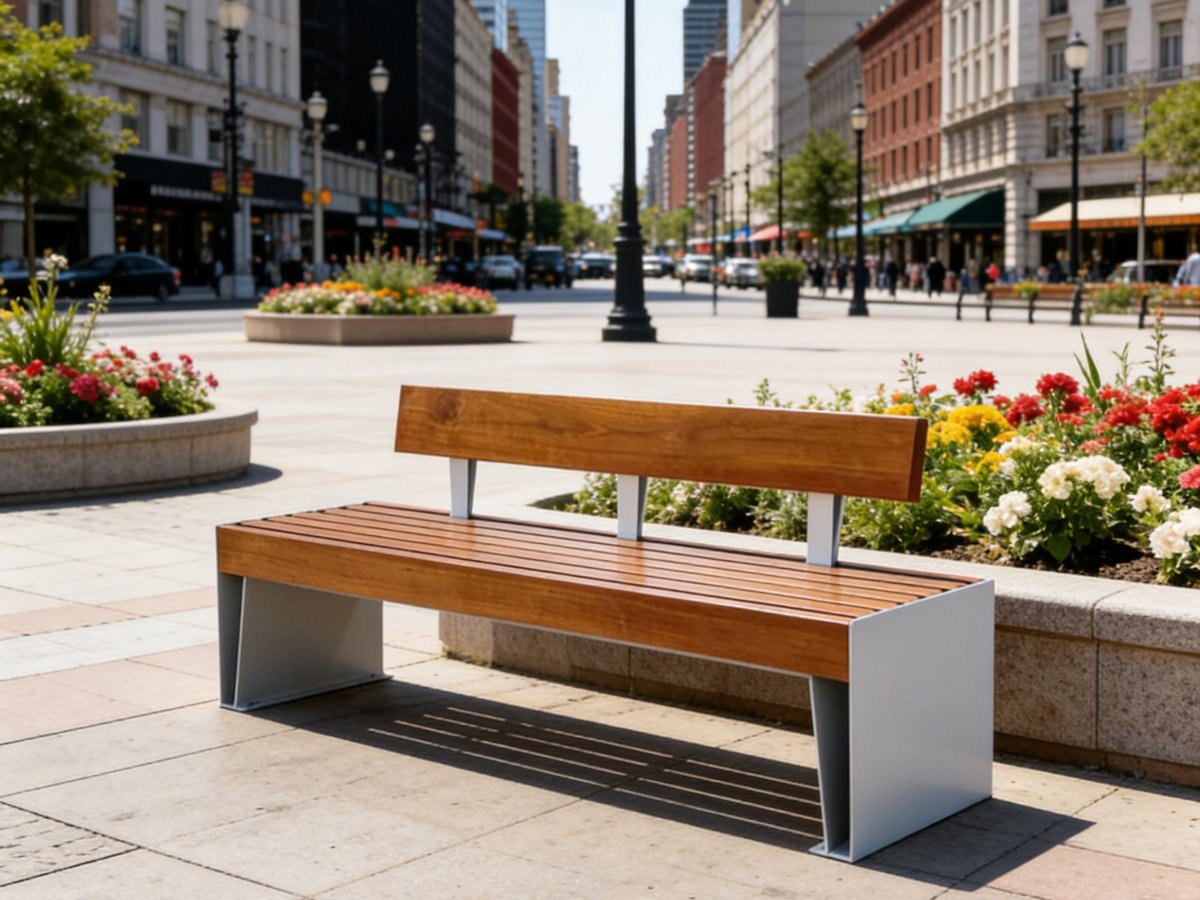
The demographics of public space are changing faster than most cities' furniture inventories. By 2050, one in four people in Europe and much of East Asia will be over 65, and the majority of their trips are made on foot — to markets, clinics, parks and bus stops. For an older adult with reduced stamina or joint pain, a fifteen-minute walk is only possible if there is somewhere to sit halfway through. That single fact reframes what a park bench is: not an amenity scattered where space allows, but walking-route infrastructure, planned with the same seriousness as lighting or kerb ramps. This is the core idea behind age-friendly public seating, and it is why "age-friendly city" programmes increasingly audit benches before they audit anything else.
This article looks at what age-friendly seating means in practice for municipal departments, landscape architects and contractors: how far apart rest points should be, what geometry actually helps an older person sit down and stand up again, which placement patterns work, and what to put in the specification when you tender for it.
Rest Points Are Route Infrastructure, Not Decoration
The most common mistake in age-friendly planning is treating seating as a scatter of individual objects. Older pedestrians experience the city as a chain of walking segments, and a route is only usable if every segment has a rest point at its end. Planners working from walking-pace surveys generally arrive at rest-point intervals between 100 and 125 metres on primary pedestrian routes — roughly a one-to-two-minute walk for someone moving at a slow, assisted pace. On steep grades, near clinics or transit interchanges, and in hot climates, the interval shortens further.
Three consequences follow for anyone planning a scheme:
- Map the routes first, then place the benches. Start from the desire lines between origins and destinations (market, clinic, park gate, bus stop), break them into segments, and place seating at the joints. Benches placed by visual symmetry rather than route logic rarely land where they are needed.
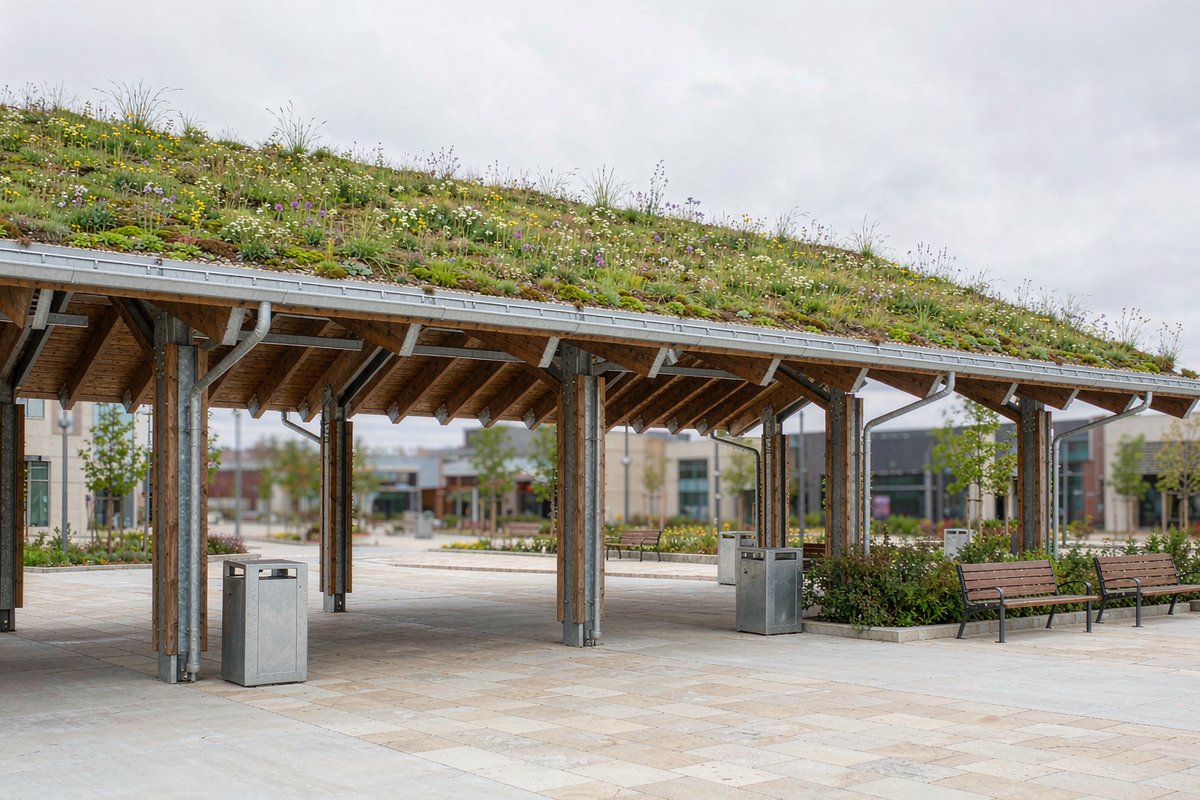
- A seat without shade is only half a rest point. Older adults also need protection from sun and heat while resting, so pair seating with tree canopy, a pergola or a shaded wall wherever the route has none.
- Count getting up, not just sitting down. The hardest part of the trip for many users is rising from a low, deep, slatted seat with nothing to push on. Seat geometry — covered in the next section — matters as much as location.
Seat Geometry: What Actually Helps Older Adults
A bench that serves a twenty-year-old comfortably can be unusable for an eighty-year-old. The differences come down to a handful of measurable parameters, and they belong in the drawing set, not in the notes column. The ranges below reflect values commonly specified in public-realm guidance; projects should confirm final dimensions against local accessibility standards and the ergonomics data in our guide to outdoor bench dimensions.
| Parameter | Commonly specified range | Why it matters for older users |
|---|---|---|
| Seat height | 430–480 mm | Below ~420 mm, rising requires knee strength many users no longer have |
| Seat depth | 400–450 mm | Too deep and users slide forward or cannot reach the floor |
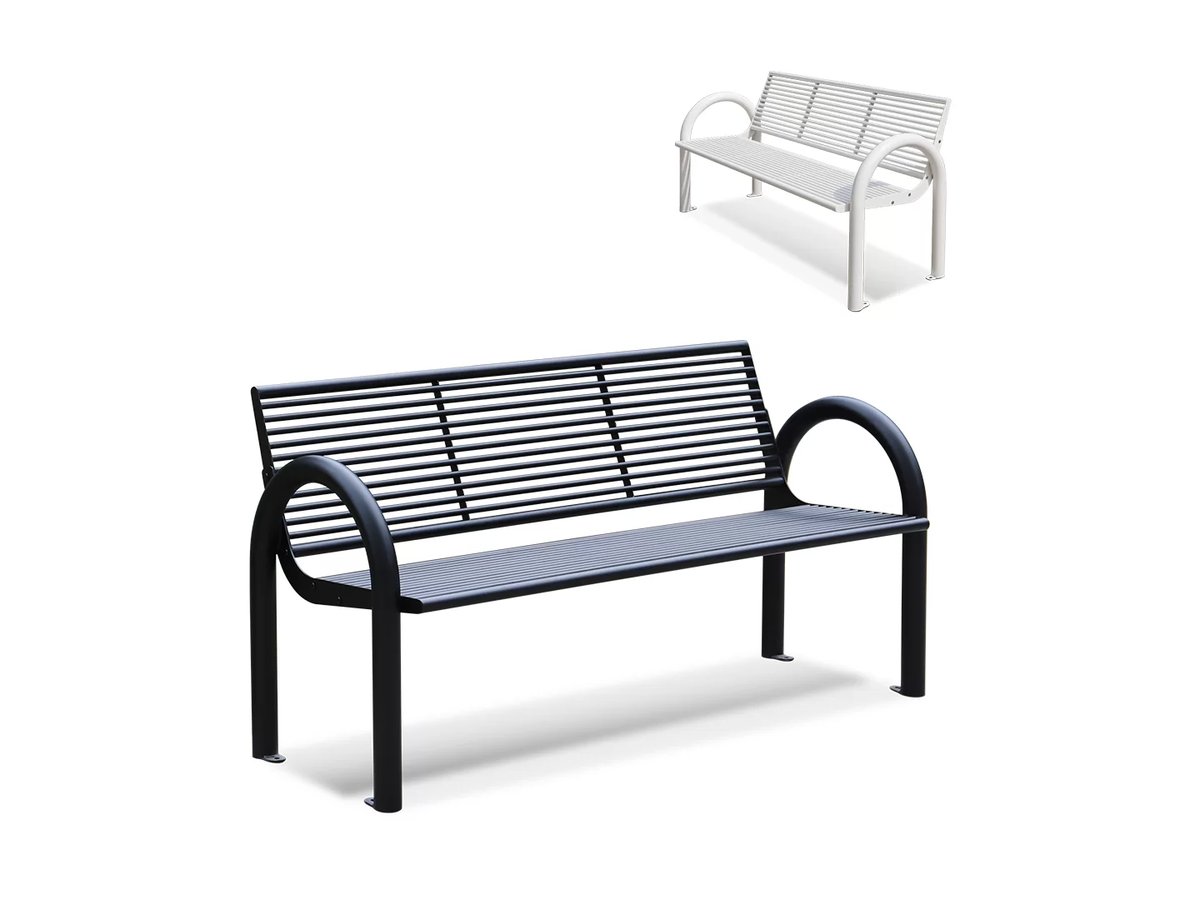
| Armrest height above seat | 200–250 mm | Provides the push-off point that makes standing up possible |
| Armrest reach | Mid-bench, not ends only | Users in the middle of a 2 m bench need a grab point too |
| Backrest angle | 95–105° from seat | A slight lean reduces spinal load during longer rests |
| Gap between slats | ≤ 10–12 mm | Wide gaps catch canes and walking-stick tips and thin heels |
Two details deserve emphasis. First, armrests on every seat position is the single highest-value upgrade in age-friendly seating — a bench with armrests at both ends and at least one intermediate position effectively doubles the number of people who can use it unassisted. Second, avoid ultra-low "designer" platforms and deep lounge profiles on pedestrian routes; they photograph well and exclude exactly the users the route exists to serve.
Placement Patterns: Spacing, Clusters and Sightlines
Once route logic and seat geometry are settled, placement becomes a pattern problem. Experience from age-friendly schemes points to three patterns worth repeating:
- Linear rest points on walking routes. Benches at regular intervals along the primary route, oriented so users sit facing the path — older pedestrians strongly prefer to keep the route in view while resting.
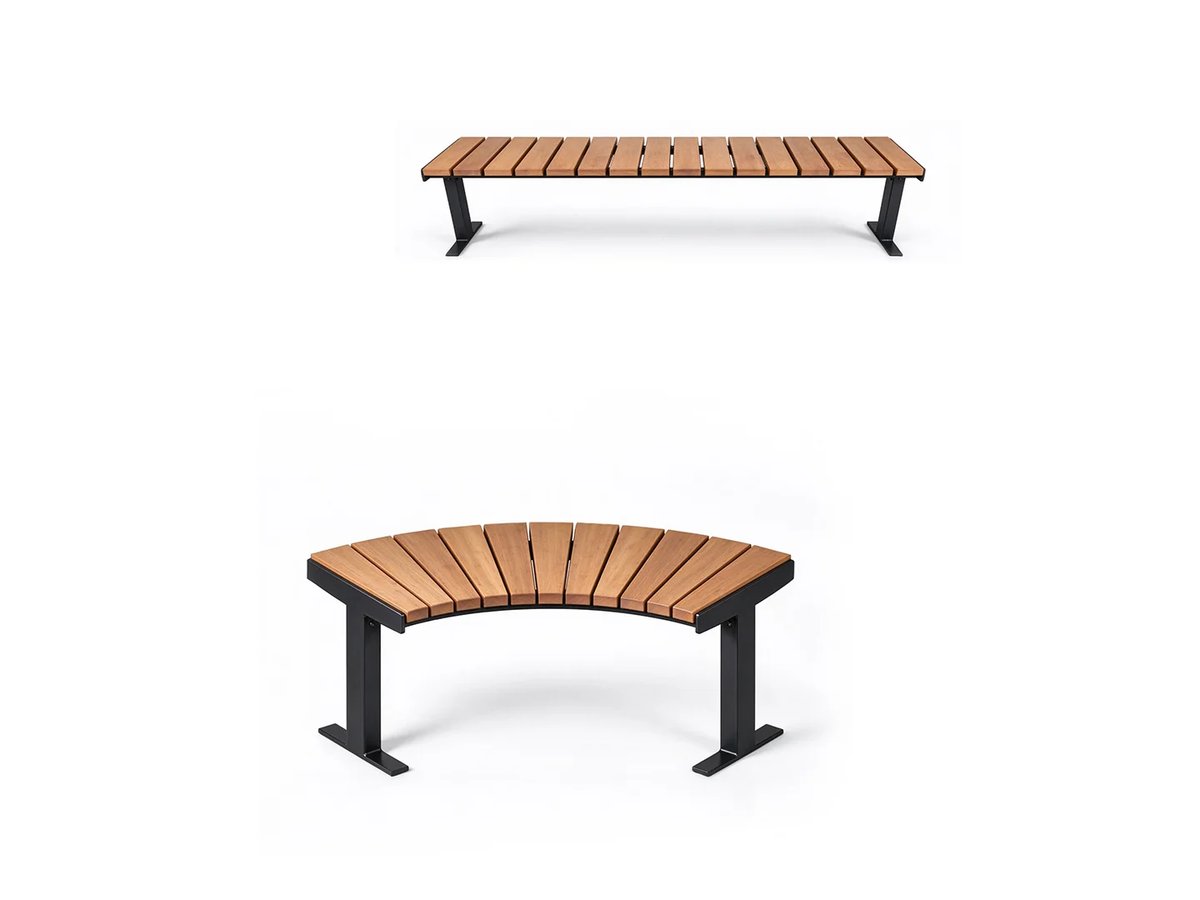
- Clustered seating at destination nodes. At markets, park entrances and transit stops, group three to five seats in a semicircle rather than a single long line. Clustering supports social contact, which is itself a public-health goal, and lets carers sit beside the people they accompany. Modular and curved bench systems work well here because they can form the arc without custom fabrication.
- Seats with a clear approach. Leave a firm, level standing space beside every bench for walkers, mobility scooters and a companion's wheelchair. A bench hard against a wall or planter looks tidy and functions badly.
One planning note: seat spacing on recreational loops inside parks can be looser than on commuter or errand routes, because users choose the loop and expect pauses. The strict interval belongs on the routes people must walk, not the ones they choose to.
Materials and Maintenance for High-Use Rest Points
Age-friendly benches are, by definition, heavily used benches — the ones people rely on get sat on dozens of times a day, every day. Specification should anticipate that load:
- Frames: hot-dip galvanized steel with a powder-coated topcoat, or marine-grade stainless near the coast, is the standard pairing for a 10-year-plus structural life in public settings.
- Slats: hardwood slats with a thermally or oil-treated finish stay comfortable in both summer heat and winter cold, unlike metal seating surfaces that become too hot or too cold to touch. Composite slats are a low-maintenance alternative where vandals or moisture are the dominant risk.
- Fixings: tamper-resistant but replaceable. A cracked slat on the most important bench of a route should be a 15-minute repair, not a replacement order — which is a good argument for designs that sell spare slats.
- Anchoring: surface-mounted flanges for most urban routes (relocation is likely over a bench's life), in-ground anchoring where vandalism or vehicle impact is a concern.
A Specification Checklist for Age-Friendly Seating Tenders
When seat height, armrests and route spacing go into a tender document, the result is measurable. A compact checklist:
- Rest-point interval defined per route class (e.g. ≤ 125 m on primary pedestrian routes)
- Seat height 430–480 mm and seat depth 400–450 mm on all route seating
- Armrests at both ends and at intermediate positions on benches over 1.5 m
- Backrest on all seating intended for rest (backless models only on secondary routes)
- Gap between slats ≤ 12 mm; no sharp edges or projecting fixings on the seat surface
- Level, firm standing space (≥ 900 mm) beside at least one seat position per cluster
- Shaded rest points on routes with no existing canopy
- Spare-slat availability and coating repair terms included in the offer
Working with a Manufacturer on Age-Friendly Schemes
Age-friendly retrofits are usually mid-volume projects: dozens of benches across a district rather than a handful for a flagship square. This is exactly the scale where AOTUDE (https://aotude.com) operates. We are a factory-direct manufacturer of outdoor street furniture from a 20,000 m² factory in Foshan, China, producing park benches, litter bins, planters, picnic tables and bike racks for municipal and landscape buyers in Europe, North America and beyond. Per-model MOQ starts from 5 pcs (most standard models from 20 pcs, custom runs from 50 pcs), so a district-wide retrofit with two or three bench types is an economical order rather than an awkward one. We manufacture to your specified seat heights, armrest positions and coating colours as OEM/ODM, and back frames and structures with 5–10 year warranties. If you are mapping rest points for a walking-route programme, send us the schedule of bench types and spacing — our team will return a per-model quotation with anchoring options and finish samples.