How to Choose Outdoor Furniture Materials: Steel, Corten, Hardwood and Recycled Plastic Compared
2026-09-22 · 4 min read · By AOTUDE Furniture Team
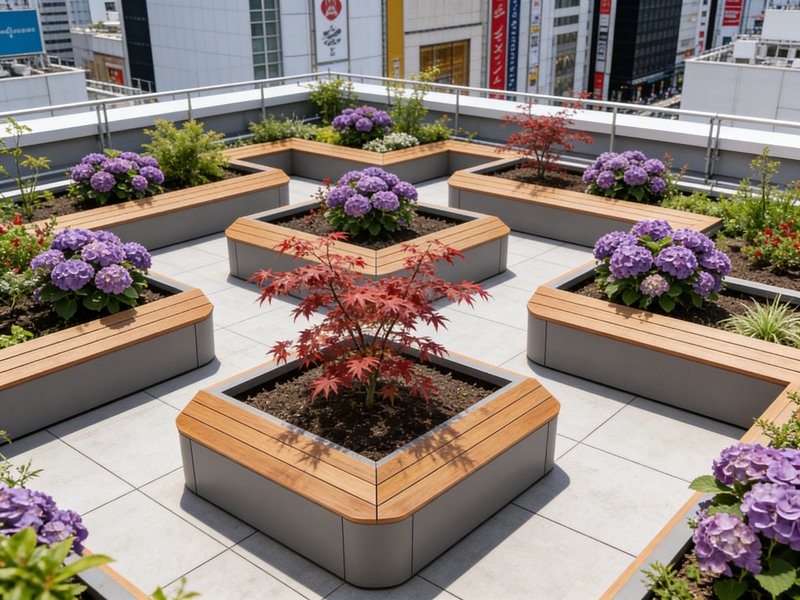
Every public furniture project starts with the same question: what should it be made of? The material decides not only how a bench or planter looks on day one, but how it performs in year ten — and what it costs the city across its whole life. As a factory that works with all four major material families every day, here is the comparison we give our own clients.
The Four Material Families at a Glance
| Material | Corrosion / rot behavior | Initial cost | Maintenance | Best for |
|---|---|---|---|---|
| Galvanized + powder-coated steel | Barrier coating over zinc layer; fails only at deep scratches | Baseline | Touch up scratches; repaint after 10–15 years | Most municipal projects, coastal sites, brand-color schemes |
| Weathering steel (corten) | Forms a self-repairing patina | 20–40% higher | Essentially none | Signature landscapes, heritage districts, inland sites |
| Hardwood (FSC teak, oak, acacia) | Natural oils resist decay; greys over time | Medium–high | Annual oiling or let silver naturally | Parks, plazas, warm-touch seating surfaces |
| Recycled plastic lumber | Zero rot, immune to insects and chemicals | Medium | Wash only | High-vandalism zones, wetlands, coastal boardwalks |
Galvanized + Powder-Coated Steel: the Municipal Workhorse
The majority of street furniture worldwide is steel, and for good reason. When the frame is hot-dip galvanized before coating, the zinc layer corrodes preferentially to protect the steel beneath it. The polyester powder coat on top blocks moisture and delivers any RAL color a city's branding program requires.
The system's only real weakness is mechanical: a deep scratch down to bare steel starts localized corrosion at that point. That is why weld quality and coating thickness (look for 60–80 µm minimum on exposed faces) matter more than the steel grade itself.
Specification tip: always require galvanization beneath the powder coat. Paint on bare steel may look identical on delivery day but will blister within two or three seasons outdoors.
Weathering Steel: the Premium, Zero-Maintenance Option
Corten steel contains copper, chromium and nickel additions that let it form a dense, self-repairing oxide layer. Once the patina stabilizes — typically over 6–18 months of wet/dry cycles — no painting program is ever needed. We cover the corten versus powder-coated decision in depth in a separate comparison, including the two classic mistakes: specifying it within a kilometer of a coastline, and installing it over pale paving before the runoff phase has passed.
Choose weathering steel when the project's identity justifies the premium: signature plazas, heritage settings and landscapes where the warm rust tone is part of the design language.
Hardwood: the Touch That People Prefer
Studies of public seating consistently show people prefer the feel of wood — it stays comfortable in both summer heat and winter cold, unlike bare steel. For structural longevity, pick species with natural durability or proven treatment:
- FSC-certified teak and acacia — high natural oil content, 25+ year service life
- Thermowood and Accoya — thermally or acetylated modified, extremely stable
- Class 4 treated pine — budget option, shorter life but excellent value
Slat fixing details matter as much as the species: through-bolted slats with anti-vandal nuts survive far longer than surface-screwed ones, because screws work loose as the wood expands and contracts.
Recycled Plastic Lumber: the Indestructible Niche
Recycled plastic lumber will never win a beauty contest against hardwood benches, but it simply does not rot, splinter or corrode, and it shrugs off graffiti solvents. For boardwalks, wetlands, piers and neighborhoods with heavy vandalism, it routinely outlasts every alternative at a lower lifecycle cost.
Matching Material to Site: a 5-Question Checklist
- How far from salt water? Within ~1 km of the shore, use galvanized + coated steel or recycled plastic — not weathering steel.
- Who maintains it? Low-maintenance budgets should favor corten or recycled plastic.
- Is color required? Brand programs and wayfinding colors are only possible with powder coating.
- What is the vandalism profile? Heavy abuse points to thicker steel gauges (1.5–2 mm minimum) and bolted hardwood or recycled plastic slats.
- What is the 20-year budget, not the 20-day one? A cheaper bench that is replaced every eight years costs more than a premium one installed once.
Our Recommendation
For most municipal and commercial projects, a galvanized + powder-coated steel frame with FSC hardwood slats delivers the best balance of cost, color flexibility, comfort and lifespan — which is exactly why it dominates our bench range and planter range. Step up to weathering steel for signature projects, and down to recycled plastic for the toughest sites.
Whatever you specify, ask the manufacturer for the mill certificate and coating-thickness report. Two products can look identical in a catalog photo and behave completely differently in year five.