Powder Coating Touch-Up and Repair for Outdoor Furniture: Field Methods, Colour Matching and Recoat Timing
2026-10-21 · 6 min read · By AOTUDE Furniture Team

A scratched powder-coated bench is one of the cheapest problems in public space management — and one of the most expensive to ignore. The film on a well-made steel bench is typically 60–120 µm thick; a scrape from a snow shovel or a mower deck cuts through it in a second, and from that moment bare steel is exposed to rain, de-icing salt and freeze–thaw cycling. A touch-up completed within days costs one technician a few minutes and a few grams of material. The same chip left for three winters can rust-bleed across an entire panel, stain the pavement beneath it and turn a repair line item into a panel replacement. This guide sets out how municipal teams, contractors and facility managers should handle powder coating touch-up and repair on outdoor furniture: what to use, how to match the colour, what a field repair can and cannot achieve, and how to decide when spot repair stops making sense and a recoat programme takes over.
Why Powder Coating Chips and Where Damage Concentrates
Powder coating is a thermoset film — polyester or polyester-epoxy powder electrostatically applied and oven-cured into a continuous skin. It adheres far better than wet paint and resists UV, but it is still a brittle film on a ductile substrate. Damage concentrates where mechanics meet edges:
- Lower rails and legs, struck by grass cutters, sweepers and snow plough blades.
- Corners and edge radii, where film thickness is naturally lower and impact focuses.
- Fixing points and drill holes, disturbed during relocation or slat replacement.
- Ground-level contact, where standing water, grit and de-icing salt attack any breach longest.
Inspect these zones first in any seasonal round — the seasonal maintenance checklist places coating inspection at ground level and on corners in every spring walk-through, precisely because that is where chips start.
Field Touch-Up: The Four-Step Method
A durable field repair is less about the topcoat than about what goes under it. The mistake most crews make is brushing matching paint straight over bright metal; without surface prep and a primer, the repair lifts within a season. The working method:
- Clean and de-rust the spot. Wash with neutral detergent, dry, then remove rust and loose coating with fine abrasive paper or a Scotch-Brite pad, feathering 10–15 mm into sound coating beyond the chip's edge. Degrease with isopropyl alcohol and let it flash off.
- Prime bare steel immediately. On carbon steel apply a cold-curing zinc-rich primer (a two-pack epoxy zinc primer is ideal; single-pack zinc primers are acceptable for small spots). Zinc in the primer provides sacrificial protection under the repair, the same principle as the hot-dip layer beneath a quality factory finish. On aluminum or stainless substrates the zinc step is unnecessary — an adhesion primer suffices.
- Build the topcoat in thin layers. Use a matched RAL aerosol or brush-applied two-pack topcoat, applying 2–3 thin coats rather than one heavy one, with light abrading between coats if the film build is visible. Thin layers cure harder and are far less prone to sagging and edge pooling.
- Respect cure time before service. Ambient-cure repair materials reach handling strength in hours but full hardness in several days. Keep cleaners, adhesives and stickers off the patch for at least a week.
For most sites, the economics are unarguable: a kit of primer, matched aerosols and abrasives costs less than a single labour hour of an emergency call-out, and prevents rust staining that no cleaner fully removes from concrete.
Colour Matching: What a Repair Can and Cannot Promise
Field touch-up will almost never be invisible, and specifying teams should plan for "undetectable at two metres" rather than "invisible". Three factors control the match:
| Factor | What it means | Practical consequence |
|---|---|---|
| Pigment batch drift | Powder formulations drift slightly between production batches | A repair aerosol mixed against a five-year-old bench will not be a perfect spectral match — view the patch from normal viewing distance |
| Gloss and texture | Matt, semi-gloss and textured finishes reflect light differently | Order the repair material in the original gloss level; a gloss patch on a matt panel reads as a blemish from far away |
| Application method | Sprayed factory film vs brushed or aerosol field film | Texture and orange peel differ; on textured finishes, dab with a sponge rather than brushing to approximate the grain |
The way to make matching easy is to fix the colour at the factory and record it. Every AOTUDE quotation states the powder system and RAL code — our RAL colour selection guide explains how specifiers lock colour, gloss and film thickness into tender documents — and matched repair aerosols can be ordered with the furniture so each depot holds its own touch-up stock from day one.
When Spot Repair Is No Longer Enough
Spot repair is the right tool up to a threshold. Beyond it, patching produces a mottled surface at rising cost per square metre. Shift to a planned recoat or panel replacement when:
- Coating damage covers more than roughly 10% of a visible face, or patches have already failed once on the same panel.
- Rust bleeding appears at edges and fixings across multiple units — the substrate protection itself is spent.
- Chalking, fading or gloss loss makes repaired patches stand out more than the surrounding wear, which is typical after 10–15 years of UV exposure.
- A piece is being relocated or refurbished anyway, when stripping and recoating in a workshop costs a fraction of replacement.
At that point the lifecycle arithmetic is simple: recoating a structurally sound frame typically restores 15+ years of service for a fraction of a new unit's price, provided the substrate was properly galvanised or stainless in the first place.
Building Repair Readiness into the Specification
The cheapest touch-up is the one planned at purchase. When evaluating quotations, require suppliers to state:
- Powder system and nominal film thickness (60–120 µm is the working range for exterior polyester on galvanised steel).
- Substrate protection — hot-dip galvanising or equivalent beneath the coating on carbon steel, so a chip never means immediate rust-through.
- Matched touch-up supply: RAL aerosols or repair kits deliverable with the order, and reorderable years later.
- Replacement panel and slat availability at least ten years after purchase, so panel-level repair stays possible.
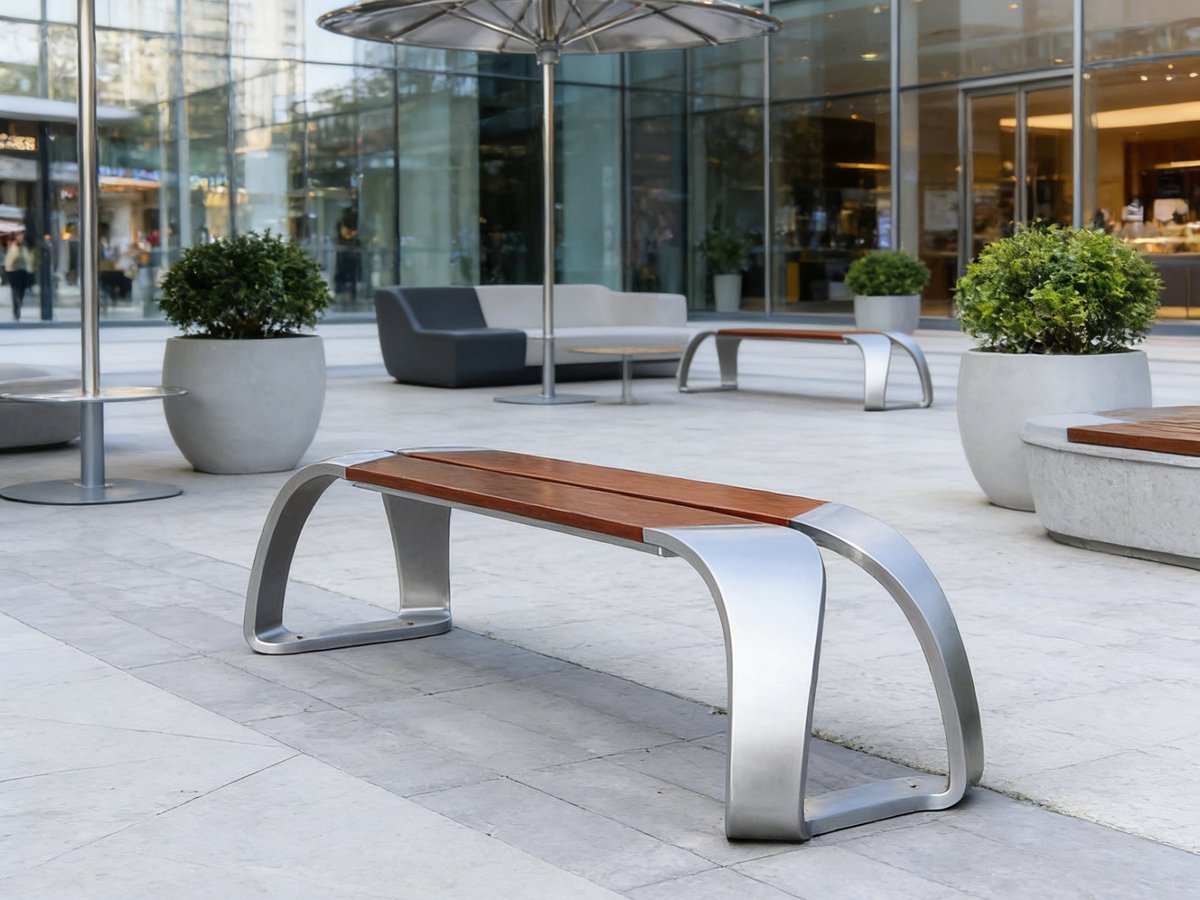
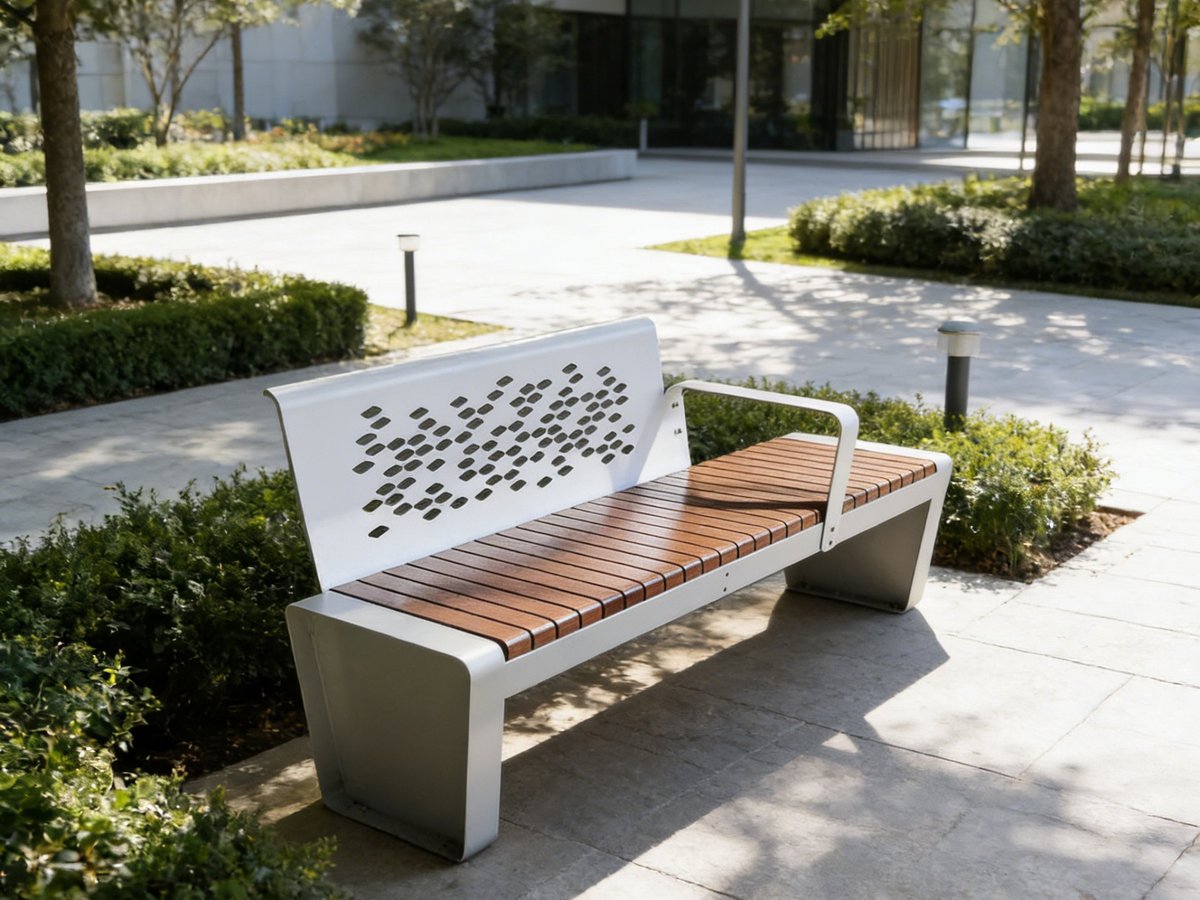
Furniture built this way — powder-coated steel frames over galvanised substrates with documented film builds, as on the metro steel bench — turns every chip from a corrosion event into a five-minute cosmetic job. For teams assembling a full seating or streetscape package, the park benches category groups the matching powder-coated and hardwood models.
Factory-Direct Support for Coating Repair
AOTUDE manufactures powder-coated steel and aluminum benches, litter bins, planters and bike racks at its 20,000 m² factory in Foshan, China, exporting factory-direct to municipal, design and contracting clients in over 40 countries. Because we coat in-house, we hold the exact powder formulations behind every order: we can state system, RAL and film thickness in writing, supply matched touch-up kits with shipment, quote OEM/ODM production from your drawings at per-model MOQ from 5 pcs (custom runs from 50 pcs), and back structures with 5–10 year warranties. If your maintenance team needs repair-ready furniture with colour and coating documentation that survives a decade of reorders, send your specification or drawings for a factory-direct quotation at https://aotude.com.