2026-09-27
Powder Coating RAL Color Selection for Outdoor Site Furniture: A Specifier's Guide
How to choose RAL colors and powder coating systems for public benches, bins and planters: color fastness, gloss levels, UV stability, corrosion classes and practical palette planning for cities and landscape projects.
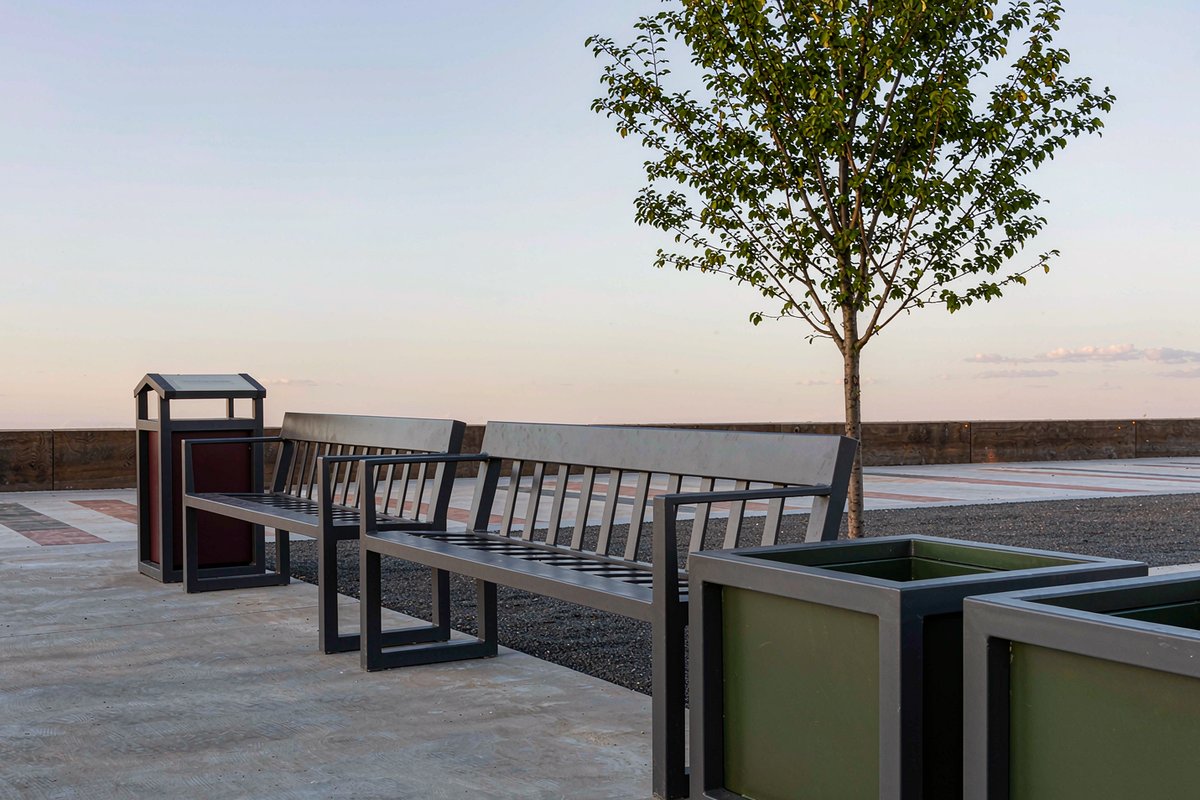
Ask any manufacturer for "green park furniture" and you will get a different green on every sample panel — and possibly a different one on each production batch. Color is one of the most contested line items in urban furniture procurement, yet it is usually specified with less rigor than a bolt size. For municipal buyers, landscape architects and contractors, a disciplined approach to powder coating RAL color selection avoids the three classic failures: a shade that looks wrong against the site palette, a coating that fades within two seasons, and color drift between delivery batches. This guide walks through how professionals should specify color for benches, litter bins, planters and bike racks that live outdoors for a decade or more.
Why RAL Is the Default Language of Site Furniture
RAL is a German color standard that assigns every shade a four-digit code — RAL 7016 anthracite grey, RAL 6005 moss green, RAL 9005 jet black and so on. Because each code corresponds to a defined formulation, a specifier in Rotterdam can write "RAL 7016, semi-matt" and a factory in Foshan will produce the same color to the same tolerance. That single property makes RAL the de facto standard for international tenders:
- Unambiguous communication: no Pantone-to-screen mismatch, no "sample approved verbally" disputes
- Batch-to-batch consistency: reputable powder suppliers guarantee their RAL formulations across years, which matters when you reorder matching pieces in year three
- Widespread availability: every serious powder coating line stocks or can source standard RAL shades without a minimum-batch surcharge
Custom colors outside the RAL fan are possible, but they typically require a minimum powder order (often 50–100 kg) and should only be used where brand colors genuinely demand it.
Color Fastness: Not All RAL Colors Age the Same
The coating system matters as much as the code. Outdoor furniture should be specified with polyester or super-durable polyester powders, rated by their weathering class:
| Powder type | Typical gloss retention (5 yr, temperate climate) | UV stability | Recommended use |
|---|---|---|---|
| Epoxy / epoxy-polyester | Poor — chalks and yellows | Low | Indoor or interior primer only |
| Standard polyester (Class 1) | 50% gloss retention | Good | General outdoor furniture, standard budgets |
| Super-durable polyester (Class 2) | 90% gloss retention | Excellent | High-exposure plazas, coastal sites, signature projects |
| Polyurethane / PVDF systems | Highest | Excellent | Special architectural applications |
One frequently overlooked rule: dark organic colors fade faster than inorganic ones. Bright reds (RAL 3020), signal oranges and vivid blues use organic pigments that break down under UV; iron-oxide-based reds, greens and most greys use inorganic pigments that hold their tone far longer. If a city branding guideline insists on a bright hue, insist on a super-durable powder to compensate — or expect visible fading at year three.
Gloss Levels and Surface Texture
Color is only half the visual result; gloss and texture change how a shade reads at street scale:
- Matt (gloss 10–30 units): the default for site furniture. It hides micro-scratches, sanding marks and minor dents, and photographs well next to concrete and timber
- Semi-gloss (30–70 units): slightly easier to clean graffiti from, but shows impact marks more readily
- Full gloss (70+ units): rarely appropriate for public furniture except on accent elements
- Textured finishes (fine, medium, silver-vein): add grip and scratch-hiding, popular on litter bin lids and bike rack posts
Anti-graffiti performance is largely a function of coating hardness and smoothness, not color — but a semi-gloss anthracite surface wipes down visibly better than a matt light grey.
Building a Practical Palette for a City or Site
Rather than choosing colors piece by piece, experienced planners define a small, consistent scheme applied across all furniture classes:
- One dominant frame color — a mid-to-dark neutral. Anthracite grey RAL 7016, moss green RAL 6005 and jet black RAL 9005 are the three most specified shades in European public procurement because they coexist with almost any planting and paving scheme
- One accent color reserved for wayfinding elements, bin lids or bike racks — applied from the RAL classic fan, not from a screen
- A durability note per element — high-touch or high-exposure faces get the upgraded powder class
- A physical sample approval step — approve color on coated steel coupons of the actual product material, never from a printed RAL fan; pigments shift slightly between paper, plastic and metal substrates
Cities that standardize one dominant color across benches, bins, bollards and planters report two side benefits: spare parts interchange between product generations, and a visibly coherent streetscape that ages gracefully instead of accumulating mismatched purchases.
What to Ask Your Supplier Before Approving Color
- Which powder brand and class (Class 1 vs Class 2) is quoted, in writing
- Film thickness: 60–100 μm minimum on properly pre-treated steel, more in coastal/de-icing environments
- Whether pre-treatment (phosphating or blasting) is included — this determines adhesion more than color ever will
- Sample coupon production and lead time
- Whether the same RAL formulation is guaranteed for reorder batches
- Warranty terms separating structural failure from coating degradation (color fade, chalking, peeling)
Specified Right from the Factory Floor
At AOTUDE, color specification is treated as engineering, not decoration. Our Foshan factory powder-coates every bench, litter bin, planter and bike rack frame with pre-treated steel and 60–100 μm polyester film as standard, matching any RAL code your tender calls for — with super-durable Class 2 powder available for high-UV and coastal projects. As a factory-direct manufacturer with MOQ from 50 pieces, we guarantee RAL formulation consistency across reorder batches, offer OEM/ODM support for custom shades and city branding, and back our coatings and structures with a 5–10 year warranty. Explore our color-matched product range at https://aotude.com or send us your RAL codes and site conditions — our team will return a coating specification and sample coupon plan within days.