
Smart Street Furniture Data Governance: A Buyer's Guide
2026-11-08 · 8 min read · By AOTUDE Furniture Team
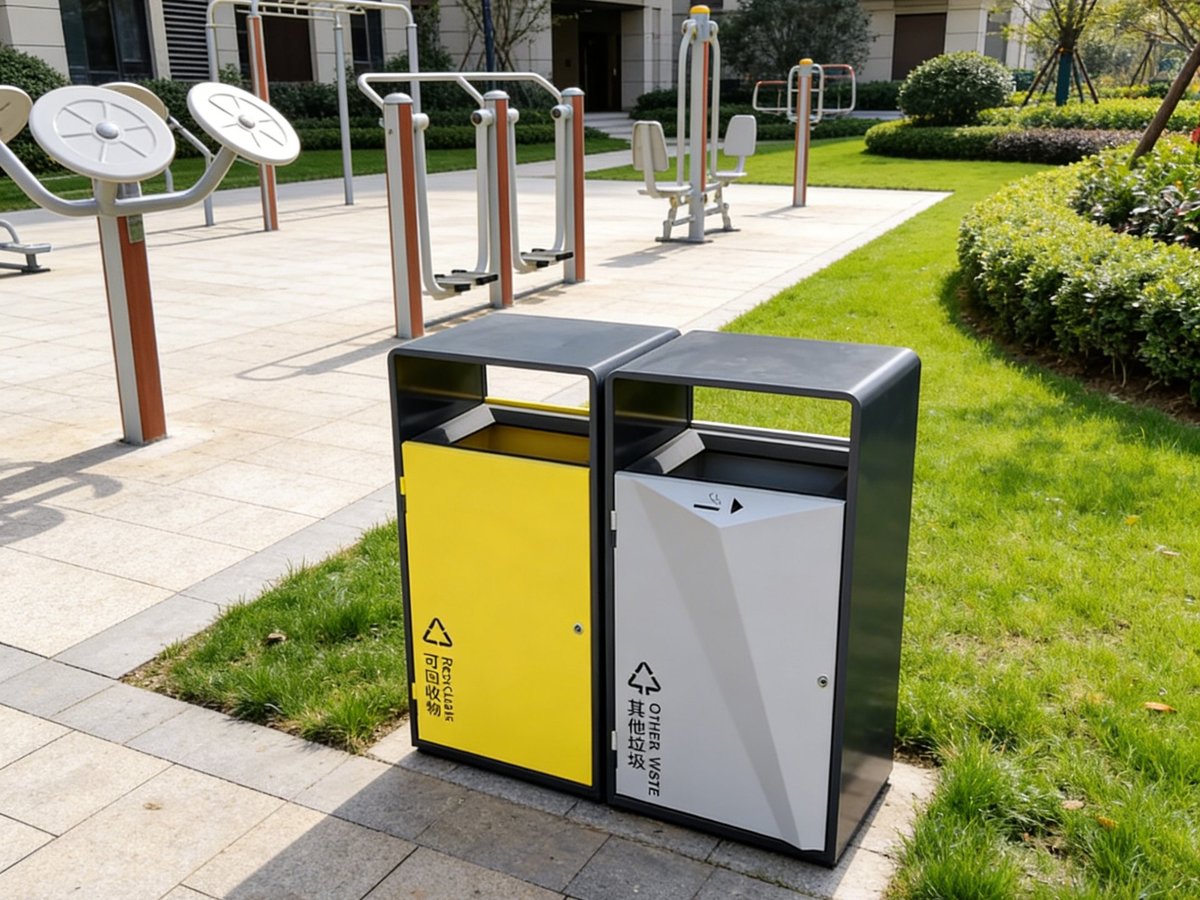
Cities are quietly wiring up their streetscapes. Fill-level sensors in litter bins, occupancy sensors on benches, environmental probes in planters, counters at transit shelters — once a municipality starts buying connected street furniture, it stops owning only steel and timber and starts owning a data operation. Most procurement teams have learned to evaluate the hardware. Far fewer have a clear answer to the harder questions: who owns the data, who can access it, how long it is kept, and what happens when the vendor changes or the contract ends. This guide sets out a practical data governance framework for smart street furniture, written for the municipal officers, landscape architects and contractors who actually write the specifications.
What Connected Street Furniture Actually Collects
The first step in any data governance plan is an honest inventory. Vendors rarely volunteer the full list, so ask for it explicitly. A typical smart furniture fleet generates some combination of the following:
- Operational telemetry. Fill levels, battery status, sensor health, last-collection timestamps. This is the least sensitive category and the easiest to govern.
- Usage signals. Occupancy counts, motion triggers, session durations on connected seating. Often aggregated, but sometimes captured per event with timestamps precise enough to re-identify patterns.
- Environmental data. Air quality, noise, temperature and humidity readings. Individually harmless, but dense urban grids of such sensors can characterise specific addresses and behaviours.
- Interaction data. Wi-Fi or Bluetooth probes, USB charging events, emergency-call or intercom logs on shelters. This is where personal data obligations bite hardest.
- Derived and third-party data. Route optimisation outputs, heatmaps, or analytics the vendor blends with other sources under the hood of their platform.
| Data type | Typical sensitivity | Personal data? | Where it usually goes |
|---|---|---|---|
| Fill level / telemetry | Low | No | Vendor platform, city dashboard |
| Occupancy counts | Medium | Sometimes | Vendor analytics, city reports |
| Environmental readings | Medium | Indirectly | Vendor platform, open-data portals |
| Wi-Fi / interaction | High | Usually yes | Vendor cloud, third-party processors |
| Derived analytics | Varies | Depends on method | Vendor cloud, sometimes resold |
The last column matters more than most buyers realise. Unless the contract says otherwise, the default in many commercial platforms is that telemetry flows to the vendor's cloud, sits in a region of the vendor's choosing, and may inform product analytics shared with the vendor's other customers.
Why Governance Belongs in the Tender, Not the Pilot
It is tempting to treat data questions as a detail for the pilot phase. That instinct is backwards, for three reasons.
First, pilot deployments create precedent. Once a fleet of connected bins has been streaming data to a vendor platform for six months, retrofitting restrictions means renegotiating with a supplier who now holds the historical dataset. Leverage declines with every month of accumulated data.
Second, hardware lifecycles are long. Street furniture is specified for ten to fifteen years of service, while sensor platforms, cloud services and connectivity standards turn over in three to five. The physical asset outlives the digital service — so the contract must define what the furniture does when the service ends, not whether it will end.
Third, procurement is the only point of real leverage. After award, the city is one customer among many. Before award, the specification shapes what vendors are even willing to offer. Every requirement in this article costs the least when written into the tender documents.
Privacy: What Municipalities Must Get Right
Privacy obligations for public-space data are stricter than many vendors assume, and the bar keeps rising. Four principles should anchor the specification.
1. Data minimisation. Require that each sensor type collects only what its stated function needs. An occupancy sensor that counts people does not need to store MAC addresses; a fill-level sensor has no defensible reason to log anything but volume and battery. Ask each vendor to justify every data field against a named operational purpose.
2. Anonymisation at the edge. Where usage data is genuinely useful — for planning rest-point density, for instance — specify that aggregation or anonymisation happens on the device or in the city's own ingestion layer, before any personally inferable data leaves the furniture. On-device aggregation also reduces bandwidth costs.
3. Transparency on site. Cities that operate sensing in public space are increasingly expected to inform the public. A small, durable sign or QR code linking to a plain-language privacy notice is a low-cost requirement that pays for itself in complaint avoidance. Make signage part of the furniture specification, not an afterthought.
4. Lawful basis and processor terms. In Europe, GDPR applies to personal data collected from public space exactly as it does anywhere else. The city is typically the controller and the vendor a processor, which means a data processing agreement, records of processing, and breach-notification duties must be in place before activation — not after.
Security Requirements Worth Specifying
Consumer-grade IoT security does not survive contact with a public street. A city network full of loosely secured devices is an attack surface, and the reputational cost of a compromised municipal system far exceeds the savings on cheap hardware. At minimum, require:
- Unique per-device credentials, with no shared default passwords across the fleet.
- Encrypted transport (TLS) for all telemetry, with certificate rotation.
- Signed firmware and a documented, testable over-the-air update process.
- A defined vulnerability disclosure and patch timeline — for example, critical fixes within 30 days.
- Network segmentation: furniture devices on an isolated VLAN, never on the corporate or SCADA network.
- Physical tamper evidence on sensor enclosures, consistent with the anti-vandal standards already applied to the furniture itself.
| Requirement | What to write in the tender | Verification method |
|---|---|---|
| Device identity | Unique credentials per unit, no defaults | Factory audit or sample inspection |
| Transport security | TLS 1.2+, certificate pinning or rotation | Vendor security questionnaire |
| Firmware | Signed OTA updates, rollback protection | Patch test during pilot |
| Patch SLA | Critical CVEs fixed ≤ 30 days | Contract term with remedy |
| Network | Segmented VLAN, no lateral access | IT sign-off before activation |
A useful shortcut: ask candidates whether their security documentation aligns with recognised IoT baselines such as ETSI EN 303 645. Vendors who can answer concretely are usually safe; vendors who answer with marketing language are not.
Ownership, Portability and Exit Clauses
The most expensive data governance failures happen at contract end. Three clauses prevent them.
Data ownership. State plainly that all telemetry, usage and derived data generated by city-funded hardware belongs to the city, and that the vendor's rights are limited to operating the service. Resist clauses that grant vendors licences to "improve products" using city data without limits.
Portability. Require open, documented export formats (CSV or JSON via API) covering full history, delivered within a defined window on request and automatically at contract end. Test the export during the pilot — an export that only runs on the vendor's schedule is not portability.
Exit and degradation. Specify what the hardware does when the subscription lapses: the bin keeps working as a passive bin, the bench keeps working as a bench. Also require that any city-side dashboard continues to function, or that its functions are replaced, for a defined transition period. And confirm that a change of vendor ownership — common in the IoT platform market — does not transfer city data to the acquirer without consent.
A Pre-Tender Data Governance Checklist
Before issuing documents for any connected furniture project, confirm the following are answered in writing:
- Complete inventory of data fields collected by each device type, with a stated purpose for each.
- Where data is stored, in which jurisdiction, and which sub-processors touch it.
- Anonymisation point: on-device, city-side, or vendor cloud.
- Retention periods per data type, and deletion procedure on request.
- Security baseline (credentials, TLS, OTA, patch SLA) with verification methods.
- Data ownership, export format and exit behaviour, signed into the contract.
- On-site transparency signage included in the furniture specification.
Planning Your First Connected Deployment
Cities that succeed with smart street furniture tend to start narrow: one device type, one district, one clear operational question — usually collection efficiency for bins, where the ROI case is easiest to measure. A focused pilot makes the governance overhead proportionate and produces clean evidence for scaling decisions. For the furniture side of a pilot, prioritise structures that outlive the electronics: galvanised steel frames, modular body panels and replaceable sensor mounts mean the assets remain useful even if the connectivity experiment ends. Our overview of sensor-based collection economics covers the business case, and our newsroom tracks the wider smart-bin and solar-compacting trend.
That durability-first philosophy is how AOTUDE builds. We are a factory-direct manufacturer of public space furniture — park benches, litter bins and multi-stream recycling stations among them — produced in our 20,000 m² factory in Foshan, China, with OEM/ODM engineering support for custom sensor mounts, cable routing and retrofit-ready mounting points. Municipal buyers can order from per-model MOQs starting at 5 pcs (most models from 20 pcs, custom runs from 50 pcs), backed by 5–10 year warranties on structure and coating. Whether your smart-city programme starts with a dozen instrumented bins or a full district rollout, browse our ranges at https://aotude.com or request a specification talk — we build the furniture that keeps working long after the pilot moves on.