Steel Gauge for Outdoor Furniture: How to Specify Frame Thickness
2026-10-24 · 7 min read · By AOTUDE Furniture Team
When a park bench fails in its third winter, the cause is rarely the timber slats — it is almost always the frame. A steel tube that looked identical to its neighbour in the showroom can dent under a bin-lifting trolley, flex when teenagers lean on the backrest, or rust through from the inside long before its coating shows any damage. The difference between those outcomes is written in one number that municipal specifiers often leave to the supplier: the steel gauge, or wall thickness. This guide explains what gauge actually means, how it converts to millimetres, which thicknesses are appropriate for each type of site furniture, and how to write a frame specification that contractors can price and factories can build without guesswork.
What "Gauge" Actually Means — and Why You Should Specify in Millimetres
Gauge is a legacy numbering system: the higher the number, the thinner the steel. That inversion confuses enough buyers, but the deeper problem is that gauge values differ between standards. A 14-gauge sheet in the US Manufacturer's Standard Gauge is roughly 1.9 mm, while a 14 SWG (British Standard Wire Gauge) is about 2.1 mm, and for tubing, "14 gauge" usually refers to the wall thickness of the tube rather than the sheet it was rolled from.
For public tenders, the practical rule is simple: specify wall thickness in millimetres, and treat gauge numbers as secondary references. A line such as "frame: 40 × 40 mm square tube, 2.0 mm wall" is unambiguous anywhere in the world; "14-gauge frame" is not. Requiring millimetres also makes factory quality control measurable — an inspector with a caliper or ultrasonic gauge can verify compliance, whereas a gauge number invites interpretation.
Tube, Section and Sheet: Where Thickness Does Different Jobs
Outdoor furniture draws on three families of steel stock, and the right thickness depends on which family you are buying:
| Material form | Typical use in site furniture | Common wall/sheet thickness | Why thickness matters here |
|---|---|---|---|
| Round/square tube | Bench and picnic table frames, bike racks, table legs | 1.5–3.0 mm | Resists bending and denting; thin tube dents visibly at armrests and leg ends |
| Formed section (rectangular hollow) | Backrest rails, planter bodies, bin frames | 1.5–3.0 mm | Larger flat faces show oil-canning and dents sooner than round tube |
| Sheet/plate | Litter bin bodies, bin lids, bollard shells, perforated screens | 1.5–6.0 mm | Takes direct abuse — kicked, climbed on, struck by maintenance vehicles |
The failure mode differs too. Tube fails by bending or buckling under load; sheet fails by denting, tearing at fixings, or fatiguing around cut-outs. That is why perforated litter bin bodies often use 1.5–2.0 mm sheet while their lids — the most abused component — are made from 2.0 mm or thicker.
Thickness Benchmarks by Product Type
There is no single "correct" gauge, but decades of manufacturing practice have produced reliable starting points for public-realm furniture:
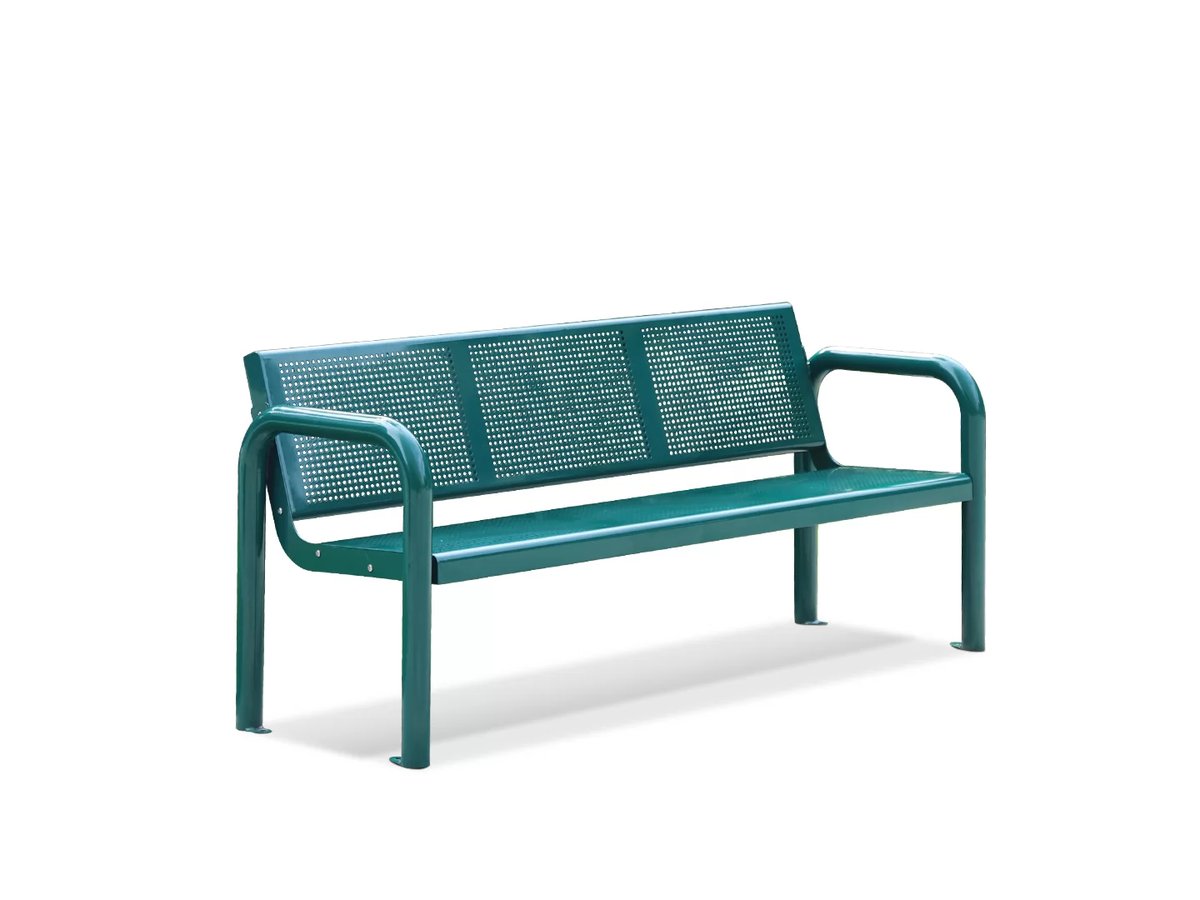
- Park bench frames: 2.0–2.5 mm wall for legs and load-bearing members; 1.5–2.0 mm acceptable for secondary rails and armrest hoops.
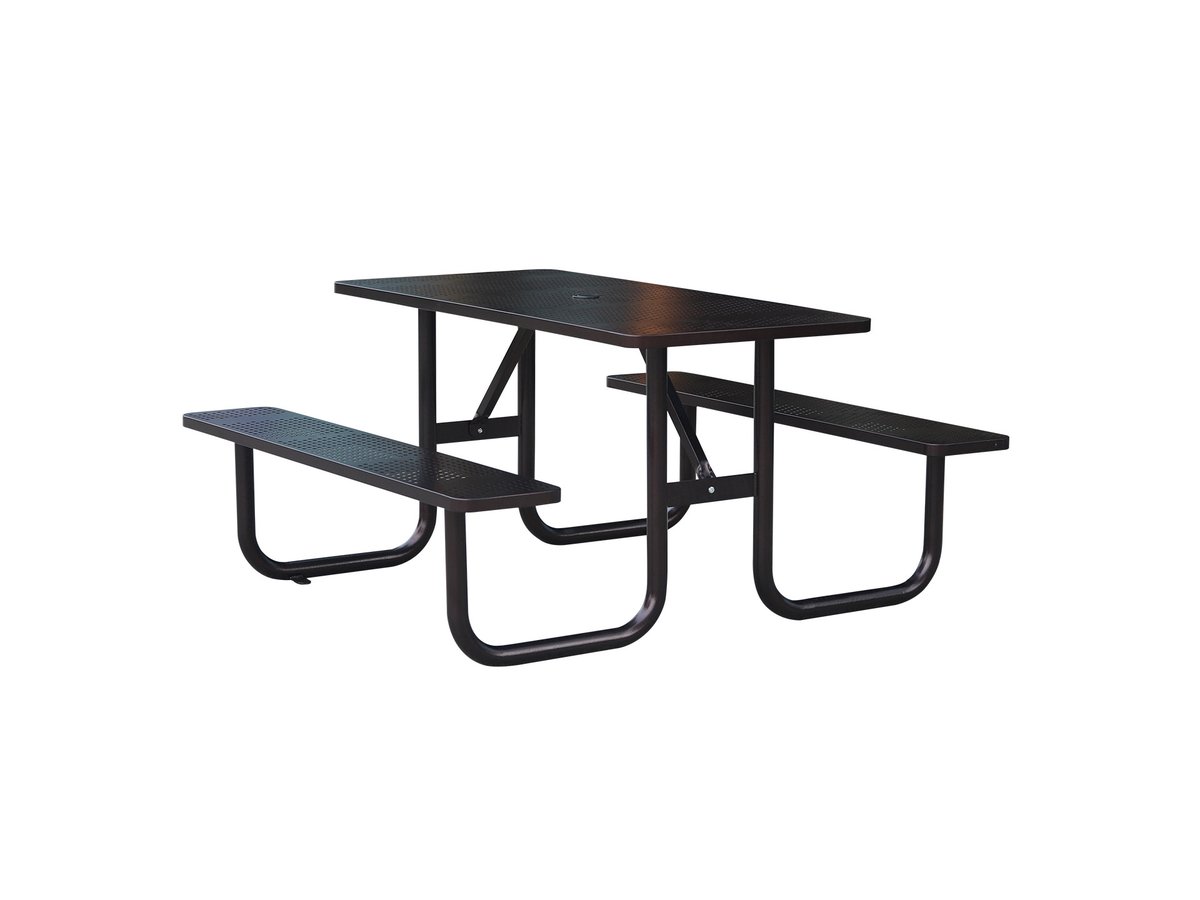
- Picnic table frames: 2.0–3.0 mm — tables see full-body loading, dragging across pavement, and snow-shovel impacts.
- Litter bin bodies: 1.5–2.0 mm steel sheet; 2.0 mm or better in high-vandalism locations or where bins are emptied mechanically.
- Bike racks: 2.5–3.0 mm minimum — riders lean their weight on racks, and a thin rack can be bent with a lever or bent accidentally by a falling bike.
- Bollards: 3.0–6.0 mm depending on whether they are decorative, security-rated, or impact-tolerant.
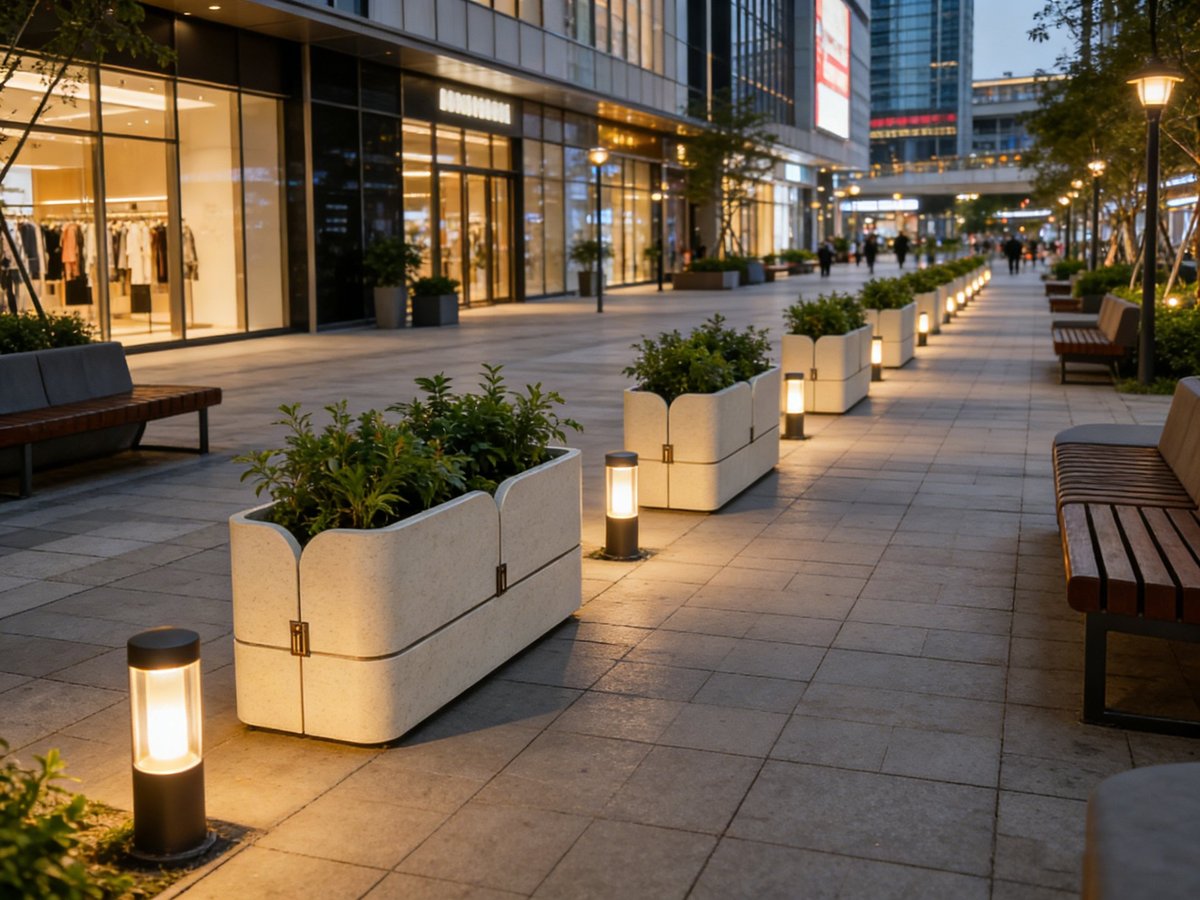
- Planter bodies: 2.0–3.0 mm for steel and weathering-steel planters; thicker plate also holds its shape better on large-radius corners.
Where a product sits between two thicknesses, decide by duty class rather than by price. A riverside bench on a quiet trail and a transit-stop bench on a downtown high street may share the same design, but they should not share the same gauge.
Corrosion Allowance: Thickness Buys You Time
Thickness is not only structural — it is a corrosion budget. Carbon steel in an outdoor environment loses material slowly to atmospheric corrosion: roughly 0.01–0.03 mm per year in a dry inland climate, but several times that in coastal salt spray or where de-icing salts splash in winter. Two millimetres of steel under a quality hot-dip galvanized and powder-coated finish therefore does not just start stronger; it has more sacrificial material available if a scratch, a weld seam or a drilled fixing hole ever exposes bare metal.
This is also why the thinnest viable gauge is a false economy. Saving 0.5 mm on a bench frame might trim a few dollars from unit cost, but it shortens the interval between "cosmetic scratch" and "structural repair" — and field repair of thin tube is harder, not easier, because there is less material to weld, grind and refinish. For a deeper look at how protective coatings extend that timeline, see our guide to hot-dip galvanizing for outdoor furniture.
Matching Gauge to Load, Vandalism Risk and Lifecycle
Before locking in a thickness, run through this quick duty-class checklist:
- Occupancy and loading. Shared benches with continuous backrests need stiffer frames than a single seat; picnic furniture needs more than either.
- Vandalism profile. Skateboard grinding, fire-setting and lever attacks all argue for thicker sections — and for avoiding thin, exposed sheet edges.
- Maintenance regime. If crews will lift, tip or machine-empty the unit, specify for that handling load, not just for static use.
- Anchoring. A 2.0 mm frame bolted to a well-designed base plate often outperforms a 3.0 mm frame on a flimsy one; thickness and anchoring should be specified together (see our bike rack anchoring and mounting surfaces guide for surface-specific details).
- Coating system. Galvanized-plus-powdered 2.0 mm tube routinely outlasts bare 3.0 mm tube; budget thickness and coating as one package.
- Repairability. In remote parks, standard tube sizes and wall thicknesses make field welding and slat replacement practical years after installation.
Material choice interacts with all of this — our comparison of aluminium grades for outdoor furniture covers when a non-carbon-steel frame is worth the premium.
What to Ask Your Supplier Before Approving a Sample
Thickness claims are easy to make and easy to verify, so put verification into the procurement process:
- State wall thickness in millimetres on the drawing, per member, not just "heavy-duty steel frame."
- Ask the factory to confirm the steel grade (e.g. Q235B or S235JR equivalent) and the sourcing route for the tube.
- Request a measured sample section or cut-off from a production run, or a first-article inspection report with caliper readings.
- Check weld quality at joints: on thin-wall tube, poor welds penetrate through or leave gaps that corrosion exploits first.
- Confirm that drainage holes exist at the base of closed sections so water cannot sit inside the frame.
None of these checks requires a lab — a procurement officer with a caliper and ten minutes can catch most of them on a sample.
How AOTUDE Builds Frames to Spec
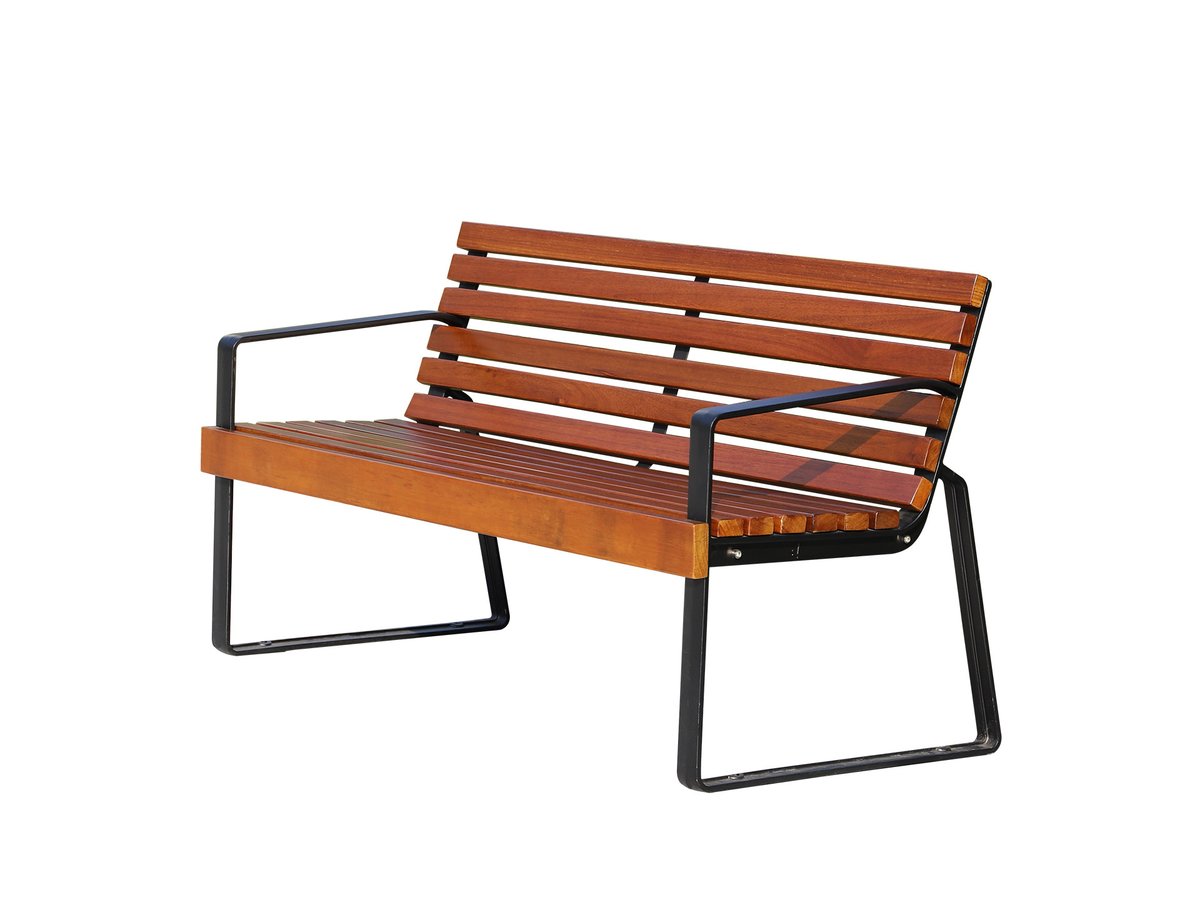
As a factory-direct manufacturer of outdoor site furniture in Foshan, China — operating a 20,000 m² production facility — AOTUDE builds bench, bin, planter and bike rack frames to customer-specified wall thicknesses, with tube grades, coating systems and weld details confirmed before production rather than discovered after delivery. Our Metro Steel Bench, with its steel tube frame and hardwood slats, is a typical example of the frame-plus-slat construction discussed above.
We support OEM and ODM projects with drawings-based customization, offer a per-model MOQ starting from 5 pcs (most models from 20 pcs, custom runs from 50 pcs), and back our products with 5–10 year warranties. If you are preparing a tender and want a second pair of eyes on a frame specification, send us your drawings or product list via aotude.com — we will confirm manufacturability, suggest thickness and coating combinations for your duty class, and quote factory-direct.