Timber Sourcing and Traceability for Outdoor Furniture: What to Ask a Supplier
2026-10-06 · 5 min read · By AOTUDE Furniture Team
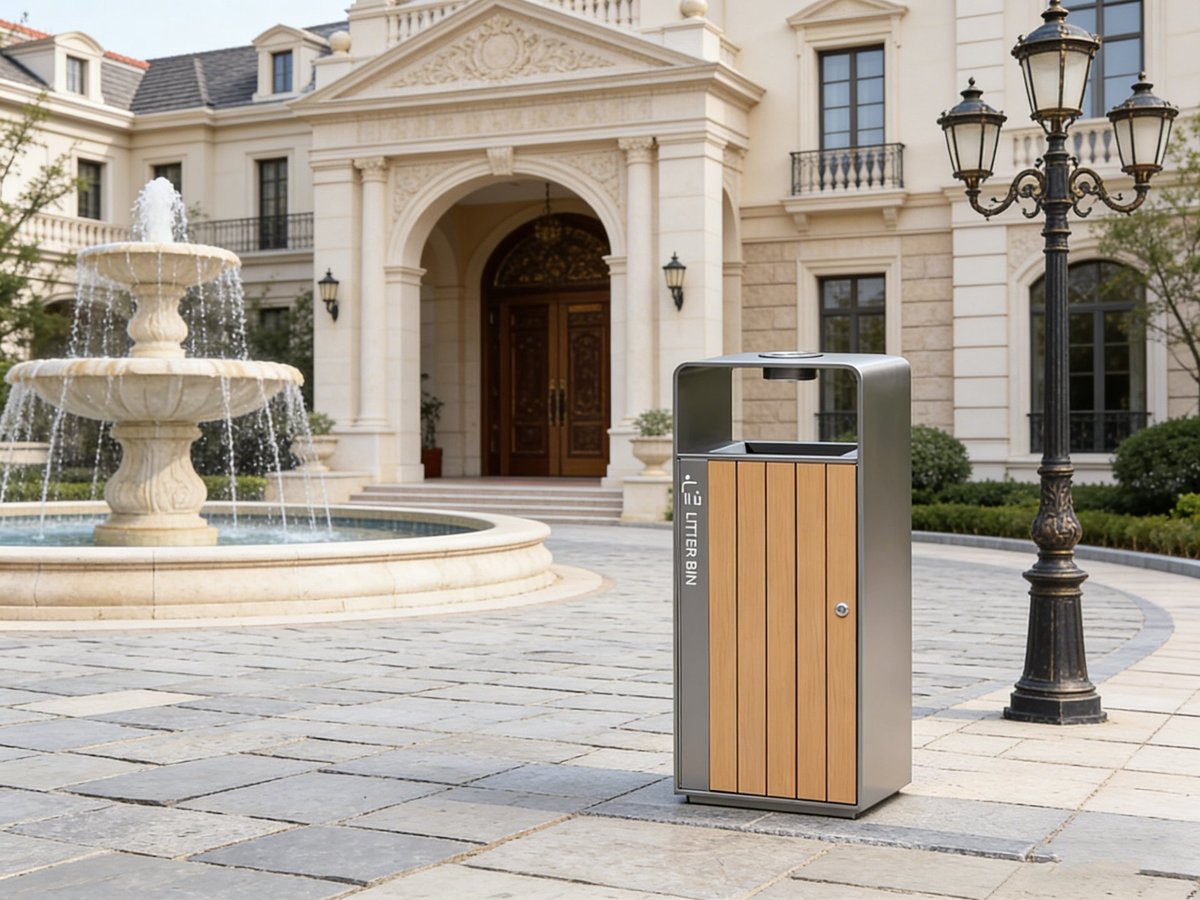
Timber slats soften the look of every public space, which is why hardwood has never left the site furniture specification. But the question municipalities ask about wood has changed. It is no longer only "is this species durable outdoors?" — it is now "can you prove where this timber came from?" Traceability has moved from a nice-to-have sustainability line to a scored criterion in public tenders across Europe, North America and Australia, and in the EU it is increasingly a legal requirement for the importer rather than a preference. This guide covers the paperwork that actually exists, the questions worth asking a supplier, and how to write a timber clause that is enforceable instead of decorative.
What "traceable" can actually mean
Four different things get sold as traceability, and they are not interchangeable:
- Species identification. The timber is what the invoice says it is, with a botanical name. This is the floor, not the ceiling — it says nothing about origin.
- Documented origin. The supplier can name the country and region of harvest and holds harvest or transport documentation for the batch.
- Third-party forest certification. An independent scheme has audited the forest management and/or the chain of custody, and issued a certificate number with a defined scope. Ask for the number and the scope, then verify it independently.
- Legality due diligence. Under the EU Deforestation Regulation, the importer files a due diligence statement with geolocation of harvest plots. That obligation sits with the EU importer, not with the factory, but the factory has to supply the underlying data.
A supplier can genuinely deliver the first two without holding the third. The specification error is to write a clause that assumes one implies another.
Why public tenders now ask
Three pressures converge on the same line item:
- Procurement policy. National green public procurement criteria and municipal sourcing policies increasingly score documented or verified timber content rather than price alone.
- Green building ratings. LEED, BREEAM and similar schemes award credits for responsibly sourced materials, and the documentation has to be product-specific rather than company-wide.
- The EU Deforestation Regulation (EUDR). Timber placed on the EU market must be shown to be deforestation-free and legally harvested, with geolocation data and a due diligence statement filed by the importer. Furniture falls in scope. Buying through documented chains makes that homework structured instead of improvised.
The paper trail worth demanding
- Species with botanical names on the order confirmation, so "teak" cannot quietly mean a lookalike.
- The country and region of harvest, stated per batch rather than per brochure.
- Certificate number and scope, if a scheme is claimed — and a copy of the certificate, not a logo.
- A product-level declaration that the slats in the delivered batch carry the claim; the claim applies per delivery, per invoice.
- For EU deliveries, the harvest data the importer needs to file its due diligence statement.
One practical note: paperwork follows the material through every process step. If slats are milled and coated outside the documented chain, the origin story has a hole in it. Ask whether milling, coating and assembly happen in the same plant.
Species choice is a separate decision
Traceability proves where the wood came from; it does not prove the wood will survive outdoors. Pair the paperwork with a durability specification based on EN 350 natural durability classes:
| Species | Durability class (EN 350) | Typical outdoor use | Notes |
|---|---|---|---|
| Teak | Class 1–2 | Premium benches, marine settings | High cost; verify genuine Tectona grandis |
| Ipe / cumaru | Class 1 | Heavy-traffic boardwalks and slats | Dense, hard on tooling; sourcing scrutiny essential |
| European oak | Class 2–3 | Park benches, planters, bins | Good availability, well-documented European supply |
| Robinia | Class 1–2 (heartwood) | Playgrounds, natural-style furniture | European plantations; strong origin story |
| Acacia | Class 2–3 | Mid-range slats and bins | Cost-effective; demand correct botanical naming |
Species selection should also match the maintenance budget. Documented or not, every hardwood exterior needs an oiling and inspection cycle — the schedules differ by species, as covered in our hardwood slat maintenance guide. If low maintenance outweighs the natural-wood look in your brief, wood-plastic composite is the usual alternative, and the trade-offs are compared in our WPC vs hardwood analysis.
Common pitfalls
- Company-level claims, product-level gaps. The certificate covers the company; the batch still ships without the claim on the invoice. Make the claim a delivery condition.
- Expired or out-of-scope certificates. Check expiry dates and the certified product categories, not just the logo.
- "Plantation grown" used as a substitute claim. Plantation origin alone is not a verified claim; it is marketing language unless a scheme audits it.
- Mixed species in one product. A bench with documented slats and an undocumented frame still fails a clause that covers all timber content.
- A finish supply chain outside the documented process. For audits, ask where milling, coating and assembly happen.
What AOTUDE can and cannot document
AOTUDE manufactures park benches, litter bins, planters and site facilities at its 20,000 m² factory in Foshan, supplying municipalities, landscape architects and contractors in more than 40 countries on a factory-direct basis.
On timber we are deliberately precise about the boundary: we supply hardwood slats from documented, traceable supply chains with species names and origin documentation available on request, and we will tell you exactly which documents exist for a given batch. We do not claim third-party forest certification — if your tender requires a certificate number and scope, we will say so up front rather than imply a claim we cannot evidence, so you can qualify the bid before it is submitted rather than after.
For projects where the durability requirement outweighs the natural-wood look, we will quote wood-plastic composite or steel-bar slats instead and explain the lifecycle trade-off. Browse the park bench range, look at wood-accented products such as the Timberline wood slat litter bin, or send the timber clause from your specification to https://aotude.com/contact and we will return the documentation list against it.