
Park furniture fails in predictable ways — a bench that racks because it was never braced for people sitting on the end, a bin that fills in two days because capacity was chosen by appearance rather than by footfall, a picnic table whose top rots where water sits.
This page sets out what a park package usually contains, how to size it, and which models are built for the abuse.
A typical park package
Most park briefs resolve into four product families. The quantities differ by site, but the composition rarely does:
| Product family | Role in the park | Typical specification |
|---|---|---|
| Park benches | Rest points along paths, at views, at playground edges | Backless for promenades, backrest for waiting areas, 1800 mm standard length |
| Litter bins | Waste capture at entrances, seating clusters and path junctions | Liner-based body, 9 models, side or top opening by vandal risk |
| Picnic tables | Group dining and shelter seating | Perforated steel for high-vandal sites, WPC for maintenance-light grounds |
| Planters | Green edge, tree protection, level change | Corten for inland signature landscapes, powder-coated steel elsewhere |
Buying the four as one load is usually cheaper than four orders: mixed models share a container, so each line only has to clear its own per-model minimum rather than a separate shipment.
How many do I need?
Quantities come from the site, not from a code. The workable sequence is: count peak simultaneous sitters, divide by the number of seated positions per bench, then sanity-check against path frontage — frontage decides where benches go, demand decides how many.
Two existing guides carry the method: how many park benches do I need for seating, and litter bin capacity planning for waste. Neither publishes a fixed per-hectare or per-visitor coefficient, because a playground edge and a memorial garden are not the same demand.
Vandal resistance and weather
Two specifications do most of the work against vandalism: steel-bar or perforated slats where timber would be broken or burned, and tamper-resistant fixings on a welded frame. Both are model choices, not add-ons.
Against weather, the choice is material-led. Powder-coated steel is the general-purpose baseline; hot-dip galvanized plus powder coat (a duplex system) is the specification for wet or coastal exposure; corten suits inland landscapes where a stable patina is acceptable and should not be used within about a kilometre of the shoreline. Hardwood slats need oiling every 12–24 months in most climates; WPC needs no finish but has lower structural strength.
Project reference
A riverside park renewal in our case files combined benches, litter bins and planters in a single shipment, with the seating line following the promenade edge rather than a fixed spacing. See the riverside park renewal case study for the delivered models and quantities.
Recommended models
Eight models that cover a standard park brief — two backrest benches, a backless bench, two picnic tables for group use, two bin bodies for different vandal profiles, and a planter for the green edge:
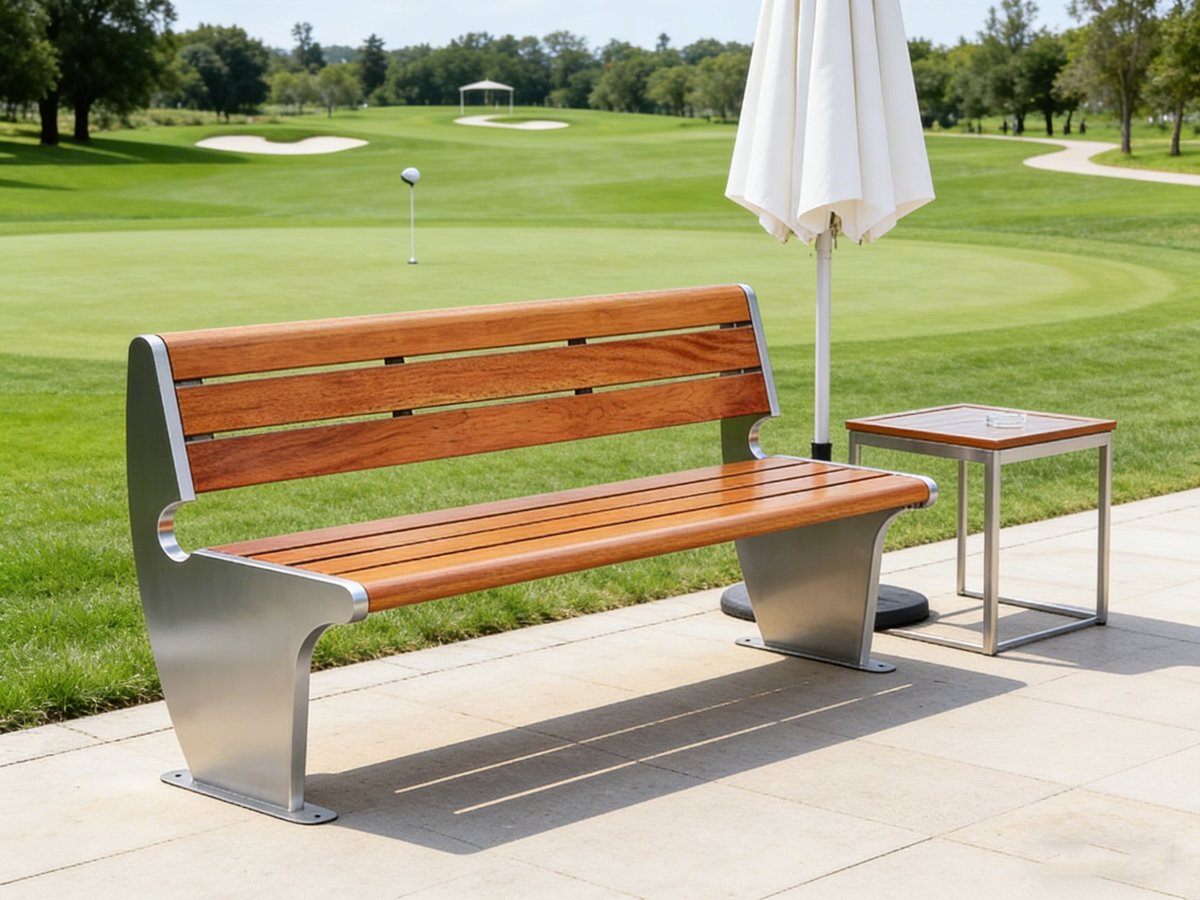
Fairway Park Bench
Classic park bench with ergonomic steel ends and contoured hardwood backrest — optionally paired with our matching side table.
Request a quote · MOQ 20 pcs
View specifications →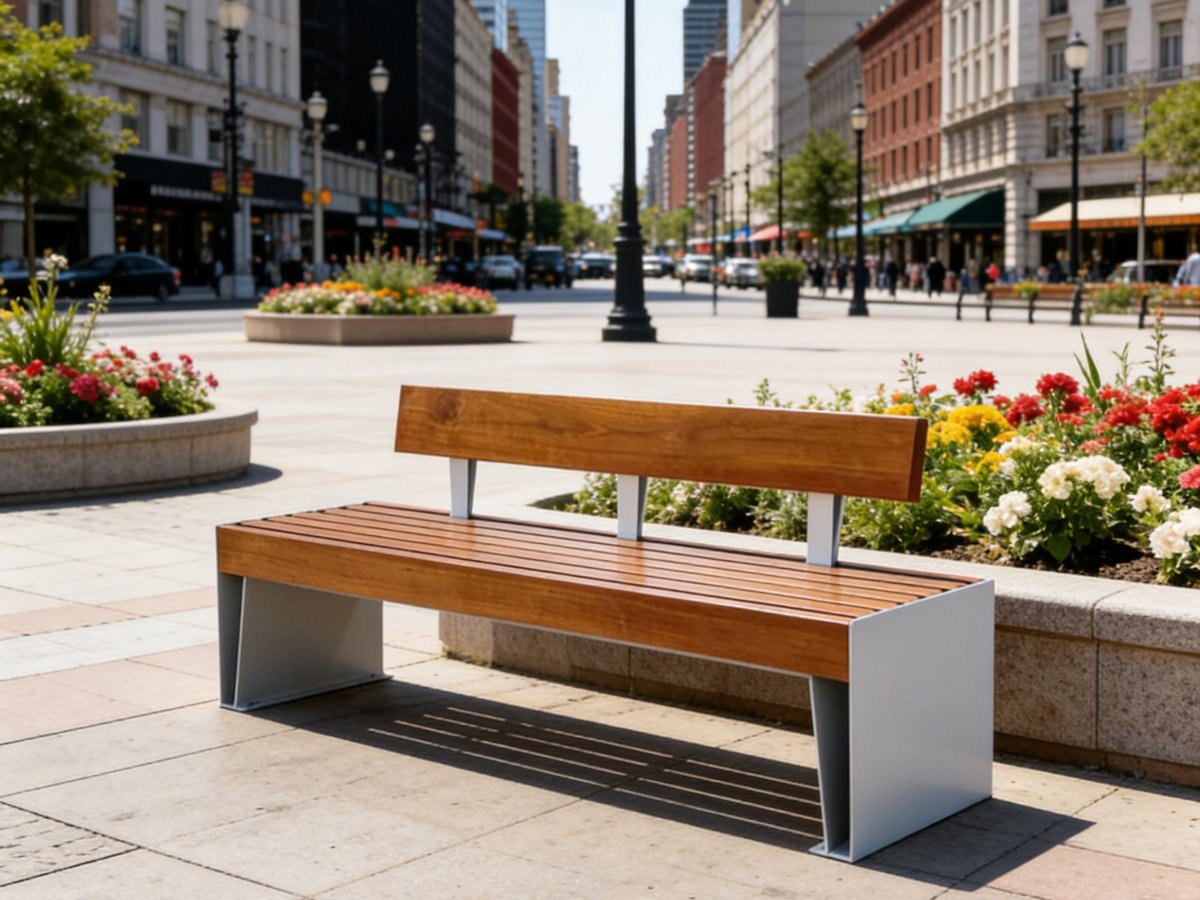
Skyline Backrest Bench
Minimalist bench with a floating hardwood backrest and light-grey steel legs — the clean lines fit modern streetscapes.
Request a quote · MOQ 20 pcs
View specifications →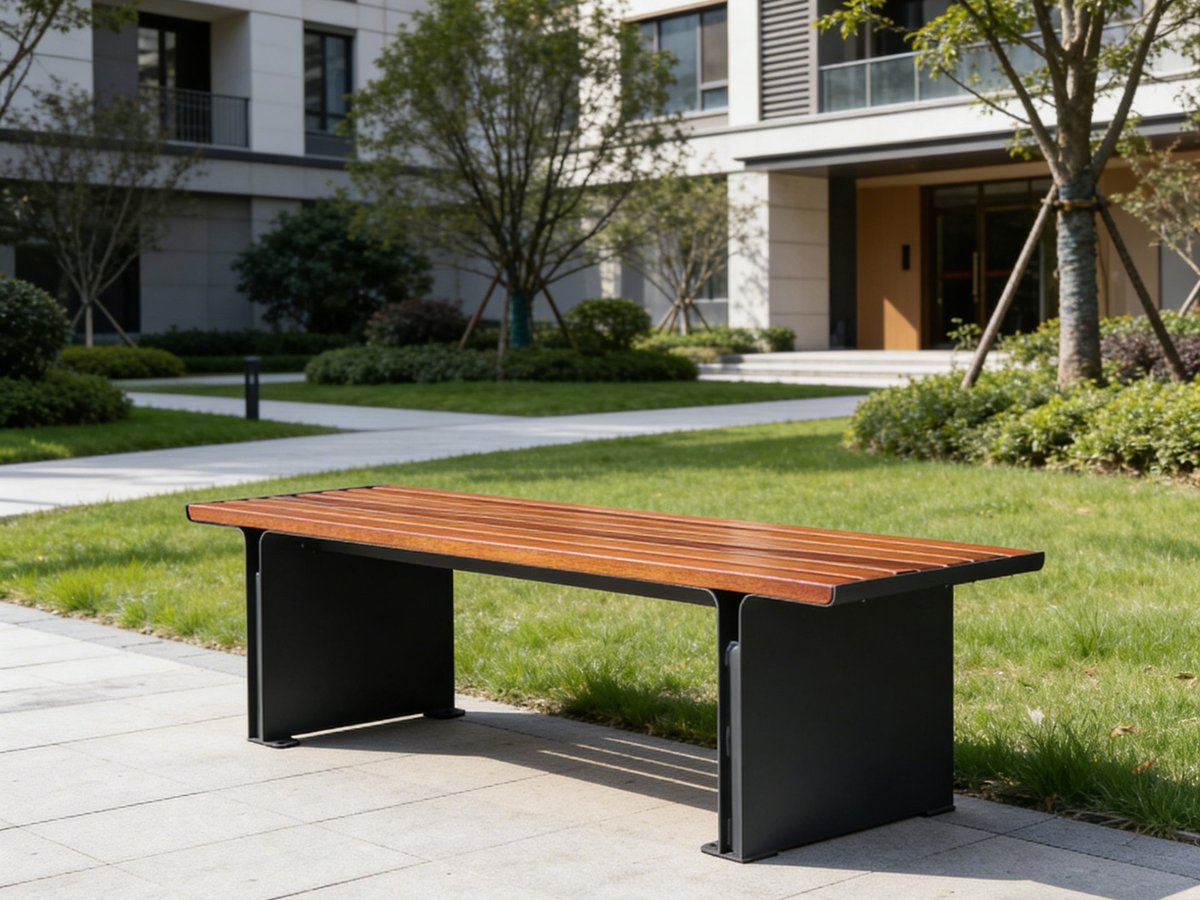
UrbanRest Backless Bench
Sleek backless bench in laser-cut steel with timber seat — sits in both directions, perfect for plazas and medians.
Request a quote · MOQ 20 pcs
View specifications →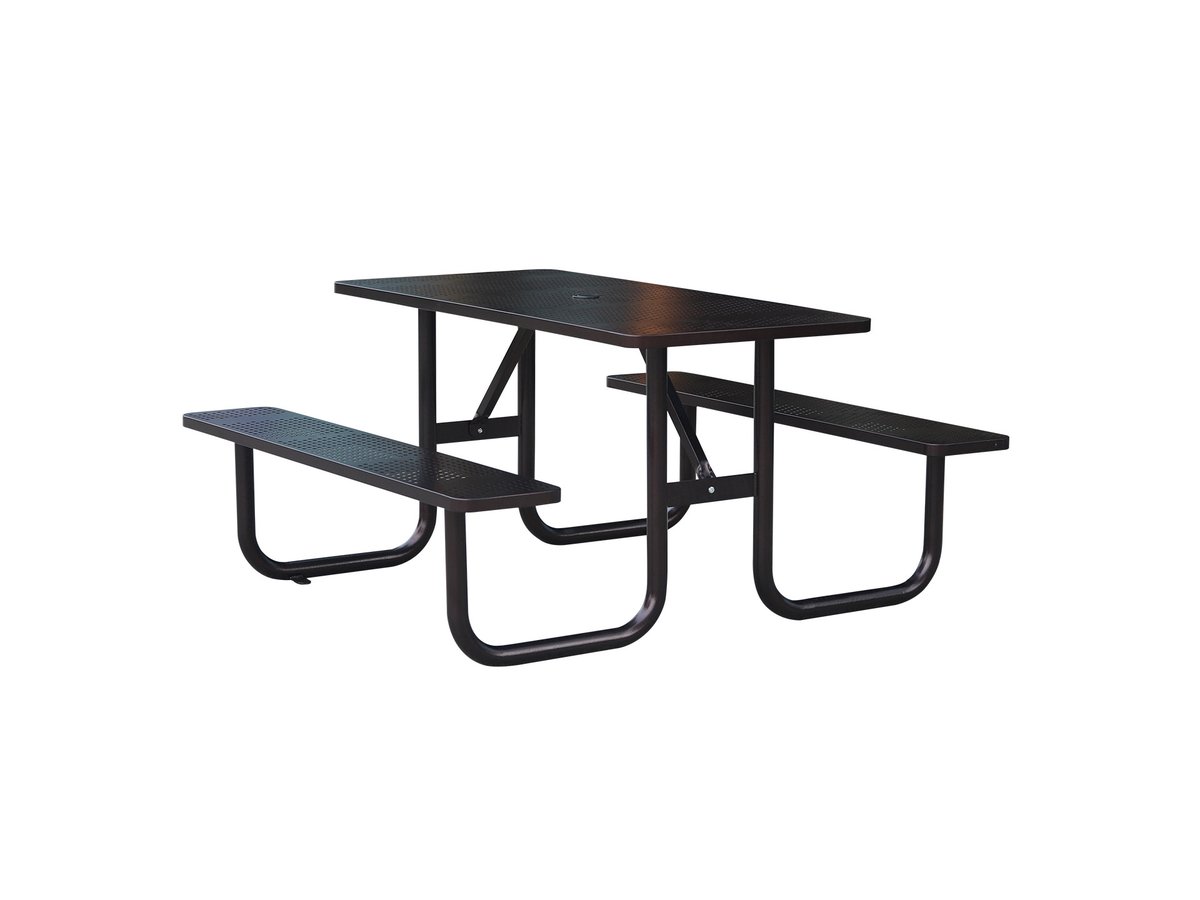
Perforated Steel Picnic Table
Attached-seat perforated steel picnic table with umbrella hole — the all-weather standard for parks and rest areas.
Request a quote · MOQ 20 pcs
View specifications →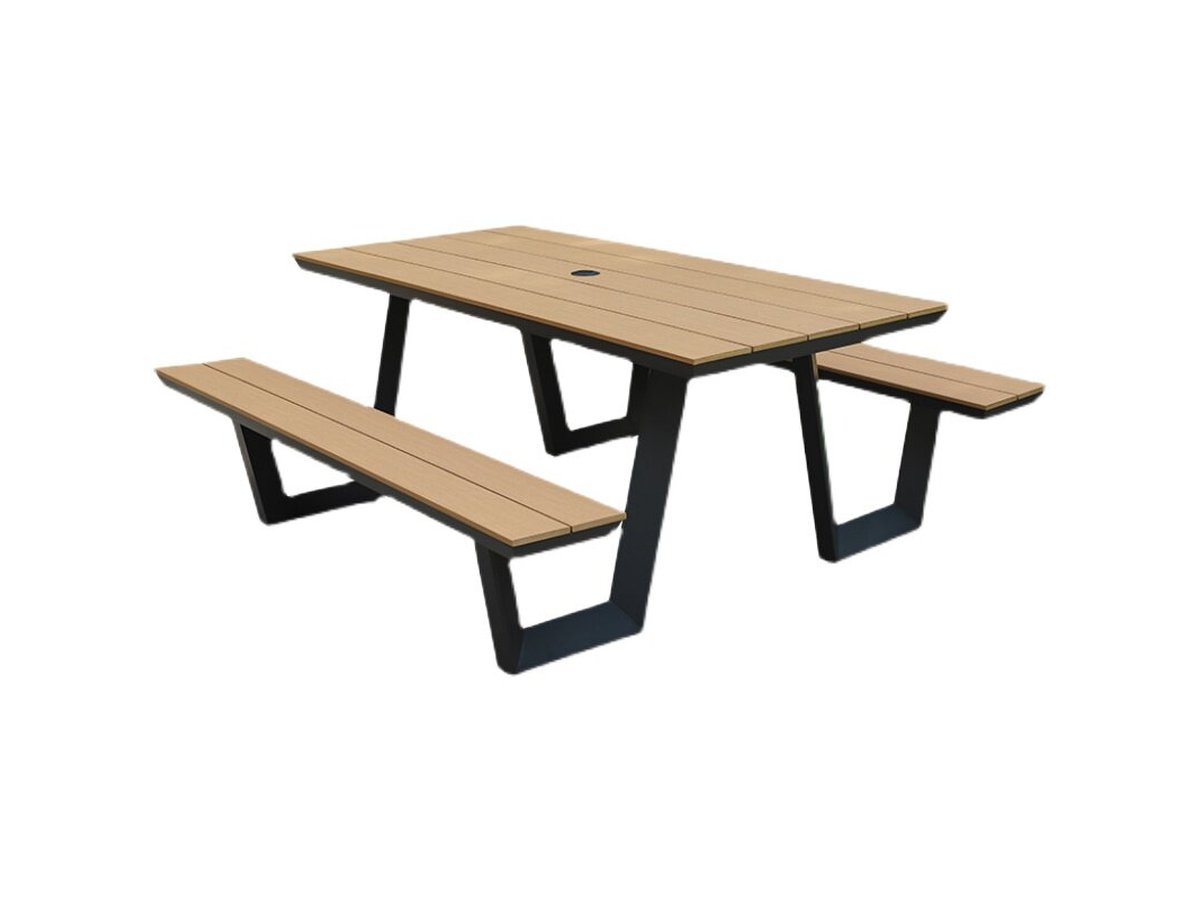
WPC Picnic Table
Modern picnic table with warm-toned WPC slats and sculptural black steel legs — comfort looks with zero wood maintenance.
Request a quote · MOQ 20 pcs
View specifications →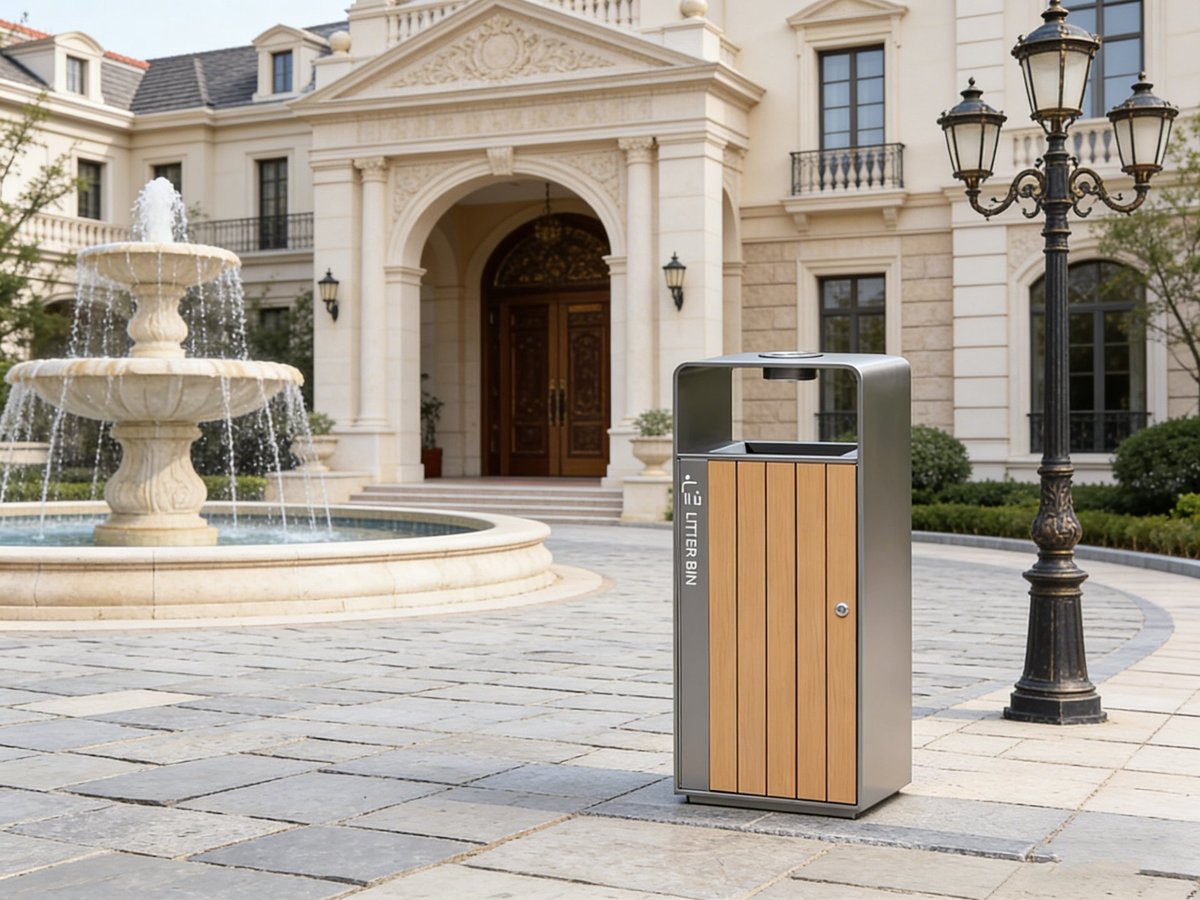
Timberline Wood-Slat Litter Bin
Tall single-stream litter bin combining a slim stainless-look steel frame with warm vertical wood slats — elegant enough for plazas and heritage streets.
Request a quote · MOQ 20 pcs
View specifications →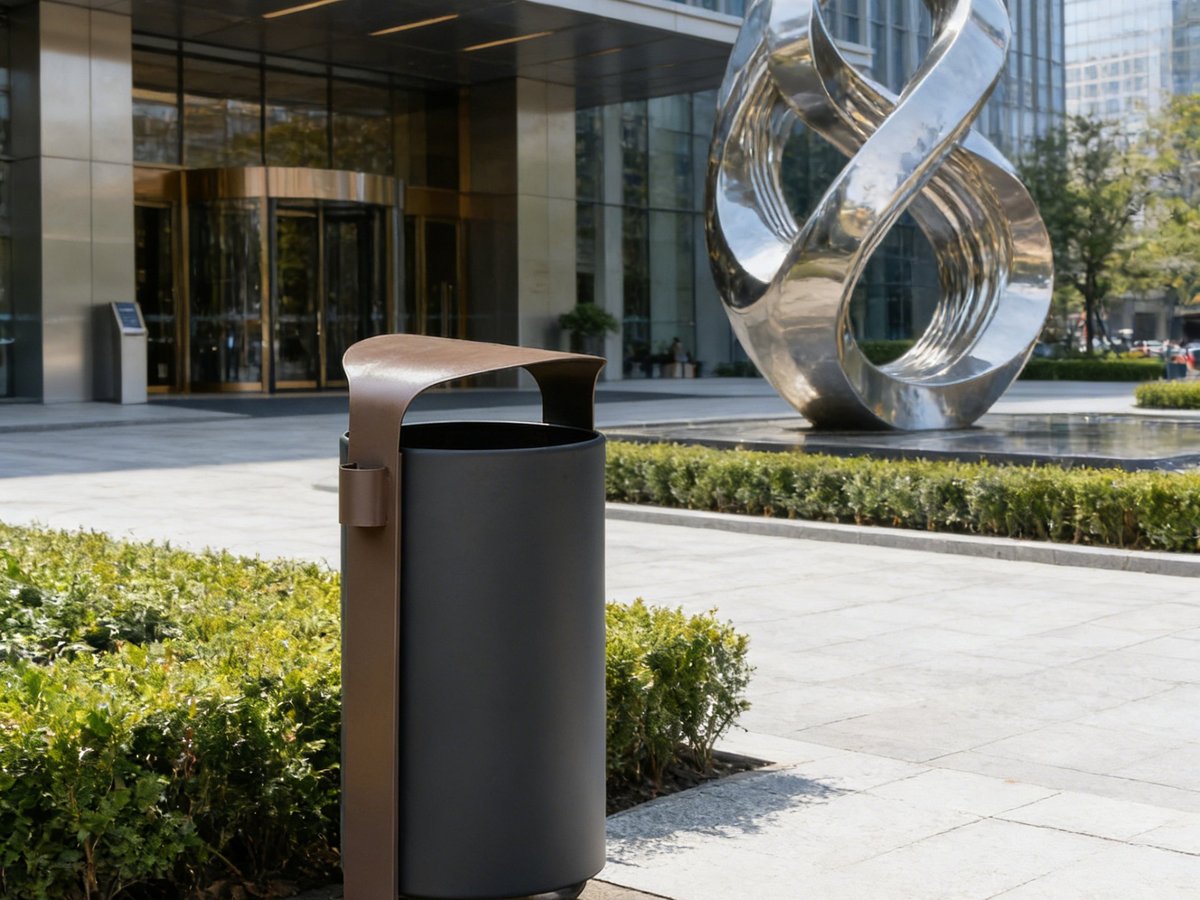
Corten Curve Hood Bin
Sculptural round bin with a corten-toned hood band wrapping a charcoal drum — an art piece that collects litter.
Request a quote · MOQ 20 pcs
View specifications →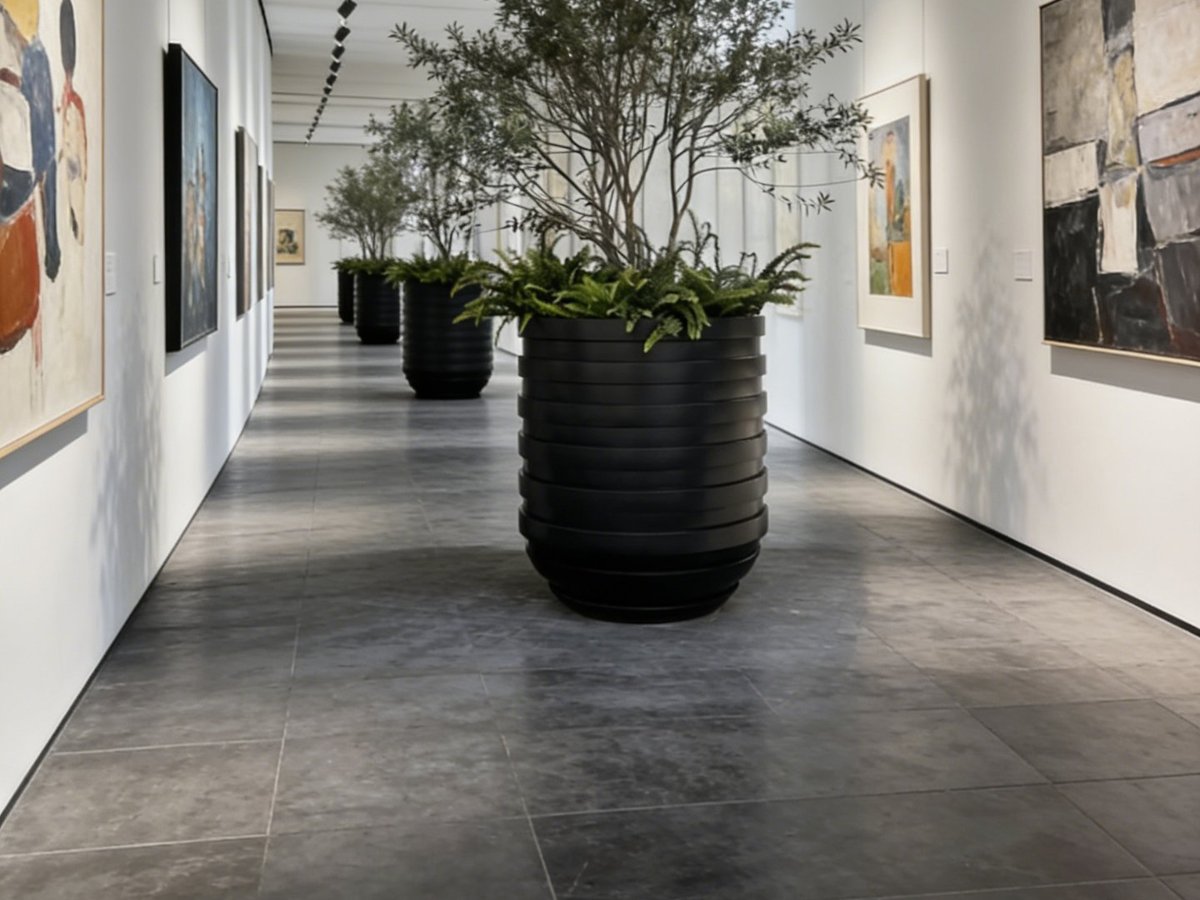
Atrium Ribbed Round Planter
Gallery-grade round planter with horizontal ribbing and a matte black finish — the sculptural choice for lobbies and exhibitions.
Request a quote · MOQ 10 pcs
View specifications →Frequently asked questions
What furniture does a park usually need?+
Seating, litter bins, picnic or group tables and planters cover most briefs. The mix shifts with the park type — a linear greenway is seating-and-bins heavy, a destination park adds group dining and shelter seating.
How many benches should a park have?+
It depends on peak simultaneous sitters and path frontage, not on a per-hectare standard. Count likely resting points, allow 2–3 seated positions per 1800 mm bench, and hold a small spare-slat allowance rather than extra frames.
What lasts longest in a public park?+
Powder-coated steel frames with steel-bar slats survive vandal-heavy sites best; duplex-coated steel survives wet and coastal sites best; WPC slats minimise maintenance where crews are thin. No material is maintenance-free.
Can park furniture be anchored into grass?+
Yes — embedded legs set into concrete footings suit lawns and resist levering better than surface plates. Surface fixing suits existing paving where the slab cannot be cut.
Send your drawing, get a costed BOM
Tell us the site, the quantity and any dimensional constraint. Our engineers reply with a specification and price within one working day.
Request a Quote