
Streetscape and transit furniture is specified against different constraints than park furniture: anchoring into existing paving rather than casting new footings, seating that works for a five-minute wait rather than an afternoon, and waste capacity that tracks a commuting peak rather than a weekend.
This page covers what changes when the site is a street, a plaza or a transit node.
Seating for waiting and queuing
Transit seating is used in short, repeated bursts. A backrest and a defined seat position matter more than length: a 1800 mm backless bench seats three people loosely, while the same length with armrest divisions seats two or three people predictably and stops it becoming a bed at night.
Where the platform edge is close, backless benches keep sightlines clear; where the wait is longer — interchanges, hospital forecourts, park-and-ride — backrest models are the better choice.
Waste and recycling at transit nodes
Transit waste is packaging-heavy and peaks with the commute. Two decisions drive the specification: whether the collection contract separates streams, and whether the bin is opened by hand or by a foot pedal where hygiene matters.
If the contract separates recyclables, a dual or triple-stream station is the correct unit and the stream count should be fixed before the tender is written, not after. If it does not, a single-stream litter bin with adequate capacity is the honest specification.
Bollards, barriers and bike parking
Bollards are a vehicle-control product that happens to look like furniture. Spacing, height and foundation type are set by the vehicle class you are excluding and by the substrate — a bollard that is right for a pedestrian plaza is not right for a loading bay.
Bike parking is usually the highest-turnover element on a street. Bike racks and bollards share a category because they share a foundation detail: both are anchored into paving and both fail at the base before they fail anywhere else.
Anchoring on paved surfaces
On an existing slab, surface-mounted base plates with expansion anchors avoid cutting the paving. On new build, embedded legs cast into footings resist levering and are the better long-term choice where the surface can still be opened.
The full comparison by substrate — including what to check before drilling — is in our anchoring specification guide.
Project reference
A CBD streetscape project in our case files used corten planters as the edge between the vehicle zone and the pedestrian zone, with benches and bollards anchored into the existing paving. See the CBD streetscape case study for the delivered scope.
Recommended models
Eight models for street and transit duty — three seating lines from formal to backless, two bin bodies sized for commute peaks, a sorting station where the collection contract separates streams, and the rack and bollard pair for the vehicle edge:
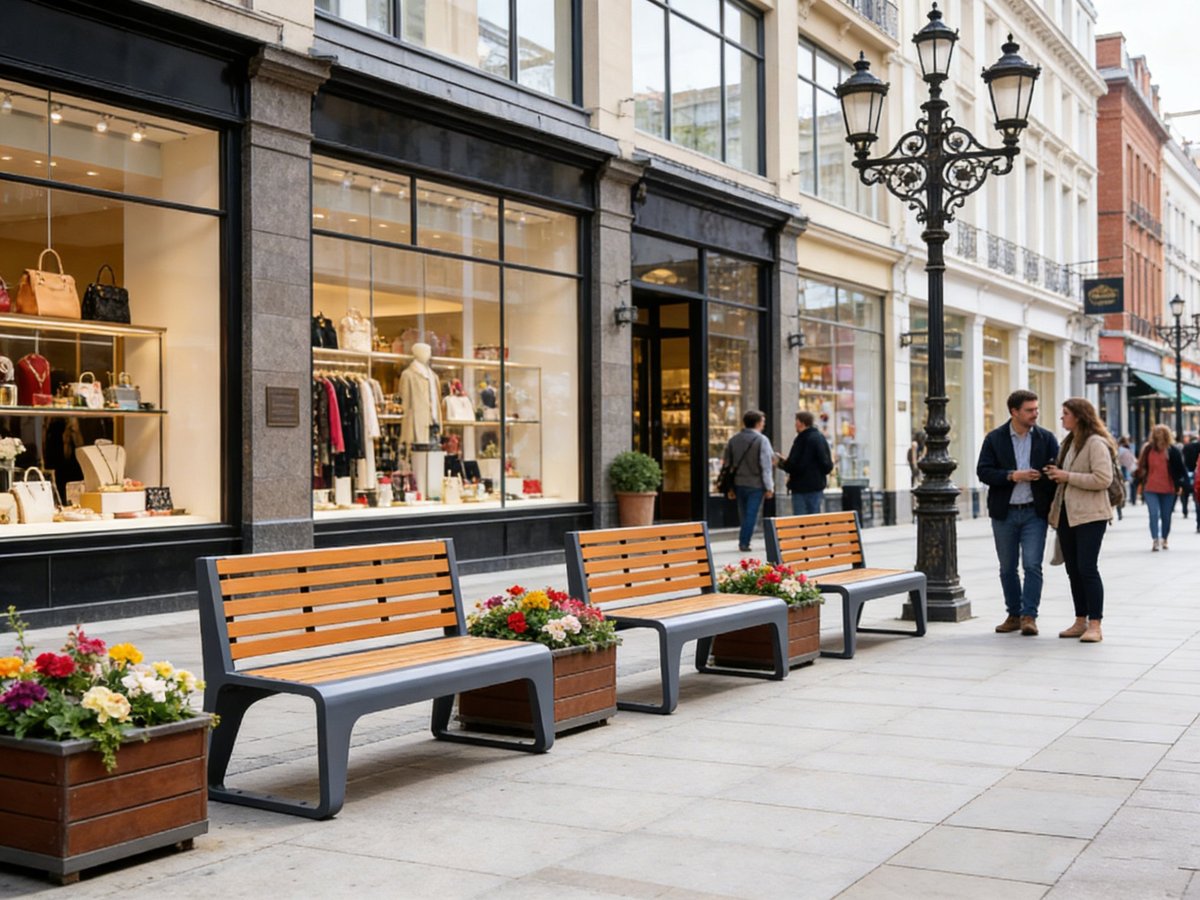
Broadway Street Bench
Retail-street favourite: compact bench with matching hardwood planter boxes — sold individually or as a set.
Request a quote · MOQ 20 pcs
View specifications →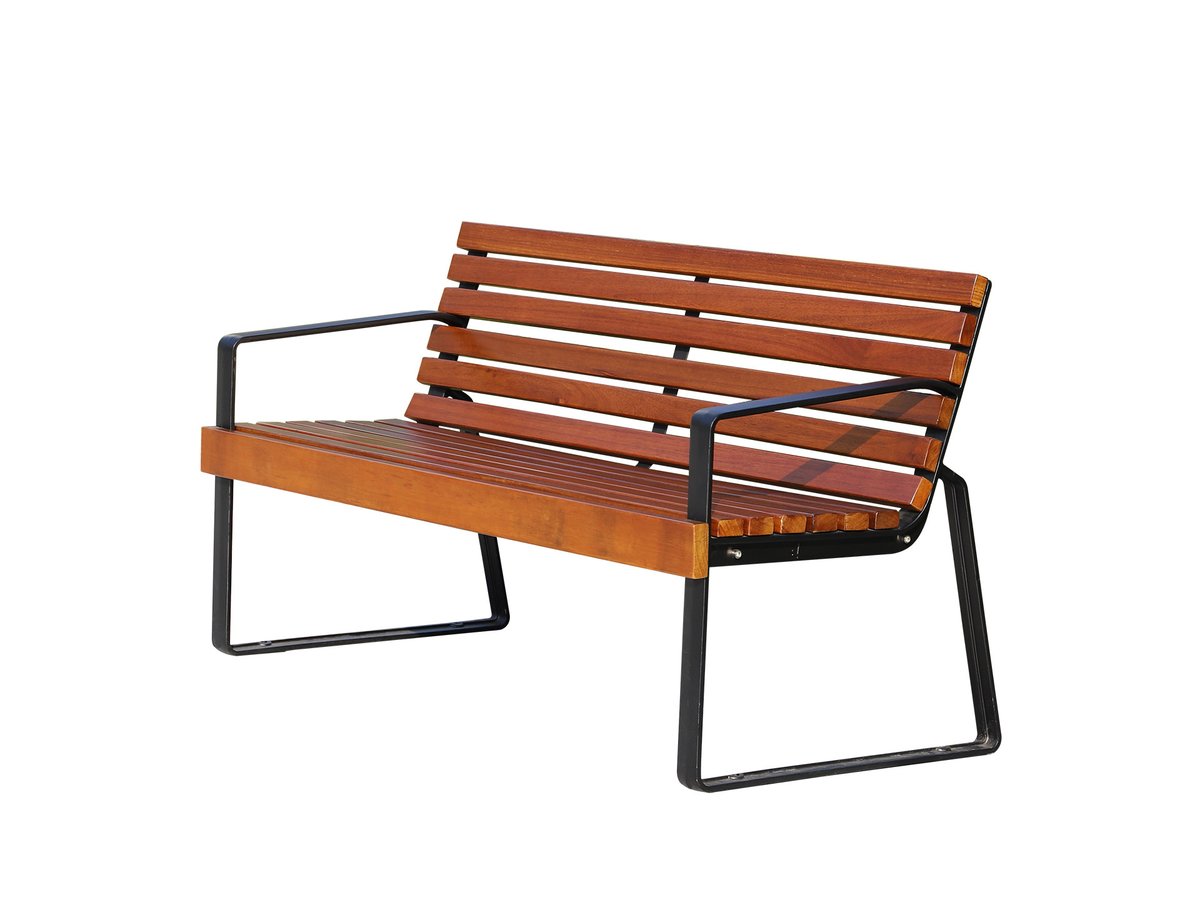
Metro Steel Bench
Workhorse park bench with a slim black steel frame, steel armrests and wide hardwood slats for high-traffic public spaces.
Request a quote · MOQ 20 pcs
View specifications →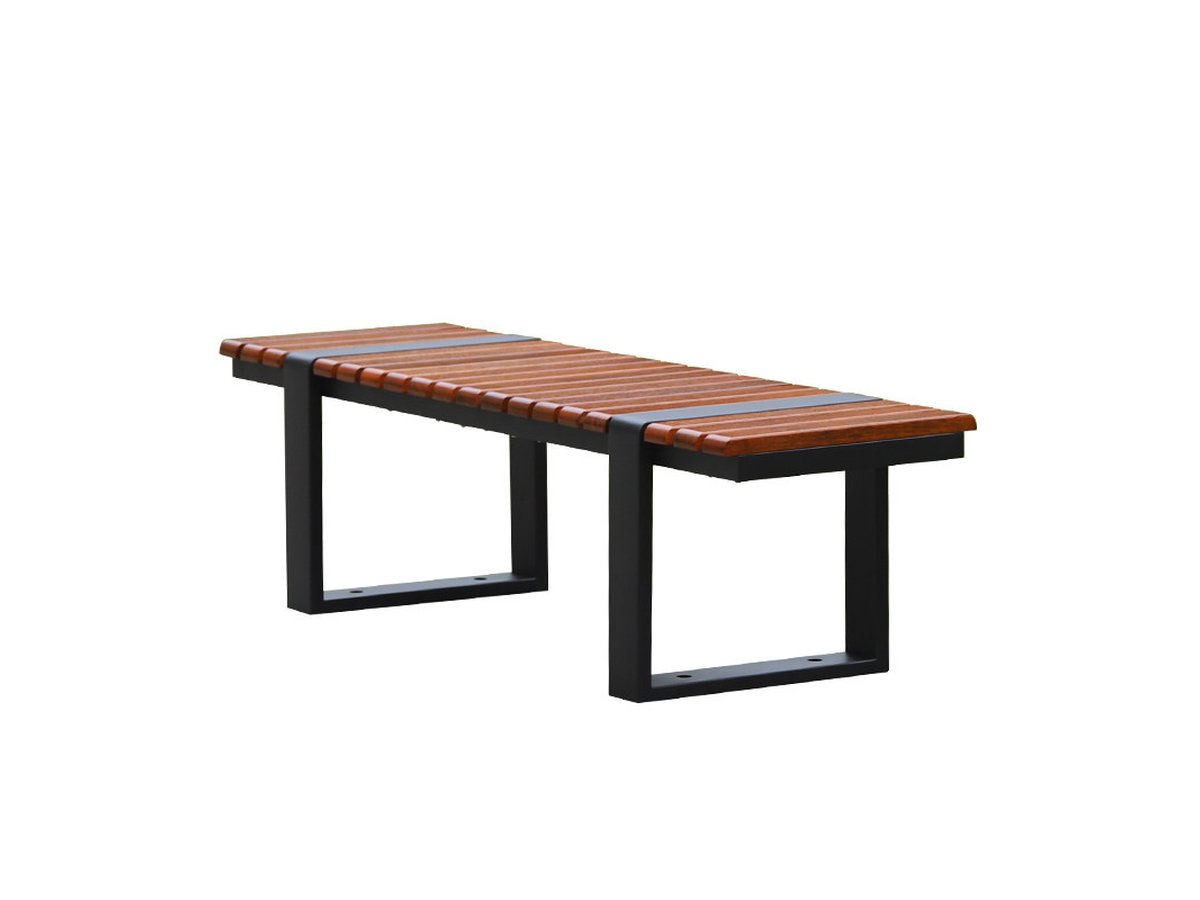
Plaza Backless Bench
Minimalist backless bench with U-shaped steel legs and hardwood slats — sit from both sides, perfect for boulevards.
Request a quote · MOQ 20 pcs
View specifications →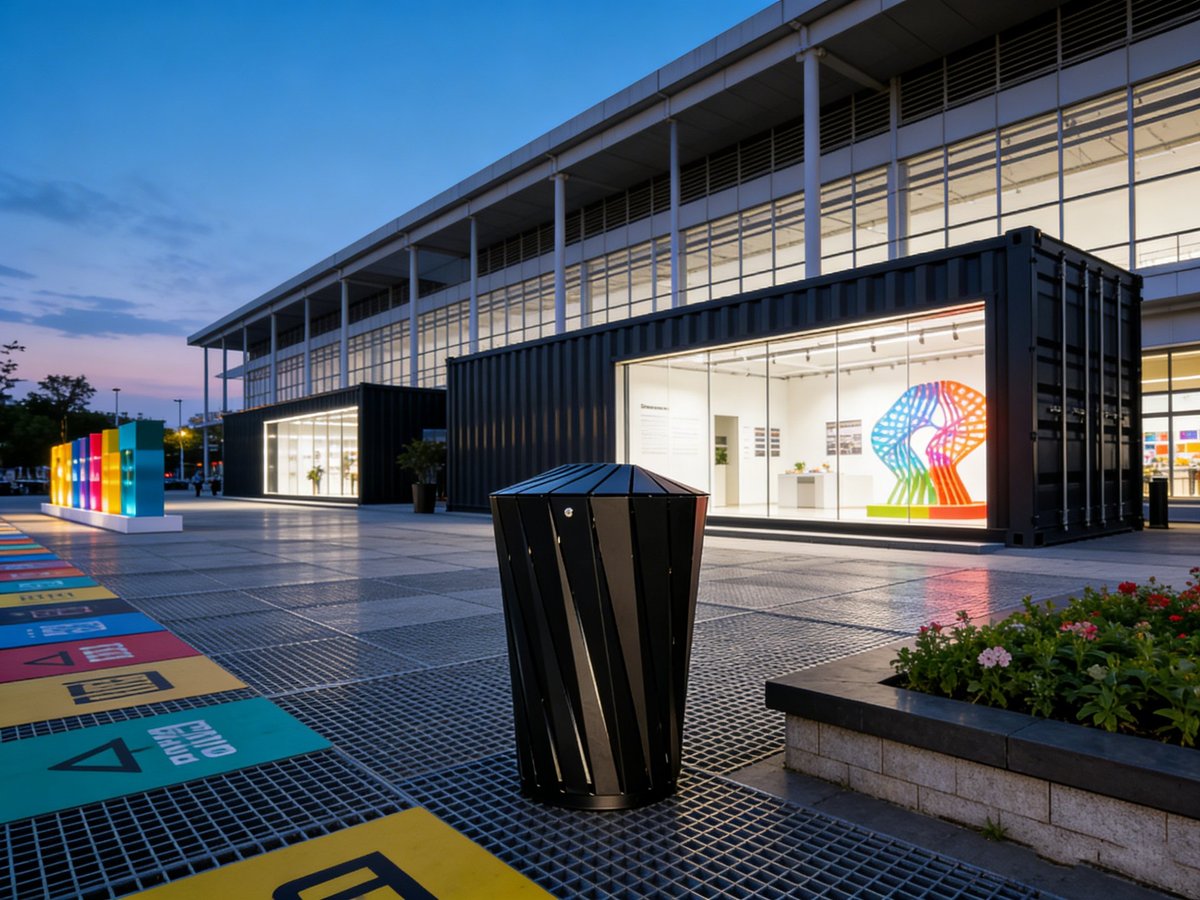
Onyx Fluted Round Bin
Tapered fluted bin in a high-gloss black finish — dramatic by day, striking under evening lighting.
Request a quote · MOQ 20 pcs
View specifications →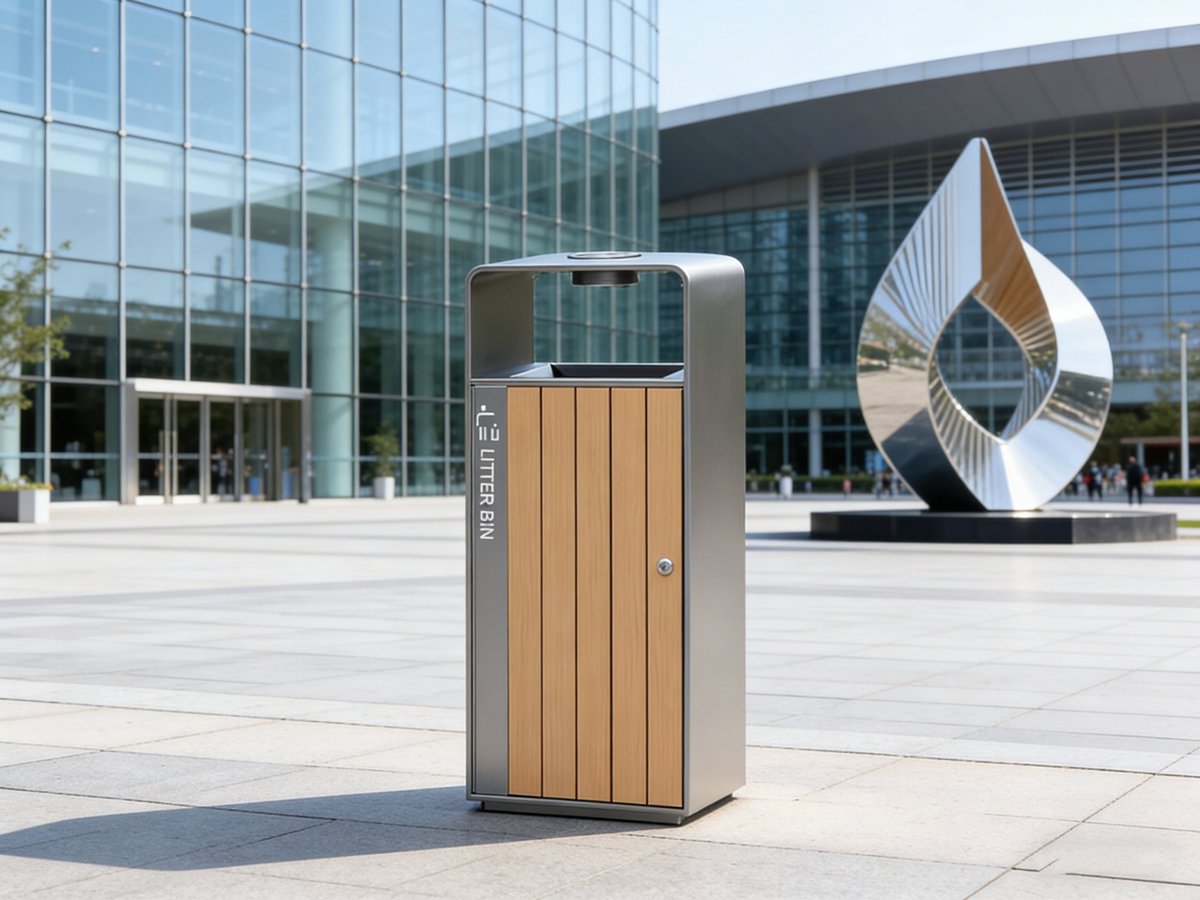
Silverline Tall Litter Bin
Slim architectural litter bin with a labeled front and stainless-look finish — a clean match for glass-facade buildings.
Request a quote · MOQ 20 pcs
View specifications →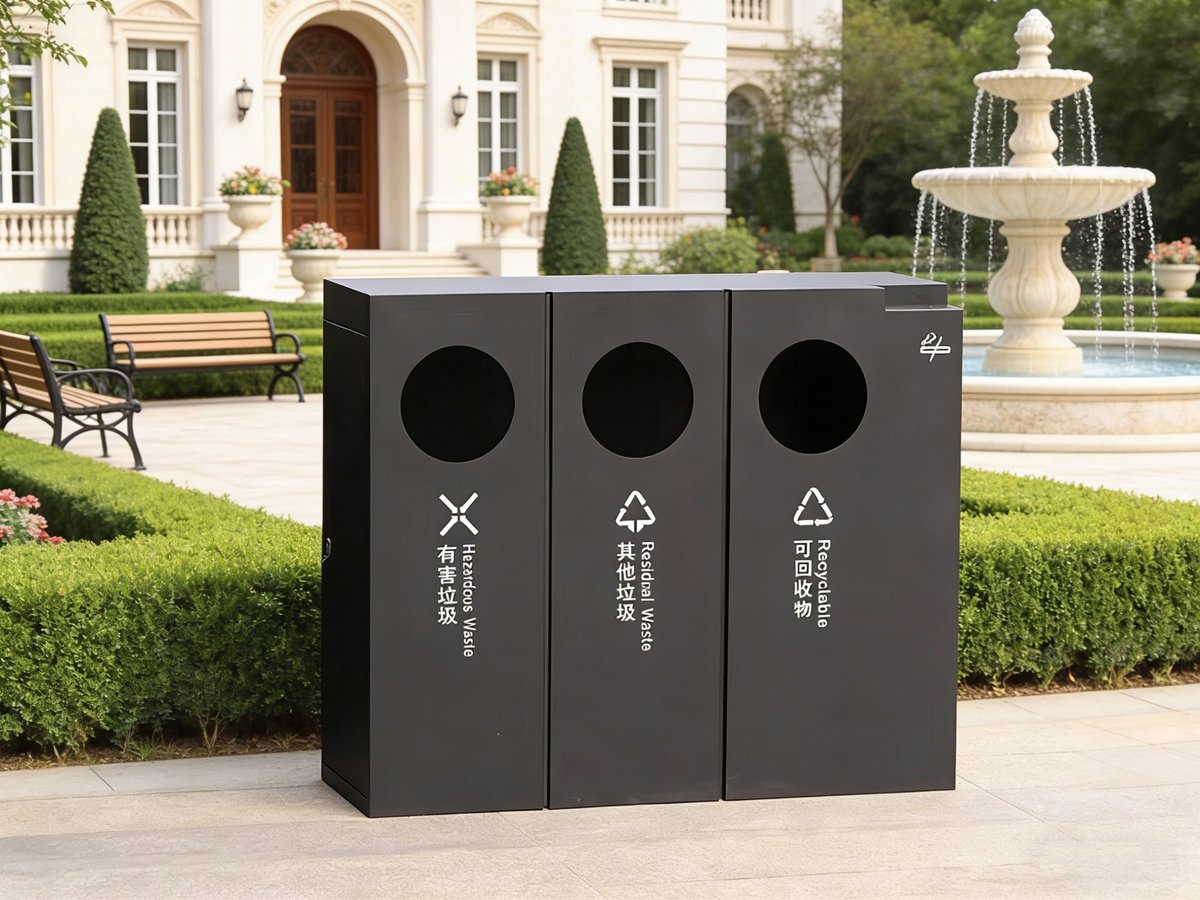
Trisort Triple Sorting Bin
Slim three-compartment sorting bin with circular apertures for recyclable, residual and hazardous waste — ideal for parks, estates and public gardens.
Request a quote · MOQ 20 pcs
View specifications →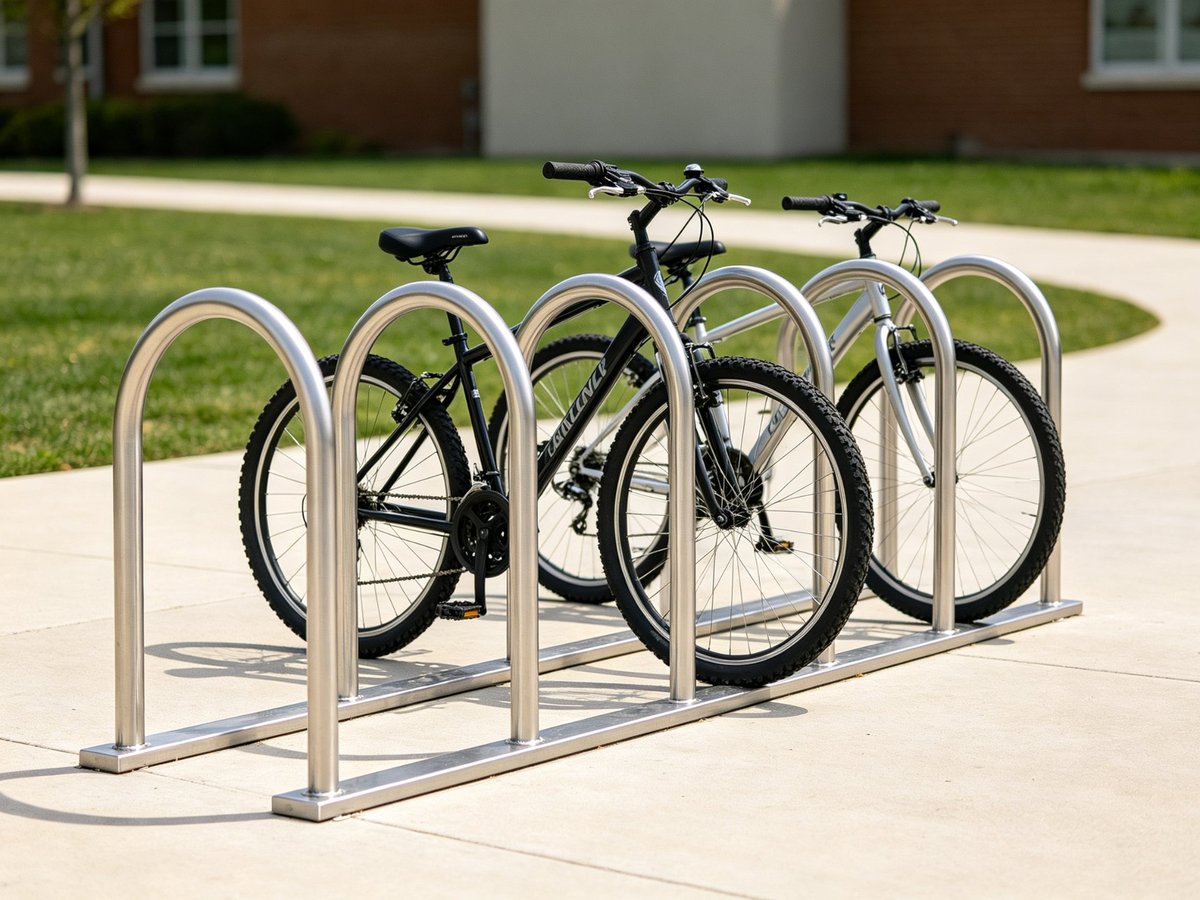
SteelArch Multi Bike Rack
High-capacity stainless steel bike rack holding up to six bicycles on twin continuous base rails, ideal for campuses and stations.
Request a quote · MOQ 50 pcs
View specifications →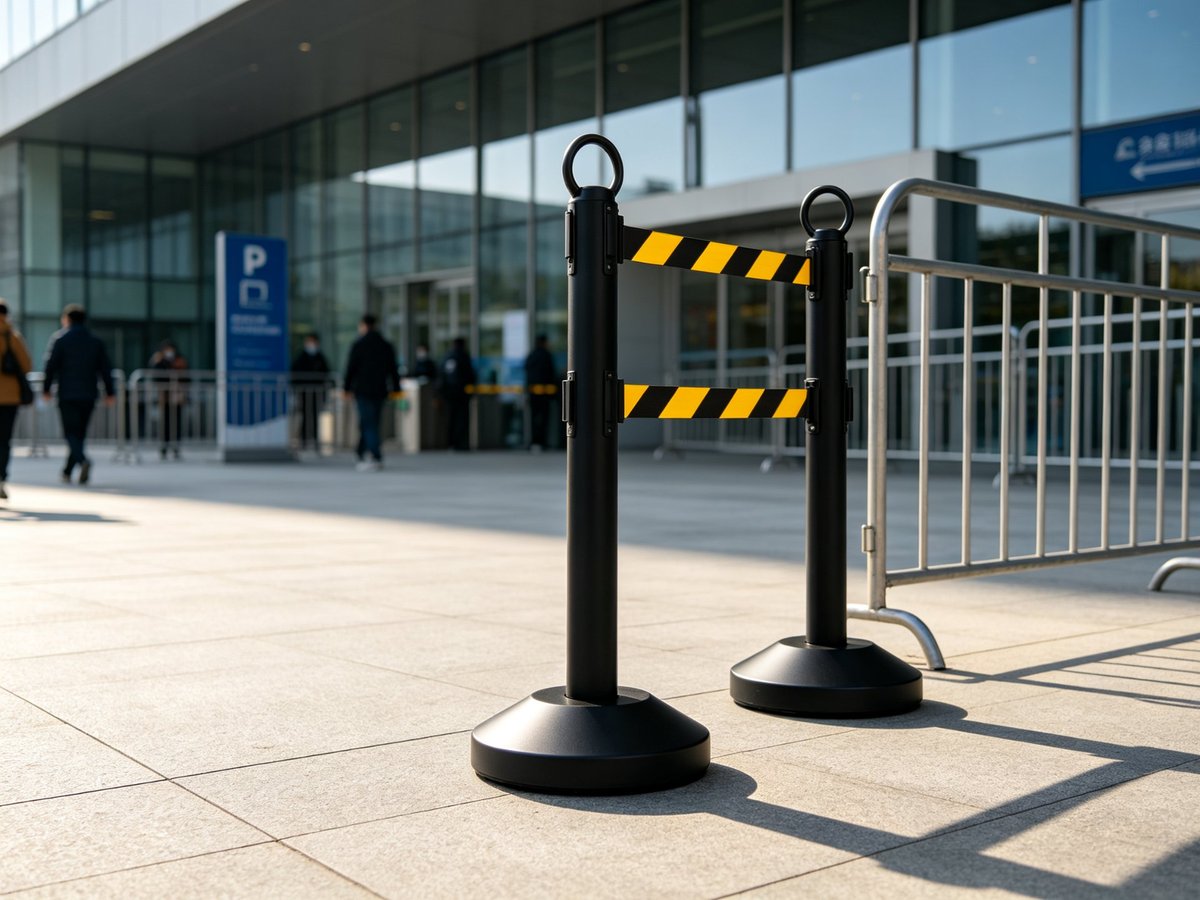
Guardian Belt Barrier Bollard
Retractable-belt crowd control bollard with 2 m belt, weighted round base and all-weather black finish for stations, venues and worksites.
Request a quote · MOQ 50 pcs
View specifications →Frequently asked questions
What furniture is used in a streetscape?+
Seating, litter bins, bollards, bike racks and planters as edge definition. The common thread is anchoring into existing paving rather than new footings, so base-plate fixing dominates.
How much seating does a transit stop need?+
It depends on the boarding peak and the wait rather than the platform length. A backrest bench with defined positions is usually better than a longer backless bench, because it seats the same number predictably.
Should transit bins separate recycling?+
Only if the collection contract separates streams. A three-stream station without a matching collection service produces contaminated recyclate — fix the contract first, then the unit.
Can bollards be fixed to existing paving?+
Yes, with surface-mounted base plates and expansion anchors, provided the slab is sound. Where the paving is thin or already cracked, embedded footings into new concrete are more reliable.
Send your drawing, get a costed BOM
Tell us the site, the quantity and any dimensional constraint. Our engineers reply with a specification and price within one working day.
Request a Quote