
2026-09-26
Anti-Vandal Street Furniture Design: How to Specify Site Furnishings That Survive Public Spaces
A specifier's guide to anti-vandal urban furniture: material selection, tamper-proof fixings, anchoring methods and coating systems that keep public benches, bins and bike racks in service for years.
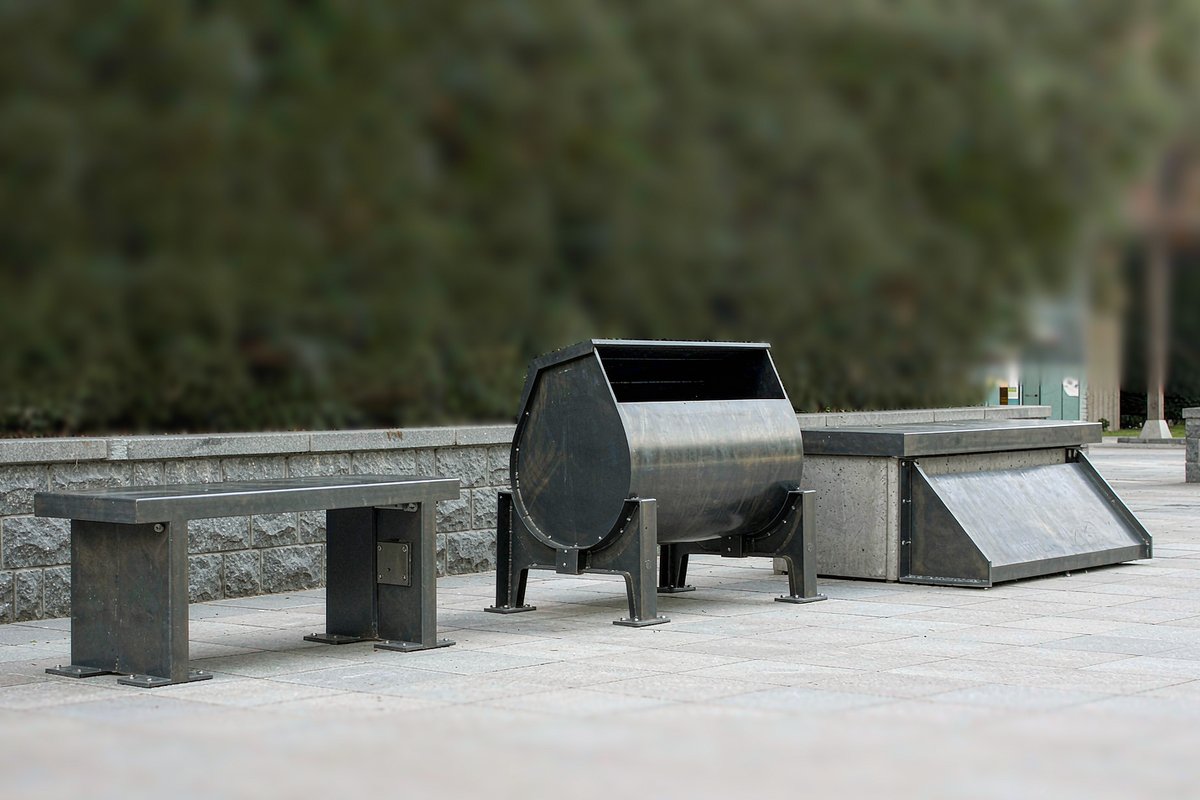
Vandalism and misuse are not edge cases in the public realm — they are the baseline operating condition. A park bench in a busy urban plaza will be stood on, skateboarded, tagged with graffiti, hit by maintenance vehicles and torqued by anyone who discovers a loose bolt. Municipal buyers who specify furniture the way they would furnish an office routinely replace 20–30% of their inventory within the first three years. The difference between furniture that lasts a decade and furniture that becomes a recurring budget line is rarely the price tag — it is a set of deliberate anti-vandal design decisions made at the specification stage. This guide sets out those decisions: materials, fixings, geometry, anchoring and coatings that municipal departments, landscape architects and contractors should demand from suppliers.
Understand the Threats Before Choosing Materials
"Vandalism" is an umbrella term that hides very different failure modes. Effective specification starts by listing which of these your site actually faces:
- Impact and static overload: people standing on benches, vehicles mounting kerbs, delivery trolleys ramming bins
- Fire: paper and litter ignited inside or under bins and benches — the single most common destroyer of wooden street furniture
- Graffiti and stickers: paint, markers and adhesive residues that permanently mark porous surfaces
- Theft and disassembly: slats, boards, signs and even entire lightweight bins removed for scrap or arson fuel
- Corrosion accelerated by damage: a scratched cheap coating on thin steel becomes a rust hole within two winters
A transit shelter in a downtown core faces all five; a riverside walking trail may only face corrosion and fire. Matching the specification to the real threat profile avoids paying for over-engineering where it is not needed — and under-engineering where it is.
Material Selection: The First Line of Defense
Material choice determines both the structural ceiling and the maintenance floor of any piece of site furniture. The comparison below reflects what municipal fleets typically experience:
| Material | Vandal resistance | Fire behavior | Graffiti removal | Typical maintenance | Relative cost |
|---|---|---|---|---|---|
| Hardwood slats (thick, FSC) | Good against impact; slats can be pried or burned | Combustible | Poor on untreated wood | Annual oil/inspect; slat replacement | Medium |
| Recycled plastic lumber | Moderate; flexes, does not rot | Combustible, melts | Fair | Low; scrub clean | Medium |
| Powder-coated steel (2–3 mm) | Excellent; resists prying and impact | Non-combustible frame | Excellent with anti-graffiti topcoat | Very low; touch up chips | Medium |
| Stainless steel (304/316) | Excellent | Non-combustible | Excellent | Lowest; may show smudges | High |
| Concrete / GFRC | Excellent against impact and fire | Non-combustible | Good with sacrificial coating | Very low; heavy to relocate | Medium–High |
| Thin-gauge sheet metal (<1.5 mm) | Poor; dents, cuts, burns through | Conducts heat, paint burns | Poor once rusted | High; dents collect water | Low |
Two patterns stand out. First, thickness matters more than material brand — a 2.5 mm steel bench frame shrugs off impacts that destroy a 1.2 mm frame of the same alloy. Second, combustible surfaces in and around litter bins are a known failure point; steel or concrete bin bodies, or fire-retardant-treated hardwood, should be standard wherever bins sit near dry landscaping.
Fixings, Geometry and Anchoring: Where Vandalism Actually Wins
Most "vandal-proof" furniture is defeated not by force but by a screwdriver. Three detailing rules eliminate the majority of failures:
- Tamper-proof fasteners only: one-way bolts, security Torx or shear nuts on every externally visible fixing. Standard hex bolts, however tight, are removed with common tools within minutes.
- No lift-off or loose parts: slats should be captured in welded or bolted steel frames with security bolts on the underside, not resting in open channels. Detachable timber inserts are an invitation to bonfires.
- Continuous welds over spot welds: spot welds fail under prying; full penetration welds at load points do not. Ask suppliers to state weld standards, not just "steel construction."
Geometry is the quieter defense. Rounded edges without ledges give graffiti less to hang on and skateboards nothing to grind. Open undersides on benches let litter fall through and deny fire a sheltered fuel bed. Frames anchored into concrete footings with embedded plates or chemical anchors resist both tipping and complete removal — surface-fixing a 30 kg bin to paving is not anchoring, it is a suggestion.
Coatings and Surface Systems
The coating is what buyers see, so it is worth being specific rather than accepting "powder coated":
- Polyester or epoxy-polyester powder coat, 60–100 μm on properly pre-treated (degreased, phosphated or blasted) steel; ask for the pre-treatment, not just the color
- Anti-graffiti topcoats (sacrificial or permanent) on high-exposure faces, allowing marker and paint removal with standard agents
- Hot-dip galvanizing under powder (duplex system) for coastal or de-icing-salt environments — this combination routinely doubles coating life versus powder alone
- RAL-matched, UV-stable colors: dark greys and greens hide scuffs between cleaning cycles better than light tones
A coating is only as good as the steel under it. Coating a 1.5 mm shell still leaves a product that dents, and every dent is a future corrosion site.
Procurement Checklist for Anti-Vandal Site Furnishings
Before awarding a tender or placing an OEM order, require written answers to these questions:
- Frame material and wall thickness (state the mm, not "heavy duty")
- Fastener type and how many are externally accessible
- Weld standard at load points (continuous vs spot)
- Anchor system: embedded plate, chemical anchor or surface fix
- Coating system: pre-treatment, powder type, film thickness, optional galvanizing
- Fire behavior of all combustible components, especially near bins
- Spare-parts availability: slats, boards and fixings stocked for at least 5 years
- Warranty terms distinguishing structural failure from coating degradation
A supplier who answers all eight in writing is a supplier who has engineered the product, not just assembled it.
Built to Take It: What AOTUDE Offers Public-Space Buyers
At AOTUDE, anti-vandal durability is not an option code — it is the default engineering standard. Our Foshan factory produces corten steel and powder-coated steel benches, litter bins, planters and bike racks with 2–3 mm minimum frame thickness, continuous welds, security fasteners and concrete-ready anchor systems as standard specification. Every order is factory-direct with no trading-company markup, available from MOQ 50 pieces, with full OEM/ODM support for custom dimensions, RAL colors, anti-graffiti topcoats and city branding. We back it with a 5–10 year structural warranty and export-grade container packing to ports worldwide. Browse the full range at https://aotude.com or request a quotation with your project drawings — our engineering team will return a specification, not a catalog page.