
2026-10-03
Urban Furniture Installation Methods: A Contractor's Guide to Surface-Mount, In-Ground and Free-Standing Fixings
How to specify installation methods for public benches, bins, planters and bike racks: surface-mount base plates, in-ground embedment, free-standing ballast, substrate requirements and the fixings that keep furniture level for a decade.
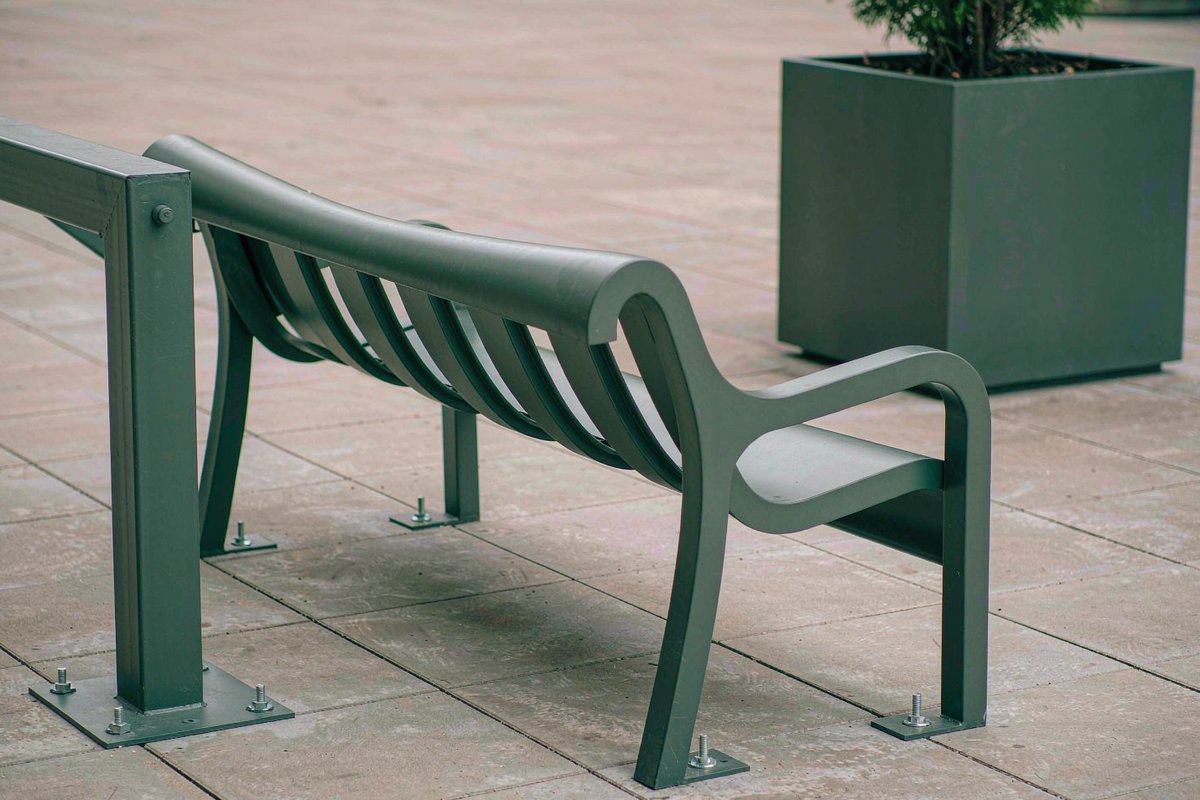
A well-specified bench can still become a maintenance liability within its first winter — not because of the steel, the coating or the slats, but because of how it was fixed to the ground. Installation is the part of a site-furniture project that happens last, gets scheduled in a hurry, and is left to whatever crew is on site that week. Yet it determines whether furniture stays level, resists theft and vandalism, drains properly, and survives plow blades and freeze-thaw cycles. For contractors and municipal crews, choosing between surface-mount, in-ground and free-standing installation is a design decision, not a detail. This guide compares the three methods, explains which substrates each one needs, and lists the fixing checkpoints that separate a ten-year installation from a two-year callback.
The Three Installation Methods at a Glance
| Method | How it works | Best for | Relative installed cost | Key limitation |
|---|---|---|---|---|
| Surface-mount (base plate + anchors) | Factory base plates bolted to finished paving with mechanical or chemical anchors | Retrofits, plazas, decks and structures where excavation is impractical | Low to medium | Anchors exert pull-out and shear loads on the paving; needs sound slab |
| In-ground (embedment) | Legs or posts extended below grade, set in concrete footings | New builds, high-vandalism zones, soft landscape edges, coastal sites | Medium to high | Requires excavation, drainage planning and coordination before paving |
| Free-standing / ballast | Furniture held by self-weight or concealed ballast frames, no fixings | Rooftops, podium decks, temporary and seasonal layouts, green roofs | Lowest | Anti-theft and wind-uplift limits; unsuitable for exposed or high-risk sites |
Most real projects mix all three methods on the same site. The mistake to avoid is letting the choice be made by whoever is holding the drill on installation day.
Surface-Mount: The Retrofit Workhorse
Surface-mounting bolts a factory base plate to the finished surface. It is the default choice for plazas and streetscapes because it can be installed after paving, relocated with modest effort, and leaves existing utilities untouched. To specify it correctly:
- Base plates matter more than anchors. A welded 5–8 mm base plate with four bolt holes distributes load far better than a thin plate or a single central boss. Insist on plates as part of the fabricated frame, not an afterthought.
- Match the anchor to the substrate. Wedge anchors suit dense concrete; screw anchors suit hollow-core slabs and pavers on pedestals; chemical (adhesive) anchors suit cracked concrete, brick and stone where expansion pressure would split the material.
- Respect edge distances. Anchors set too close to a slab edge or joint lose most of their pull-out capacity — typically a minimum of 100–150 mm from any edge or expansion joint.
- Seal the penetration. Every anchor hole is a water path into the paving and the fixing itself. A bead of neutral-cure silicone under the plate and around the bolt heads prevents both staining and anchor corrosion.
Surface-mount is also the most forgiving method for future maintenance: a bench can be unbolted, refinished or replaced without breaking the plaza apart.
In-Ground: The Durability Standard
In-ground installation extends the furniture legs or posts below grade into a concrete footing. It is the strongest defense against theft, rocking, skateboard leverage and vehicle impact, and it is the only method that looks seamless because no hardware is visible. The trade-off is planning: embedment depth (typically 300–600 mm for benches and bins, deeper for bike racks and bollards), footing size, and coordination with drainage and paving levels all have to be decided before the furniture ships.
Three details decide whether an in-ground installation lasts:
- Drainage at the footing. A post set in a water-collecting pocket becomes an internal corrosion chamber. Specify gravel or crushed-stone drainage at the base of the excavation, and galvanized or hot-dip coated steel below grade.
- Level and alignment jigs. Furniture shipped with extended legs should be set with a simple leveling template, not adjusted by eye. A bench installed 10 mm out of level reads as defective and collects standing water on its seat rails.
- Concealed fixing option. For sites where the strongest possible fixing is needed, ask the manufacturer for in-ground legs with internal bolt-down flanges inside the post — the anchor is then inaccessible to tools.
Free-Standing: When Not to Fix
Ballasted and free-standing furniture is often dismissed as temporary, but it is the correct answer for podium decks and green roofs where waterproof membranes cannot be penetrated, and for layouts that change with events or seasons. The specification concerns are wind uplift and theft: benches and planters need sufficient self-weight or concealed ballast trays, and high-value pieces in open squares should be fitted with discreet ground lugs so a cable or anchor can be added later if site policy changes.
Substrate Checklist Before You Order
Installation failures usually trace back to a substrate assumption nobody verified. Before ordering, confirm:
- Paving build-up: is furniture going onto structural slab, sand-bed pavers, or paving on pedestals? Each needs a different anchor strategy.
- Slab thickness and condition: minimum 100 mm structural concrete for wedge anchors; older or cracked slabs need chemical anchors and edge-distance review.
- Services below: in-ground footings conflict with drainage runs, irrigation and lighting conduits — get the utility drawing before the furniture drawing is finalized.
- Frost depth: in cold climates, footings must extend below the local frost line or freeze-thaw will heave the furniture out of level within a few seasons.
- Removal and servicing access: crews need to lift liners and service bins; fixings must allow the intended maintenance, not fight it.
Specifying Installation with the Furniture Order
The most cost-effective moment to decide installation is when the furniture is still a drawing. Manufacturers can supply extended legs for in-ground setting, thick base plates for surface-mount, or ballast frames for free-standing use — but retrofitting these after fabrication means new welds, new coatings and new lead times. A complete purchase specification should state, in one page: the installation method per item, the substrate, the anchor type, the embedment depth or plate size, and who supplies the anchors.
Installation Support from the Factory
AOTUDE manufactures outdoor trash bins, planters, benches and site facilities in its Foshan factory and supplies municipalities, landscape contractors and distributors in more than 40 countries on a factory-direct basis. Every product line is available with the fixing detail your project needs — surface-mount base plates, in-ground legs, or free-standing ballast frames — and installation drawings are issued with the shop drawings so the fixing method is agreed before production, not discovered on site. With OEM/ODM capability, a practical MOQ from 50 pieces, and 5–10 year warranties on frames and coatings, AOTUDE supports the full lifecycle from specification to installation. Browse the range or request a fixing-detail quote at https://aotude.com.