
2026-11-02
Custom Park Bench Manufacturer: From Drawing to Container
What a custom park bench manufacturer changes — dimensions, RAL colour, laser-cut logos, slat profiles — and how a run moves from drawing to sample to container.
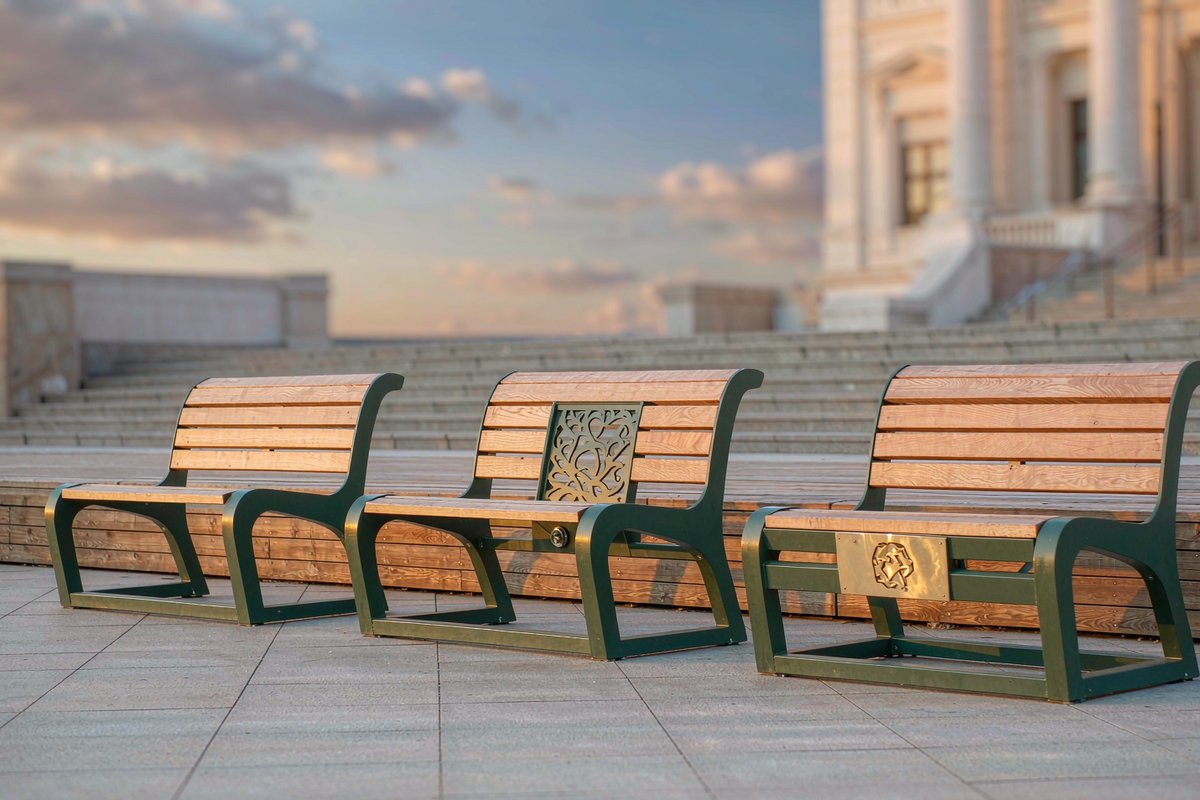
A custom park bench manufacturer is the partner to call when your project cannot be met from a catalogue: a bench that has to fit a specific bay between trees, a streetscape programme that carries the city's logo cut into the frame, or a developer brand that needs the seating range supplied under its own name. As a factory-direct manufacturer, we run custom benches through the same Foshan facility, coating line and QA process as our standard park bench range — laser cutting, welding, hot-dip galvanizing and powder coating sit under one roof. A custom run starts at 50 pcs per model; modifications to catalogue models (length, colour, a cast logo) start from the per-model minimum printed on each product page, from 5 pcs on selected builds.
Four levels of "custom" — pick the right one
Not every request needs a full custom run, and choosing the wrong level is the most common way buyers overpay or under-order. There are four practical tiers:
| Level | What changes | Typical minimum | What you receive |
|---|---|---|---|
| Catalogue modification | Length, RAL colour, a cast or laser-cut logo on a standard model | Per-model minimum, from 5 pcs | Updated drawing + revised quotation |
| Custom run (OEM) | Your dimensions, slat profile, frame geometry, laser-cut backrest panels | From 50 pcs per model | Shop drawing, pre-production sample, quotation |
| Mixed programme | Several models (benches, bins, planters, tables) built to one scheme | Each model at its own minimum | One consolidated packing plan, one shipment |
| Private label | The above plus retail-ready cartons, barcodes and your brand on documentation | From 50 pcs per model | Custom packaging artwork approval |
If a standard model at 1,800 mm works for 80% of your site and only one plaza needs a 2,340 mm version, that is a custom run for one model, not a whole-programme change. Our engineers review the layout drawing and tell you which tier each item falls into before you commit quantities.
What can actually be changed on a bench
Custom scope covers more than length, but it is not unlimited — changes that affect the load path go through engineering review first:
- Dimensions and proportions. Bench length, seat height and depth can be re-set to your drawings. The catalogue models run 1,800 mm long with a 450 mm seat height as reference points; custom lengths are quoted per run.
- Frame and slat materials. Powder-coated steel is the default frame; hot-dip galvanizing is added beneath the powder coat for coastal or high-humidity sites; 304 stainless suits premium streetscapes. Slats are available in hardwood sourced through documented, traceable supply chains, or in WPC and steel round-bar for near-zero-maintenance programmes.
- Colour. Any RAL colour, including two-tone schemes — the Steel Slat Bench, for example, ships in black RAL 9005 as standard and can be re-coated to a municipal palette.
- Branding. Laser-cut city logos on side panels or backrests, cast plates, and engraved plaques. The laser-cut decorative backrest is the signature move for civic programmes.
- Fixings. Surface-mount anchor bolts as standard, embedded or other fixing methods engineered to your base detail — see the specifications centre for what a full bench specification covers.
- Packaging. Container-optimised flat packing as standard; retail-ready cartons for private-label programmes.
The process: drawing to sample to container
A custom run is documented like standard work. The sequence is deliberately boring, because boring is what protects your delivery date:
- RFQ and drawings. You send dimensions, site plan context and branding files. We return a costed bill of materials and a quotation, typically within one working day.
- Shop drawing. Our engineers convert your sketch or tender drawing into a shop drawing for sign-off — dimensions, wall thickness, coating system and fixings all appear on it.
- Pre-production sample. One bench is built in the final finish — final powder coat, final slats, final logo — and photographed or shipped for approval before bulk production starts. Sample cost and whether it offsets against the bulk order are pending factory confirmation; sales confirm both terms with the quotation.
- Production and coating. Bulk runs go through the same cutting, welding, galvanizing and powder-coating line as catalogue work.
- Packing and loading. Flat-packed, container-optimised loading plans — the same discipline described in our OEM container packing guide.
Commercial terms follow our standard export model: FOB or CIF, 30% deposit with balance against shipping documents. The trade terms page sets out incoterms, deposit and payment in full.
What to send us for an accurate quotation
The fastest quotations come from complete RFQs. Include:
- Quantity per model and per length
- Bench length and seat height (or the drawing that dictates them)
- Frame material: steel, galvanized steel, or 304 stainless
- Slat material: hardwood, WPC or steel
- RAL colour reference (or brand guideline for two-tone schemes)
- Branding: laser-cut logo file, plaque wording or cast plate artwork
- Fixing method: surface-mount or embedded, plus the base detail if known
- Destination port for the freight quote
- Delivery date the site needs benches on the ground
You can attach all of this through the custom OEM project page, or send it to us directly for a same-week engineering review.
Four mistakes that slow custom bench orders
- Ordering at catalogue MOQ but expecting full custom scope. A logo change on a standard model is a small job; a new frame geometry is a custom run. Quantities and scope have to match — the arithmetic behind this is laid out in our park bench MOQ article.
- Sending a photo instead of a drawing. We can work from a photo, but every dimension then has to be assumed and re-confirmed. One dimensioned sketch saves a full revision round.
- Approving colour from a screen. Powder-coated finishes vary by batch and display. Ask for the RAL on a physical slat or the pre-production sample before bulk coating.
- Leaving branding artwork to the end. Laser-cut files and cast plates need vector artwork. Late artwork is the single most common cause of a sample redo.
Where custom benches fit a real programme
City-wide procurement usually mixes tiers: standard Fairway Park Bench models for the majority of paths, a custom length where a plaza gap demands it, and laser-cut backrests on the landmark promenade. Because mixed models share a container, the custom pieces ride along with the catalogue order instead of justifying their own shipment. If your programme covers more than seating, the same custom logic extends to recycling stations — see how we handled custom recycling station branding and stream configuration.
Send us the drawings and the quantity split. We will tell you which tier each bench falls into, return a costed bill of materials, and put a sample plan against your delivery date.