
2026-11-08
Park Bench Wholesale Price: A Per-Unit Cost Model for Buyers
How a park bench wholesale price per unit is built: pricing bases, six cost lines, quantity breaks, packing, Incoterms and how to compare quotes fairly.
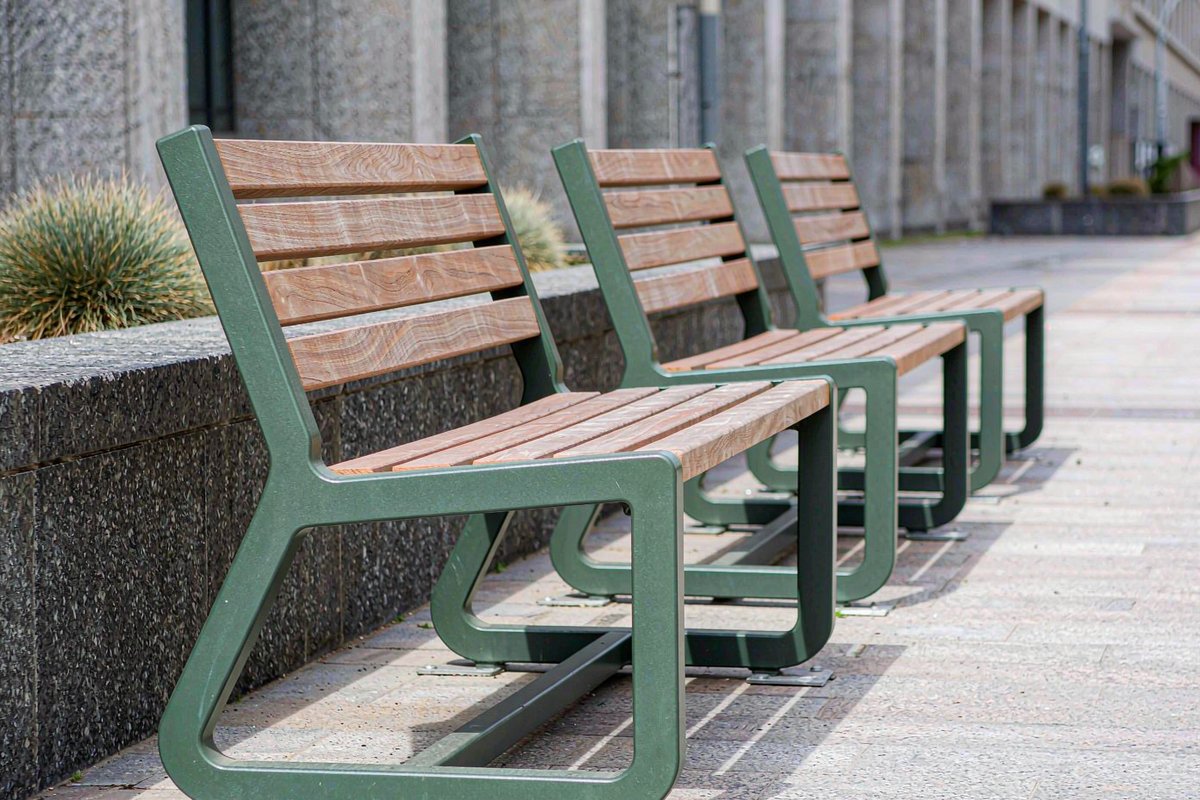
A park bench wholesale price per unit is assembled from six cost lines — frame, slats, finish, fixing kit, fabrication setup and packing — quoted at one quantity break, on one Incoterm. There is no meaningful catalogue figure. Freeze those six lines, ask two or three factories to price the same bill of materials at the same quantity, and the numbers become comparable. Leave any line open and the cheapest reply is usually the one with the most scope taken out.
Quick answer: ask for a per-bench rate that states the quantity tier, the finish system, whether anchors are inside the price, and the Incoterm. A figure missing those four qualifiers is a placeholder, not a price.
Pick the Base Unit Before You Compare Anything
Bench pricing circulates in three bases, and mixing them is the fastest way to mistake a thin quote for a keen one.
| Pricing base | Where it is used | Confirm before you rank the quotes |
|---|---|---|
| Per bench unit | Catalogue models quoted from a price list | Length, slat material, finish and fixing kit included or excluded |
| Per linear metre | Continuous or curved seating runs, modular systems and planter-bench combinations | Whether end units, joints and radius modules are priced per metre or billed separately |
| Per seat | Tender budgets built from a seat-count target | Seat count taken from the model's own drawing, not counted from a photograph |
Convert every reply to cost per bench at your real quantity before comparing. The per-seat base is the most dangerous of the three, because it imports an assumption about how many people a bench holds; length, armrests and layout all change that, so ask the supplier to state the seat count they priced.
The Six Cost Lines Behind the Number
Almost all of the spread between a lean quote and an expensive one sits in this table. Each row is a decision you can make deliberately, and a line you can ask a factory to itemise.
| Cost line | What moves it | What the enquiry must state |
|---|---|---|
| Frame structure | Section size, wall thickness, number of welded joints, cast versus fabricated ends, seat depth and back rake | Section and wall thickness on the drawing, and whether the frame is delivered as one welded body |
| Slat package | Slat material, count and profile, radiused edges, fixing method per slat | Slat material by name, and confirmation that each slat is individually replaceable |
| Finish system | Hot-dip galvanizing plus powder coat, powder only, or 304 stainless; whether the finish reaches inside the frame | Coating system and RAL reference; for stainless, the grade |
| Fixing kit | Surface base plates with expansion anchors, or embedded legs with a setting template; fastener grade | Substrate (paving, slab, lawn) and whether anchors sit inside the unit price |
| Fabrication setup | Cutting programmes, bending fixtures, weld jigs and first-article inspection — one-time costs spread over the run | Whether setup is charged once for the run or repeated for each shipment |
| Packing and loading | Frames nested, slats packed flat, blanket wrap versus individual crating, units per container | Carton or crate dimensions and units per 40 ft high-cube for your actual model mix |
Two rows do most of the work. The finish row is the one most often left vague: galvanized-plus-powder and powder-only are different products at different levels, and a quote that says "powder-coated steel" has not yet priced the bench. The coating systems and what each is expected to do in service are set out in the coating and stainless sections of the specifications hub.
The slat row carries the same trap in a different form. Hardwood, WPC and steel-bar slats are three separate supply chains, and a species named only as "hardwood" is not a specification — it is a placeholder that gets resolved after the deposit. If the project needs timber, ask for documented, traceable supply chains in writing, and check which models in the park bench range actually carry the slat you want rather than assuming it is available across the line.
Normalise the Quotes With an Index
The practical way to compare replies is to re-score them on identical scope, with the lowest scope-matched total indexed at 100. The worksheet is the whole method.
| Scope item | What "scope-matched" means |
|---|---|
| Frame | Same section and wall thickness, same joint count, same seat depth |
| Slats | Same material, same count, replaceable individually |
| Finish | Same system, inside and outside, same RAL |
| Fixing kit | Anchors, base plates or embedded legs, plus templates, inside the price |
| Packing | Export crating, not blanket wrap |
| Setup | Charged once for the run, not per shipment |
| Incoterm | Same term, same destination port |
One reply indexes at 100 and a second at 104, so the first looks 4 points cheaper. Add the scope the first excluded — anchors and export crating, both quoted separately — and its scope-matched index moves to 109. The cheaper quote was never cheaper; it was a smaller order. Run that arithmetic before anyone recommends, because a tender that ranks on headline numbers selects the thinnest scope every time.
Quantity Breaks and the Mixed Container
Wholesale pricing steps down at fixed quantities rather than sliding smoothly. Minimums are set per model and printed on each product page: 20 pcs on most models, 5 pcs on selected builds, with custom lengths and new geometry quoted from 50 pcs per model. The MOQ and order-route breakdown covers how those routes are chosen.
Three rules govern the ladder. Setup is amortised, not discounted — cutting programmes, jigs and first-article inspection are one-time costs spread across the run, which is the real reason a larger tier is cheaper. Tiers are per model, so mixing models rarely reaches a higher tier on any single one. And a quantity sitting just under a break is worth re-checking, because the step above it is often cheaper in total than the smaller order once the per-unit step is applied.
What a mixed order does buy is freight. Bench frames nest and slats pack flat, so a container carrying benches, bins and planters from one order is usually cheaper to ship than the same volume split across two shipments — the loading logic is set out in the container packing and landed cost guide. Bins are the line that catches buyers out, because a hollow body can occupy more cube than the bench standing next to it; the litter bin price per unit breakdown works that arithmetic through a three-offer comparison.
The Landed Layer
FOB is the factory gate, not the project cost. Benches are bulky rather than dense, so chargeable volume usually decides the freight line; duty and import VAT are calculated on FOB plus freight; port, clearance and haulage follow, and a long crate may need a crane or tail-lift at the receiving end. Site fixing — anchors, templates, drilling time — belongs in the furniture package from the start, and it is the layer most often left out of a comparison that claims to be about price.
Terms That Belong Beside the Number
A per-unit figure without a validity window is not a commitment. Steel moves, so ask for a stated validity period, a named currency and the payment split — 30% deposit with the balance against shipping documents is the structure used here, with FOB and CIF quoted side by side. Confirm whether the rate holds across the whole run, whether it re-bases if the quantity shifts between tiers, and whether artwork, laser-cut plates or fixture setup are billed once or repeated per shipment. The commercial terms are set out on the trade terms page.
Four Ways a Bench Price Misleads
- Slat material left unnamed. "Hardwood" or "composite" resolves into whatever the factory has in stock; the number moves once the species is fixed.
- Anchors outside the price. Base plates, expansion anchors and setting templates arriving as a variation after the order is the classic post-award increase.
- Per seat measured against per bench. An undocumented seat count can make the same bench look 20 points cheaper.
- Finish scope silent. Powder-only quoted against galvanized-plus-powder reads as a saving until the first scratch opens bare metal.
How to Specify — What to Send Us
Send these eight items and the reply is a costed proposal against your own specification rather than a list of questions:
- Model or drawing, with quantity per model and the total package if bins or planters ship in the same container.
- Bench length and seat depth, plus backrest or backless — catalogue builds such as the Fairway park bench or the Plaza backless bench can be quoted directly, and non-standard lengths move to a custom run.
- Slat material: hardwood, WPC, steel bar or aluminium, with any species requirement written out.
- Frame family and finish: powder-coated galvanized steel, 304 stainless such as the stainless frame bench, or aluminium; RAL reference for the coating.
- Fixing method and substrate: surface base plates, embedded legs, or a mix across the site.
- Delivery term and destination port, so FOB and CIF can be quoted side by side.
- Whether export crating is required, and the receiving constraints at site.
- The installation date you are working back from, so the quantity tier and shipping window are realistic.
The park bench dimensions in mm, inches and feet in the specifications hub settle the sizing questions before they reach the quotation, and the park bench range shows which builds are already tooled — including the steel slat bench for high-vandal sites where timber is the wrong answer. If the quantity is still open, the bench quantity method turns seated demand into a count first, and the specification path for a bespoke build covers what changes when nothing in the catalogue fits.
Send the specification through the contact page and we will return a per-unit rate at your quantity, the tier it sits in, the fixing detail it assumes, and FOB and CIF shown separately so the landed comparison is yours to check.